
The NEXTEKCI TrainingLearn poultry farming like an entrepreneur
For the poultry entrepreneur and their technician, in open-sided houses, from 1,000 to 100,000 birds: 15 levels in three cycles, 3 tracks (white broilers, coloured chickens, laying hens), 9 specialisations (slaughterhouse, feed, expert layers, free range and festive markets, building a house, farm manager, table eggs, farm health technician, day-old chick), technical guides like in the books, a week-by-week calendar, disease sheets and answers to farmers’ questions.
15 levels · 3 tracks · 9 specialisations · 262 lessons · 8 guides · 17 disease sheets · 140 farmers’ questions
For the entrepreneur
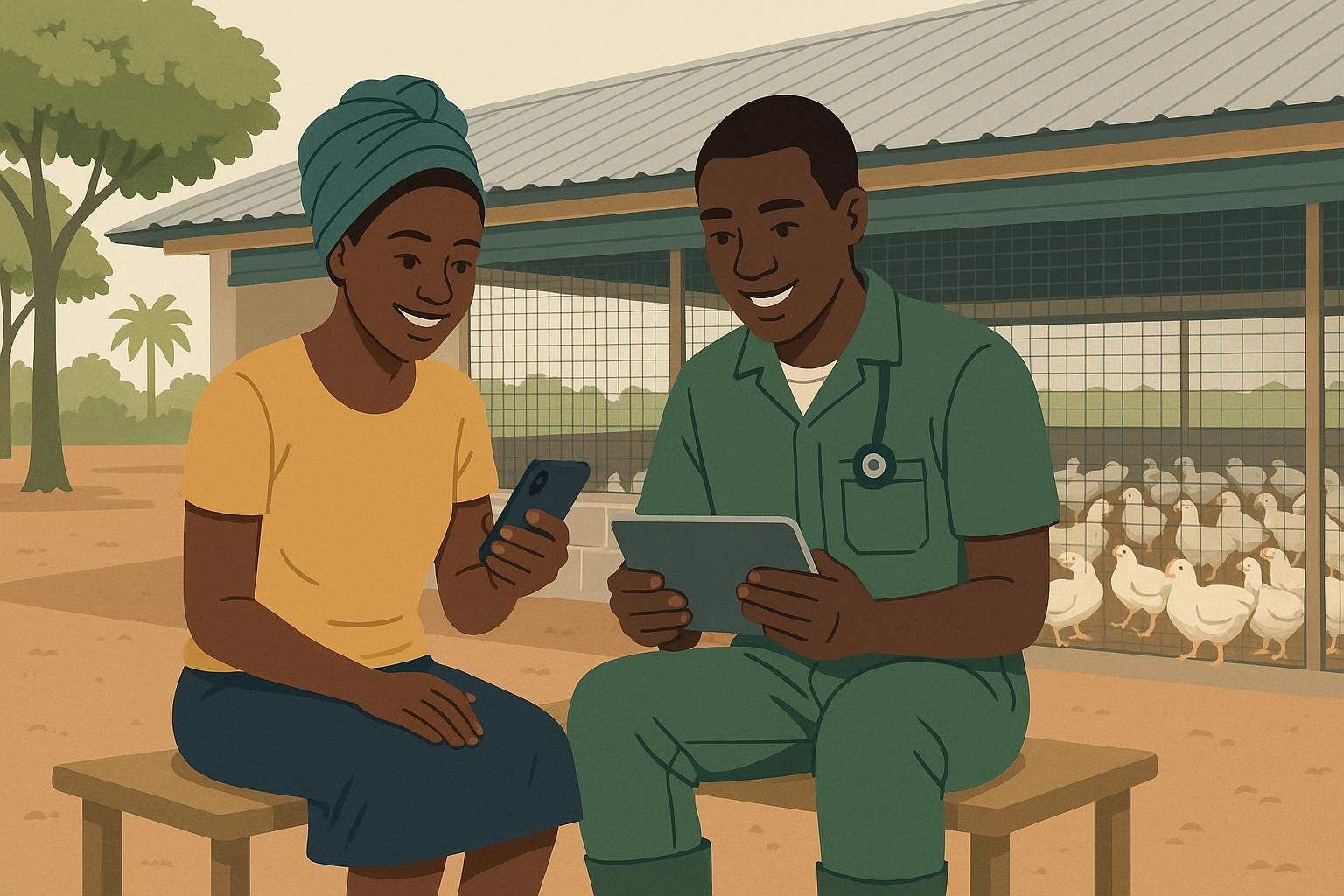
You have invested in poultry farming without being a poultry farmer? Each lesson tells you what to check, what to ask and what it costs. And the three questions to ask your technician this week.
For the technician
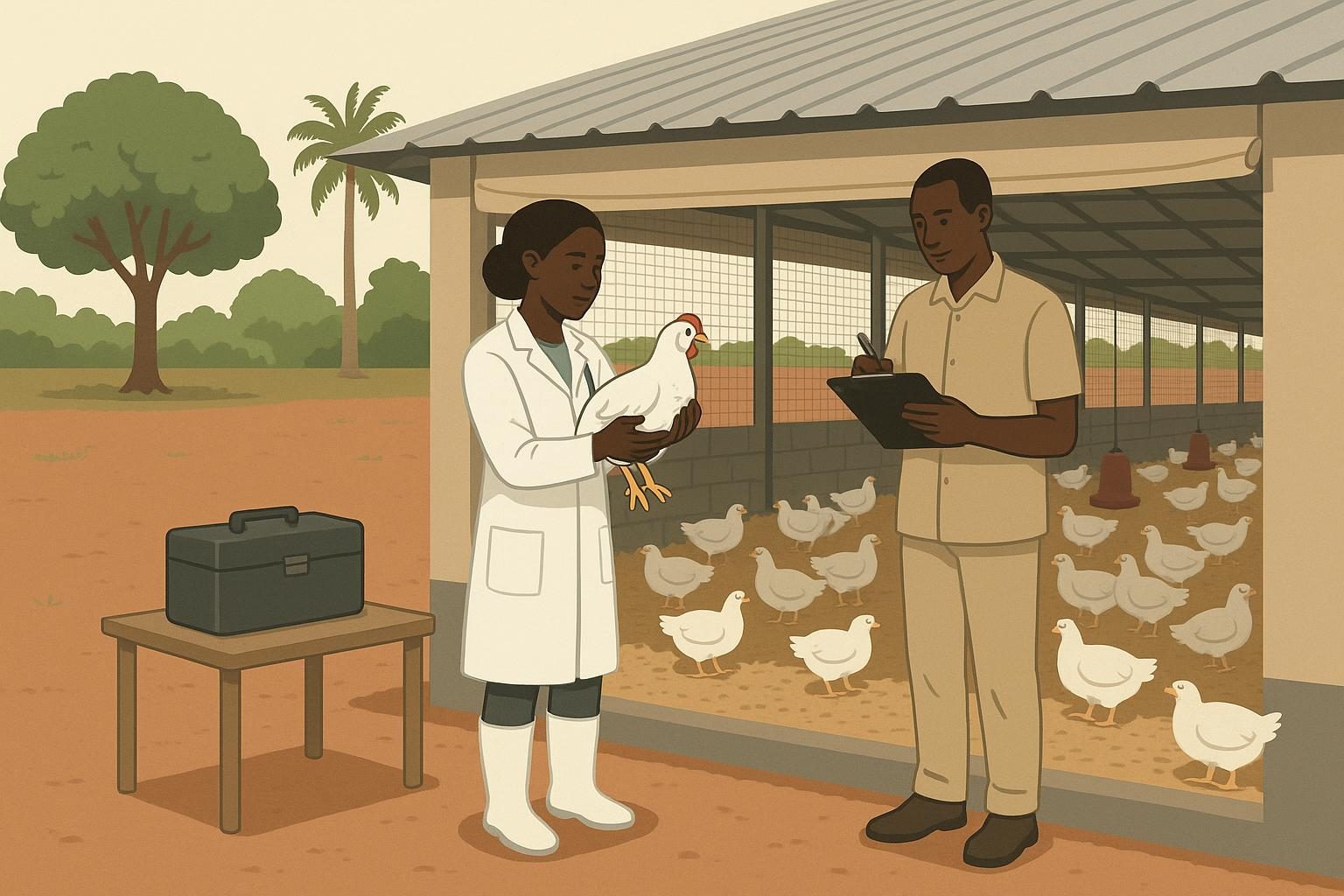
The precise actions, the key figures, the signs to watch for. Everything you need to do the job methodically and prove it with a certificate.
Not a children’s course
Stocking densities, temperatures, ratios, calculations with your own figures. It does not replace the veterinarian: you learn to recognise problems early and to know when to call them.
All the training’s resources, free to use
No sign-up needed: read, learn, download.
How it works
- 1Sign up
Your WhatsApp number receives a code, then first name, surname, city. Two minutes, no password.
- 2Follow the lessons
One lesson = one specific problem, 8 to 12 minutes of reading, on phone, tablet or computer.
- 3Pass a quiz
5 questions at the end of each lesson; 4 correct answers to move on.
- 4Take the exam
20 questions per level (30 for levels 10 and 15, which award a cycle certificate). Passed at 80%: your certificate is issued, with a code that anyone can verify.
Fifteen levels, three cycles, three certificates
Each level unlocks the next. The Foundations cycle (levels 1 to 5) teaches the actions, the Technician cycle (6 to 10) explains the why, the Expert cycle (11 to 15) trains the farm manager and the adviser. At the end of each cycle, a certificate.
Cycle 1 — Foundations
levels 1 to 5 · at the end: Poultry Farmer CertificateLevel 1 — Getting started
Launching your first flock without mistakes
Choosing your production, preparing an open-sided house suited to the Ivorian climate, securing water and equipment, costing your first flock with your own figures, receiving your chicks and getting the first 72 hours right.
- 1.Choosing your production: broiler, layer or cockerel?
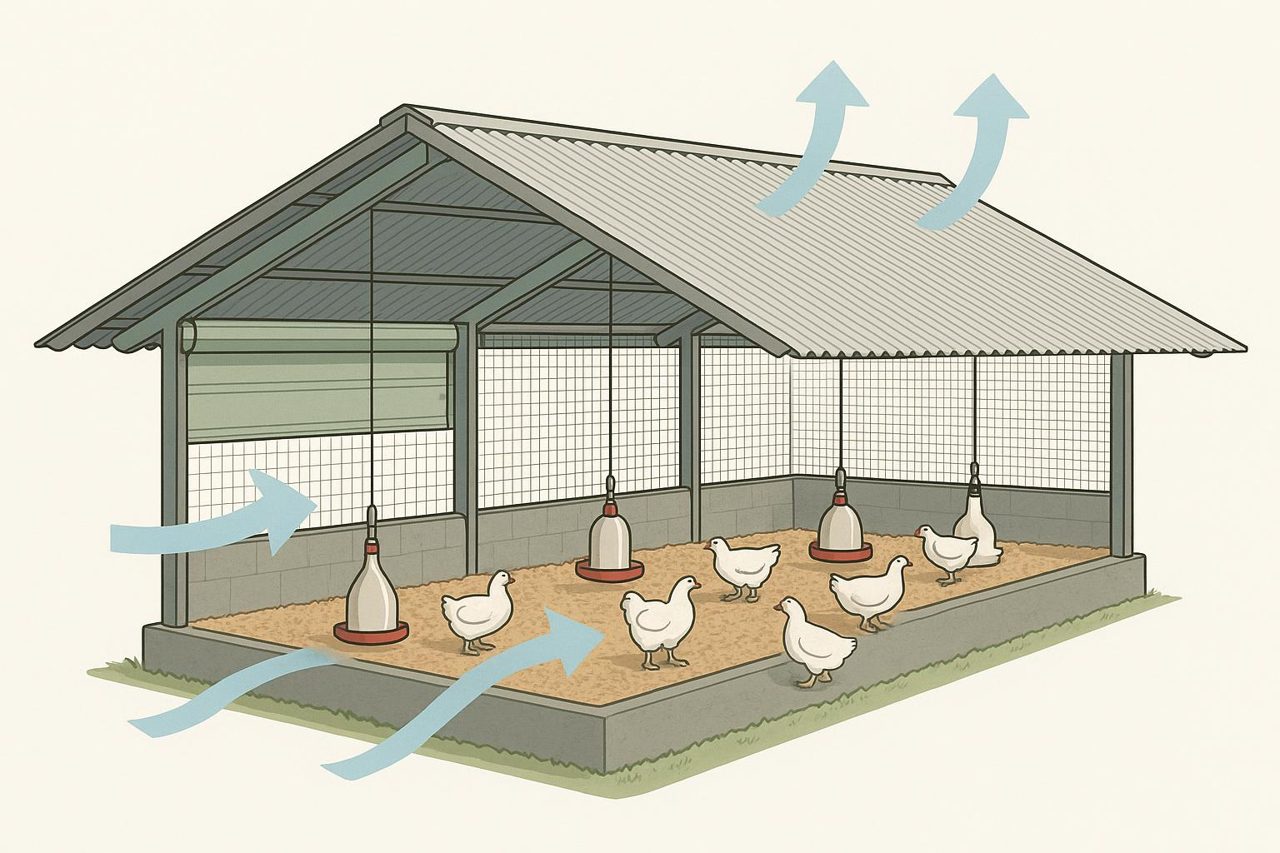
- 2.The open-sided house: well oriented, well ventilated, well sized
- 3.Water: the first raw material of poultry farming
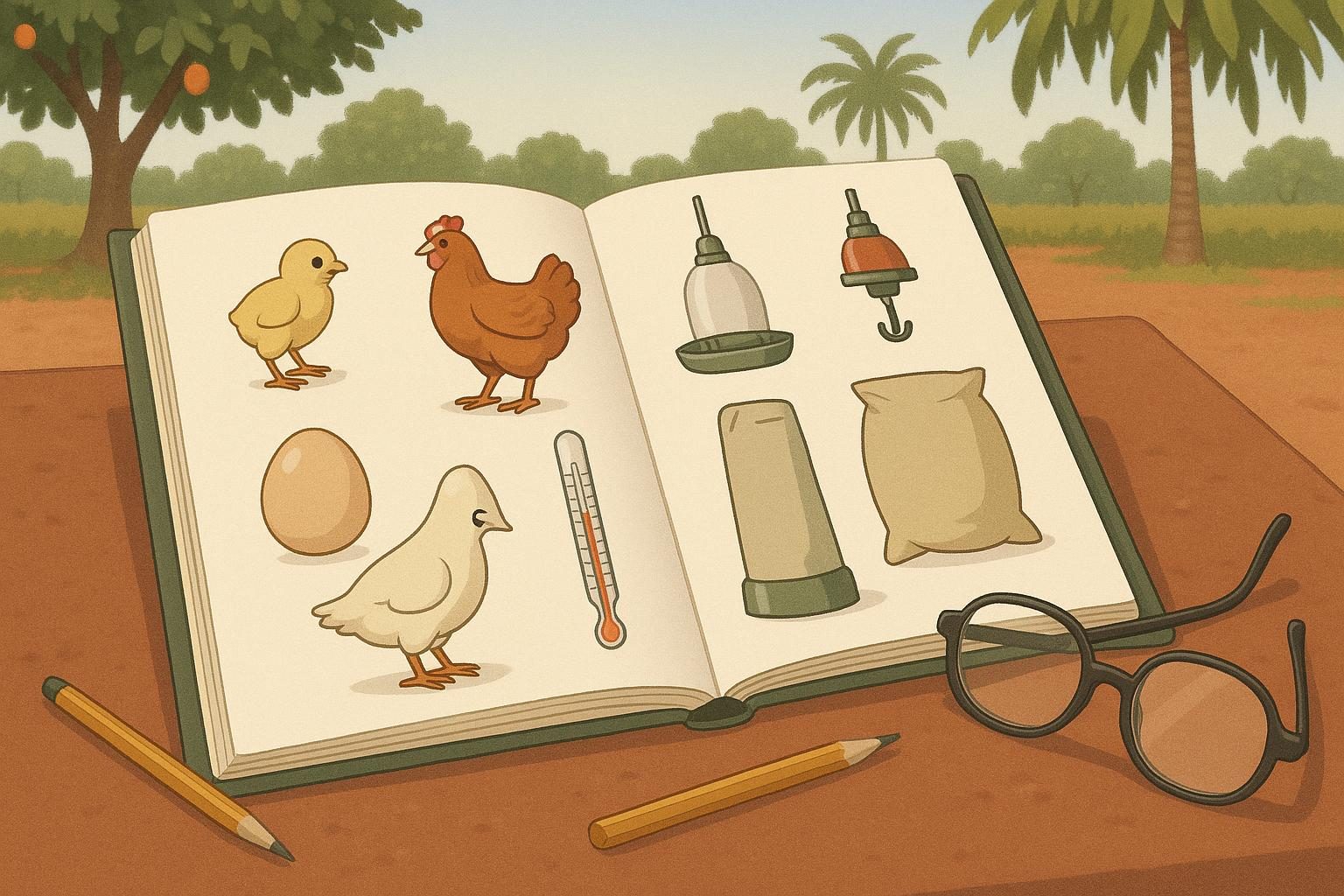
- 4.Brooding equipment: heat, brooder guard, feeders, drinkers, litter
- 5.Costing your first flock with your own figures
- 6.Ordering and receiving your chicks
- 7.The first 72 hours: heat, water, feed, observation
- 8.The 10 mistakes of a first flock, and how to avoid them
Level 2 — Managing a flock
From day 1 to sale, without losing track
Brooding, feed by phase, watering, litter, weekly weighing, mortality monitoring, the daily record sheet and the two-pairs-of-eyes check, end of the flock, cleaning and sanitary break.
- 1.Brooding, from day 1 to day 14: this is where the flock is won
- 2.Feed by phase: the right bag at the right age, properly stored
- 3.Watering: cleanliness, height, flow rate, and products in the water
- 4.Litter: depth, moisture, turning
- 5.Weighing every week and reading the curve
- 6.Mortality: count, record, understand, act
- 7.The daily record sheet and the two pairs of eyes
- 8.End of flock: when and how to sell
- 9.Cleaning, disinfection, sanitary break: preparing the next flock
Level 3 — Health and prevention
Recognise early, act fast, know when to call
Vaccination at the hatchery and on the farm, coccidiosis, Newcastle disease, Gumboro disease, respiratory diseases, heat stress in open-sided houses, the rainy season, biosecurity, and the right time to call the veterinarian.
- 1.Vaccination: what is done at the hatchery, what is done on the farm, the role of the veterinarian
- 2.Coccidiosis: the disease of wet litter
- 3.Newcastle disease: the disease that empties poultry houses
- 4.Gumboro disease: the disease that disarms the defences
- 5.Respiratory diseases: dust, ammonia, cool nights and germs
- 6.Heat stress in an open-sided house: the hours that kill
- 7.The rainy season: humidity, moulds, roads cut off
- 8.Biosecurity: the barriers that replace medicines
- 9.When to call the veterinarian, and what to tell them
Level 4 — Performance and management
Deciding with your figures, leading your teams
Feed conversion ratio, target weight by age and laying curve, margin per flock, rotating several houses, managing employees, decisions based on figures, selling better, plan Bs for breakdowns.
- 1.The feed conversion ratio: the figure that tells you whether feed is turning into meat
- 2.Target weight by age and laying curve: steering with objectives
- 3.Margin per flock: from the one-page balance sheet to the decision
- 4.Several poultry houses: rotation, annual calendar and orders
- 5.Managing your employees: instructions, checks, motivation
- 6.Deciding with your figures: six indicators and one ritual
- 7.Selling better: per head or per kilo, to whom, when
- 8.Breakdowns: electricity, water, feed, transport — a plan B for each one
Level 5 — Large farms
Large farms and advanced skills
Biosecurity zones and procedures, layers over the whole cycle, managing an epidemic and avian influenza, water on a large scale, traceability and registers, slaughter and the cold chain, financing a house, the farm dashboard.
- 1.Large farms: zones, staff, traffic flows, procedures
- 2.Layers over the whole cycle: from the pullet to culling
- 3.Managing an epidemic: the seven-day protocol
- 4.Water on a large scale: treatment, lines, monitoring
- 5.Traceability: batches, registers, and what an inspector asks for
- 6.Slaughter and the cold chain: from live chicken to frozen chicken
- 7.Financing a poultry house: costs, return on investment, sources of money
- 8.The farm dashboard: ten indicators, one page, one decision
Cycle 2 — Technician
levels 6 to 10 · at the end: Poultry Technician CertificateLevel 6 — The bird: anatomy, physiology, behaviour
Understand what happens inside the chicken's body and read a flock
Skeleton and growth, digestion, breathing, thermoregulation, immunity, egg formation, flock behaviour: the why behind every action of cycle 1.
- 1.Skeleton, muscles and growth: why a broiler grows so fast, and what it costs its legs
- 2.From beak to cloaca: the chicken's digestion and what it demands from the feed
- 3.Breathing: a fragile system, sensitive to dust and ammonia
- 4.Chickens do not sweat: thermoregulation and heat stroke explained
- 5.The immune system: how it builds up, from chick to adult
- 6.From ovary to egg: how a hen makes an egg in 25 hours
- 7.Reading a flock: noise, spread, posture, signs of comfort and stress
- 8.Stress: what it does to the chicken's body and how to measure it without instruments
- 9.Field exercise: time the breathing and observe the posture of 10 birds in the hot hours
- 10.Case study: watch a flock for ten minutes and write down what you see
Level 7 — Feed and nutrition
Understand a feed, judge it, store it, work out what it costs
Nutrients, raw materials of Côte d'Ivoire, labels and analyses, phases, feed form, storage and mycotoxins, intake and cost calculations with your own figures.
- 1.Nutrients: energy, protein and amino acids, minerals, vitamins, and what each one does
- 2.Raw materials of Côte d'Ivoire: maize, soya, bran, fish meal, shells, and their pitfalls
- 3.Reading a feed label and an analysis sheet
- 4.Phases: why feed changes with age (starter, grower, finisher; pullet, layer)
- 5.Mash, crumbs, pellets: feed form and waste
- 6.Storing feed: moisture, heat, rodents, moulds and mycotoxins
- 7.Calculating: expected intake, safety stock, cost per kilo of chicken and per egg, with your own figures
- 8.Water, the first feed: quantity, temperature, quality, and its effect on intake
- 9.Field exercise: weigh the feed given over 3 days and compare with the table
- 10.Case study: a flock that does not grow despite good feed, where to look?
Level 8 — Climate control and housing in a hot climate
Measure and adjust the microclimate, audit a house
Microclimate and measurements, natural ventilation of an 8 m house, stocking density (manufacturers 8 to 10 per m², NEXTEKCI 5 per m² in hot periods), light, equipment, fighting heat, rainy season, 20-point audit.
- 1.The microclimate: temperature, humidity, air speed, ammonia, CO₂, dust, and how to measure them
- 2.Natural ventilation: orientation, 8 m width, height, roof overhang, curtains
- 3.Stocking density: the manufacturers' figures, and why NEXTEKCI advises 5 per m² in hot periods
- 4.Light: duration, intensity and programmes in open-sided houses
- 5.Sizing feeders, drinkers and water lines by age and flock size
- 6.Fighting heat: roofing, misting, fans, feeding hours
- 7.Rainy season: humidity, litter, moulds, walls and floor
- 8.Litter as a system: depth, moisture, ammonia, turning, replacement
- 9.Field exercise: record temperature and humidity morning, noon and evening for a week
- 10.Case study: the 20-point house audit
Level 9 — Advanced health: understand, prevent, monitor
Write a biosecurity plan, write a report the vet can use
Pathogens and transmission, immunity and vaccination (the local vet's programme), parasites, metabolic diseases, written biosecurity plan, alert thresholds, examining a dead bird for the vet. We describe, we do not treat.
- 1.Viruses, bacteria, parasites, fungi: who does what, and how each one spreads
- 2.Immunity and vaccination: how a vaccine works, the cold chain, the programme stays the local vet's
- 3.External and internal parasites: recognise, describe, prevent
- 4.Metabolic and nutritional diseases: ascites, sudden death, deficiencies, mycotoxicoses (recognising them)
- 5.The written biosecurity plan: zones, flows, airlock, quarantine, rodents, flies, visitors
- 6.Alert thresholds: mortality, water, feed, weight, and when to make the call
- 7.Examining a dead bird: what a technician looks at, notes and photographs for the vet
- 8.Cleaning, disinfection and downtime: the science behind the steps (products, contact time, order)
- 9.Field exercise: draw your farm's biosecurity plan (zones, entrances, flows)
- 10.Case study: mortality has been rising for three days, write the report for the vet
Level 10 — Technical analysis and management
Calculate the indices, compare with the standard, find the real cause
Daily gain, feed conversion, livability, efficiency index, eggs per hen housed; target curves and gaps, uniformity, comparing flocks, water/feed ratio, cost price, simple tables, the farm record book. End of the Technician cycle.
- 1.The technician's indicators: daily gain, feed conversion, livability, efficiency index, eggs per hen housed
- 2.Comparing with the standard: read a target curve, calculate the gap, know whether it is serious
- 3.Uniformity: weigh a sample, calculate the coefficient of variation, act
- 4.Comparing two flocks, two houses, two seasons: finding the real cause
- 5.Water and feed as signals: the water/feed ratio and its alerts
- 6.Cost price per kilo and per egg, item by item, with your own figures
- 7.Simple tables and charts: from the notebook to the phone or computer
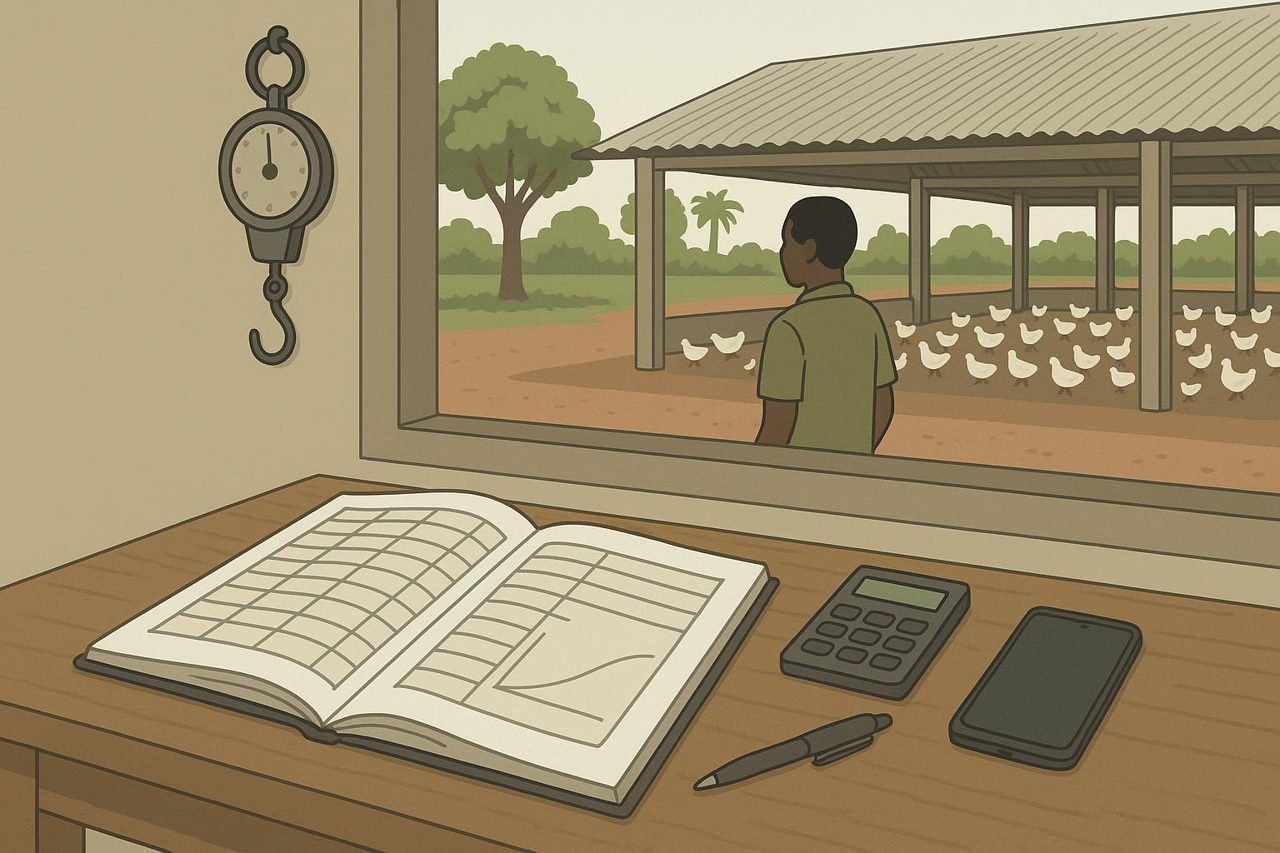
- 8.The perfect farm record book: what to note every day, every week, at every end of flock
- 9.Field exercise: calculate daily gain, feed conversion and uniformity on your last flock
- 10.Case study: analyse a failed flock from start to finish and write the correction plan
Cycle 3 — Expert
levels 11 to 15 · at the end: NEXTEKCI Poultry Expert CertificateLevel 11 — Making feed on the farm
Formulate, make and check a feed
Should you make feed, formulation (Pearson square, needs by phase), equipment, buying raw materials, quality control, premixes and additives, layer feed. Never a medicine without the vet.
- 1.Should you make feed? Advantages, risks, flock-size threshold, and the licence required in Côte d'Ivoire
- 2.Formulation: needs by phase, raw material tables, the Pearson square method
- 3.Formulating a complete feed step by step: broiler, then layer
- 4.Equipment: grinder, mixer, scale, and the order of incorporation
- 5.Buying raw materials: quality, season, moisture, samples
- 6.Quality control: particle size, homogeneity, mycotoxins, hygiene of the workshop
- 7.Premixes and additives: what to know before adding anything (never a medicine without the vet)
- 8.Layer feed: calcium, phosphorus, particle size and the shell
- 9.Field exercise: formulate a grower feed with the raw materials available to you
- 10.Case study: correct a formula that gives wet droppings and slow growth
Level 12 — From farm to customer: slaughter, eggs, sales
Sell without losses and cleanly, build a brand
Preparing for sale, hygienic slaughter and critical points, cold chain, cutting and labelling, eggs from collection to transport, markets, brand and loyalty, staff hygiene.
- 1.Preparing for sale: fasting, catching, transport without losses
- 2.Hygienic slaughter: steps, hygiene, critical points
- 3.The cold chain: chilling, freezing, deep-freezing, transport, breaks
- 4.Cutting, packaging, labelling: what the customer and the inspector expect
- 5.Eggs: collection, grading, dry cleaning, storage, shelf life, transport
- 6.Knowing your markets: markets, restaurants, shops, wholesalers, festivals and calendar
- 7.Building a brand and keeping customers: name, regularity, quality, keeping your word
- 8.Staff and workshop hygiene: clothing, hands, cleaning, checks
- 9.Field exercise: follow a chicken from catching to customer and note every loss
- 10.Case study: organise the sale of a flock from A to Z with a schedule
Level 13 — Organising the farm: staff, procedures, planning
Run a farm with a team and a yearly plan
Organisation chart, recruiting and training, written procedures, production planning (all-in / all-out), ordering chicks and transport on the 3 routes, stocks and purchasing, internal control, day-to-day money management.
- 1.A farm's organisation chart: who does what, from the guard to the manager
- 2.Recruiting, training and keeping a good poultry worker
- 3.Written procedures: write an instruction sheet everyone follows
- 4.Production planning: single flock, multiple flocks, all-in / all-out, downtime
- 5.Ordering your chicks: plan, book, arrange transport with a carrier on the 3 routes, receive
- 6.Stocks and purchasing: feed, litter, cleaning products, spare parts
- 7.Internal control: checklists, rounds, monthly audit, team meeting
- 8.Managing money day to day: cash, purchases, pay, receipts, with your own figures
- 9.Field exercise: write the instruction sheet for a task and have someone else apply it
- 10.Case study: plan a year of production for three houses
Level 14 — Environment, regulation and sustainability
Bring a farm into compliance and make it last
Manure and compost, dead birds and waste, water and wastewater, neighbours, the legal framework in Côte d'Ivoire (licences, registers, IPRAVI), animal welfare, risk prevention, climate and resilience.
- 1.Manure: storage, composting, sale, odours and flies
- 2.Dead birds and waste: incineration, burial, hygiene rules
- 3.Water: quality at source, analysis, treatment, wastewater
- 4.Neighbours and the site: distances, nuisances, good relations
- 5.The legal framework in Côte d'Ivoire: licences, registers, vet, IPRAVI, inspections
- 6.Animal welfare: what it is, why it pays, the concrete actions
- 7.Climate and resilience: heat, rain, breakdowns, power cuts, planning to last
- 8.Preventing risk: fire, theft, flooding, power failure, and the emergency plan
- 9.Field exercise: list the non-compliance points of your farm
- 10.Case study: bring an existing farm into compliance in 90 days
Level 15 — Expert adviser: project, audit and passing it on
Set up a project, audit a farm, advise and train
Setting up a poultry project, business plan with your own figures, the expert's audit grid, advising a farmer, training others, reading a breed sheet and a publication, the technician's ethics, networking, final project. End of the Expert cycle.
- 1.Setting up a poultry project: from the dream to the file (market, site, house, calendar)
- 2.The business plan: structure, assumptions, scenarios, with your own figures
- 3.Auditing a farm: the expert's grid (house, bird, feed, water, health, data, staff)
- 4.Advising a farmer: listen, diagnose, propose a realistic action plan
- 5.Training others: explain simply, demonstrate, check that it is understood
- 6.Reading a breed technical sheet and a publication: sorting true from false
- 7.The technician's ethics: honesty about results, the bird first, the vet as a partner
- 8.Networking and keeping up to date: vets, IPRAVI, suppliers, training, and how to stay current
- 9.Field exercise: audit a neighbour's or a friend's farm with the expert's grid
- 10.Final project: the complete audit of a farm, from the visit to the report
Three specialty tracks
Drawn from our technical guides: one track per type of chicken, 3 free lessons as soon as you sign up, then a one-time payment, with quizzes, an exam and a certificate.
White broilers
From preparing the house to depletion, with the growth targets
- 1.Growth targets: checking against the tables every week
- 2.The open-sided house and preparing for the chicks’ arrival
- 3.The first 14 days: heat, checks and lighting
- 4.Water and feed: measuring to steer the flock
- 5.Heat and ventilation in open-sided houses
- 6.Health, vaccination in drinking water, sale and records
- 7.Reading your weighings: average weight, daily gain and coefficient of variation
- 8.Litter and air quality: ammonia, humidity and feet
- 9.The costliest mistakes: spotting them early with your figures
- 10.Preparing for depletion: feed withdrawal, catching, transport and quality at the processing plant
Coloured and hybrid chickens
Red broiler, barred grey, hybrids: choose, raise, sell at the right age
- 1.Choosing your coloured chicken: the range and its strengths
- 2.Growth targets week by week
- 3.Choosing the selling age: the right weight at the right time
- 4.Managing an open-sided house over 8 to 14 weeks
- 5.The outdoor run: letting your coloured chickens out safely
- 6.Health of a long flock and preparing the sale
- 7.Brooding the coloured chick: the first 10 days
- 8.Feeding the coloured chicken: quantities, selling age and FCR
- 9.Selling your coloured chickens: customers, weights and the festive calendar
- 10.Case studies: diagnosing a flock that is behind in growth
Brown laying hens
From chick to depletion: weights, lighting, laying, egg quality
- 1.Brooding layer chicks (0 to 5 weeks)
- 2.Rearing the pullet (6 to 18 weeks)
- 3.Lighting in a hot climate: the programme week by week
- 4.Coming into lay (16 to 25 weeks): the calendar not to miss
- 5.Following the laying curve (25 to 80 weeks)
- 6.Water, heat, health and depopulation: holding laying to the end
- 7.Egg quality: from the hen to the tray
- 8.Cages or floor: equipping the laying house
- 9.Reading your laying record sheet: spotting a problem early
- 10.Moulting, feather pecking and cannibalism: prevention is better than cure
Nine specialisations
Separate expert modules, after or alongside the 15 levels: 10 lessons each, 3 free lessons from registration, then a one-time payment, with quizzes, an exam and a specialisation certificate. Each module’s programme is public; the lesson text is reserved for registered students.
Slaughterhouse and processing
Design, run and make a small poultry slaughterhouse pay
Design a small slaughterhouse, choose the equipment, organise the slaughter day, master hygiene and the cold chain, cut, clean, sell processed chicken. Example of the complete NEXTEKCI chain in Agnibilékrou (day-old chicks, slaughterhouse, frozen chicken).
See the programme and the 10 lessonsMaking feed on the farm, expert level
Set up a workshop, formulate in a spreadsheet, control and trace a feed
Feed workshop, spreadsheet formulation with constraints and least cost, alternative raw materials of Côte d'Ivoire, analyses and reports, mycotoxins, premixes and additives, pellets, quality and traceability of a home-made feed. Extends level 11.
See the programme and the 10 lessonsLaying hens, expert level
From pullet to culling: steering lay week by week
The perfect pullet, transfer and onset of lay, steering the laying curve, egg quality, layer feed and water, behaviour (pecking, floor eggs), cage or floor, end of flock and moult. Extends the brown laying hen track.
See the programme and the 10 lessonsFree-range poultry and festive markets
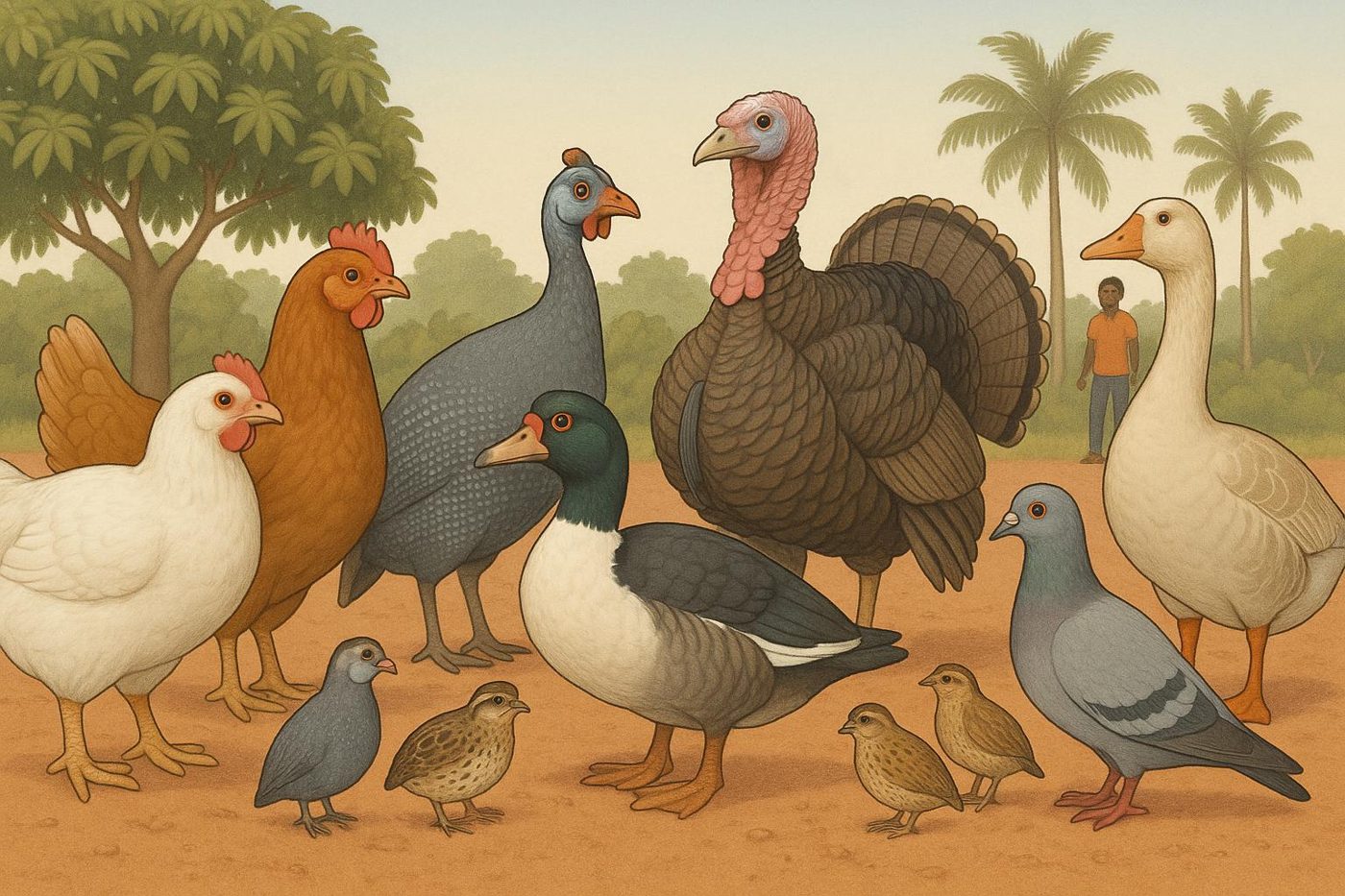
Long flocks, free range, guinea fowl and ducks, festive calendar
The range (area, fencing, shade, rotation, predators, parasites), managing a long flock, the calendar of demand peaks in Côte d'Ivoire, guinea fowl, ducks and cockerels (no hatching), selling live or processed, health on the range. Extends the coloured chicken track.
See the programme and the 10 lessonsDesigning and building a poultry house
From choosing the site to handover: an 8 m open-sided house
Choose the site, size an 8 m wide open-sided house for a flock at 5 broilers per m² in the hot period, the plan (foundations, low wall, posts, frame, roof, overhang, curtains), the materials of Côte d'Ivoire, water and electricity, site supervision, extending or renovating.
See the programme and the 10 lessonsFarm manager: finance, growth, succession
Read your accounts, finance, grow without breaking, hand over
Read your accounts (profit, cash) in units and percentages, full cost price, financing and bank file, growing house by house, contracts, risks of the trade, protective paperwork, delegating and handing over. With your own figures, never an invented amount.
See the programme and the 10 lessonsTable eggs: from nest to customer
Collect, grade, store, pack and sell clean, fresh eggs
What the customer buys (freshness, size, shell), collection and grading, the dry-cleaning rule, storage, candling and quality control, packing and labelling, selling and the brand, hygiene and traceability. Extends the laying hen track.
See the programme and the 10 lessonsFarm health technician
Prevent, monitor, alert and document, with the veterinarian of your area
The role of the health technician, the health plan written with the veterinarian, daily biosecurity, monitoring and alert thresholds, the report to the veterinarian, samples, managing an alert, cleaning-disinfection and the farm health audit. We describe and prevent, we never treat without the veterinarian. Extends level 9.
See the programme and the 10 lessonsThe day-old chick: the first 30 days
Choose, order, receive and start a flock without losing a chick
Choosing your chick, ordering and booking (collection at NEXTEKCI in Agnibilékrou or at the arrival of a route), preparing the house, the first 72 hours, week 1, weeks 2 to 4, starting mortality, the 10 mistakes of the first month. The heart of NEXTEKCI's trade, explained day by day.
See the programme and the 10 lessonsA certificate that can be verified
For each level passed, a PDF certificate is issued in your name, with a unique code and a QR code. Anyone — an employer, a partner, a bank — can check that it is genuine on our website, in a few seconds. At the end of levels 5, 10 and 15, an end-of-cycle certificate: Poultry Farmer, Poultry Technician, NEXTEKCI Poultry Expert.
Verify a certificateThe kids’ corner
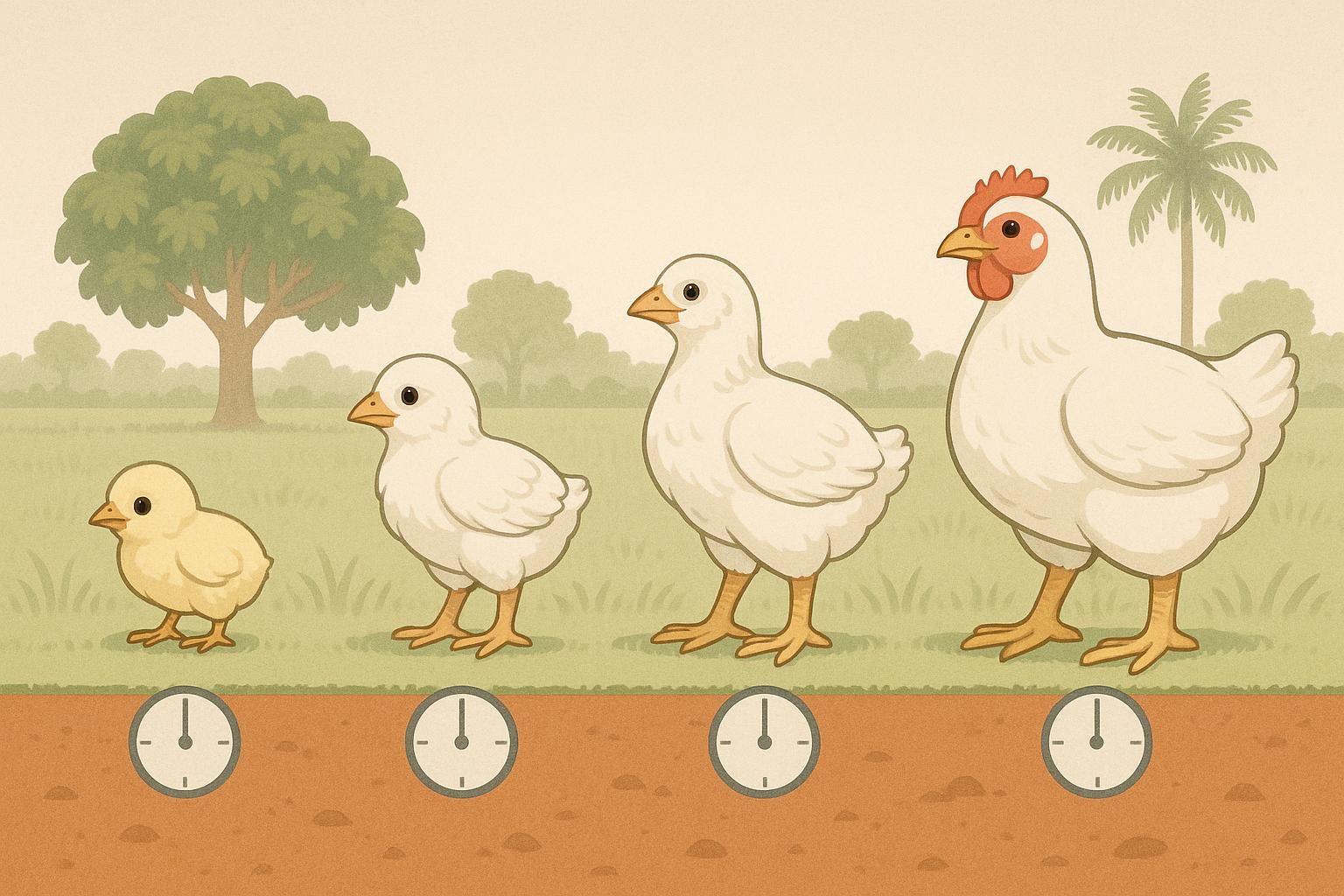
From egg to chick in 21 days, a little game to understand what a chick needs, a true-or-false quiz and a picture to colour in. No sign-up needed.
Enter the kids’ cornerFrequently asked questions
Is it free?
Levels 1 to 5 are free: they are offered by NEXTEKCI, a hatchery based in Agnibilékrou since 2006, so that every poultry farmer succeeds with their flocks. Levels 6 to 15, the technician and expert levels, are paid: a one-time payment per level, by mobile money or bank card. The 3 tracks and the 9 specialisations start with 3 free lessons; the rest also opens with a one-time payment.
Is it a school?
No. It is an online poultry farming course offered by NEXTEKCI, a hatchery based in Agnibilékrou. If you were looking for a poultry farming school in Côte d’Ivoire, this training teaches you the trade step by step, from your first flock of chicks to running a large farm. Certificates are issued privately: they are neither diplomas nor State qualifications.
Can I follow the training from another country?
Yes, from any country. The training is online, in English and French. You sign up with a WhatsApp number from any country, typed with its country code, and the paid levels are settled by bank card. The lessons are written for open-sided houses and hot climates: they serve the farmer in Africa, North Africa, the Middle East, Asia or the Caribbean, as well as the student or researcher working, wherever they are, on poultry farming in hot countries.
Do I need a computer?
No. Everything works just as well on a phone as on a tablet or computer, with an ordinary connection. The pages are light.
How long does it take?
A lesson takes 8 to 12 minutes to read. A level is completed in one to two weeks at one lesson a day.
I am a technician and I already know the trade
After signing up, take the placement test (20 questions): each level you pass opens the next one, up to level 3 (out of 15). The following levels are then earned one by one, exam after exam.
Are chick prices in the lessons?
No, and that is deliberate: prices change with the seasons. You ask for the price of the day on WhatsApp and you calculate with your own figures.
How do I sign up?
In two minutes: open the sign-up page, type your WhatsApp number, copy the 6-digit code received on WhatsApp, then your first name, surname and town. No password to remember. You land on “My progress” and start lesson 1.
I did not receive the WhatsApp code
Check that the number typed is the one that has WhatsApp (with the country code), wait one minute (one code per minute, three per hour), then request a new code. If you have set a password, use “Log in with a password”. Otherwise, write to +225 05 44 83 27 79 from the account’s number: the team unblocks the login.
How do I pick up where I left off?
Log in, then open “My progress”: the page shows your next step (lesson to do or exam to take), your levels, your tracks, your specialisations, your points and your certificates. One click on the next step is enough.
Are levels 6 to 15 paid?
Yes. Each level opens once you have passed the previous level’s exam, then after a one-time payment by mobile money or bank card. The price is shown on “My progress” when you unlock the level. The payment opens the level’s lessons, assignments, exam and certificate, with no time limit. The programme, the objectives, the outline of each lesson and the questions and answers of each level remain readable by everyone.
What are the specialisations?
Separate expert modules, after or alongside the 15 levels: slaughterhouse and processing, making feed, laying hens, free-range poultry and festive markets, building a poultry house, farm manager, table eggs, farm health technician, the day-old chick. 10 lessons each, 3 free lessons from registration, then a one-time payment, with an exam and a specialisation certificate. Their programme and their questions and answers are public; the lesson text is reserved for registered students.
What level of study does the training correspond to?
The NEXTEKCI training is not compared to any diploma. It is practical training for the poultry farmer’s trade, level after level, from beginner to expert, written for open-sided houses and hot climates. Certificates are issued privately by NEXTEKCI: they are neither diplomas nor State-recognised titles.
Can Maria help me if I am lost?
Yes. Maria is NEXTEKCI’s online assistant, available on the website at any time: she guides you step by step to sign up, log in, find your progress, take an exam or download your certificate, and she answers your poultry questions from the training’s lessons. For human help: WhatsApp +225 05 44 83 27 79.
© NEXTEKCI, Agnibilékrou · Lessons protected by copyright · Terms of use · Privacy policy