
Metabolic and nutritional diseases: ascites, sudden death, deficiencies, mycotoxicoses (recognising them)
Not all diseases come from a microbe. A broiler that dies on its back at 25 days, a flock with swollen bellies, chicks walking on their hocks, a flock refusing a bag of feed: nothing contagious, and yet losses. These diseases come from the bird itself, from the feed or from the environment. They are prevented by husbandry, not by the vet alone. This lesson teaches you to recognise them and to tell them apart from an infectious disease, so that you do not look for a microbe where there is none.
13 min read · 20-question assignment at the end (16 to pass)
 By Abdul Hussein ChoumanFounder of NEXTEKCI · Agnibilékrou hatchery since 2006
This lesson is part of Level 9 — Advanced health: understand, prevent, monitor. It opens to registered students who have passed the level 8 exam. Levels 1 to 5 remain readable by everyone.
Not all diseases come from a microbe. A broiler that dies on its back at 25 days, a flock with swollen bellies, chicks walking on their hocks, a flock refusing a bag of feed: nothing contagious, and yet losses. These diseases come from the bird itself, from the feed or from the environment. They are prevented by husbandry, not by the vet alone. This lesson teaches you to recognise them and to tell them apart from an infectious disease, so that you do not look for a microbe where there is none.
- ✓Tell a non-infectious disease from a contagious one based on what is observed in the flock
- ✓Recognise ascites and the sudden death syndrome of broilers and their husbandry causes
- ✓Recognise the signs of the main vitamin and mineral deficiencies
- ✓Recognise a mycotoxicosis and apply the feed storage rules
- Infectious or not: the technician's first question
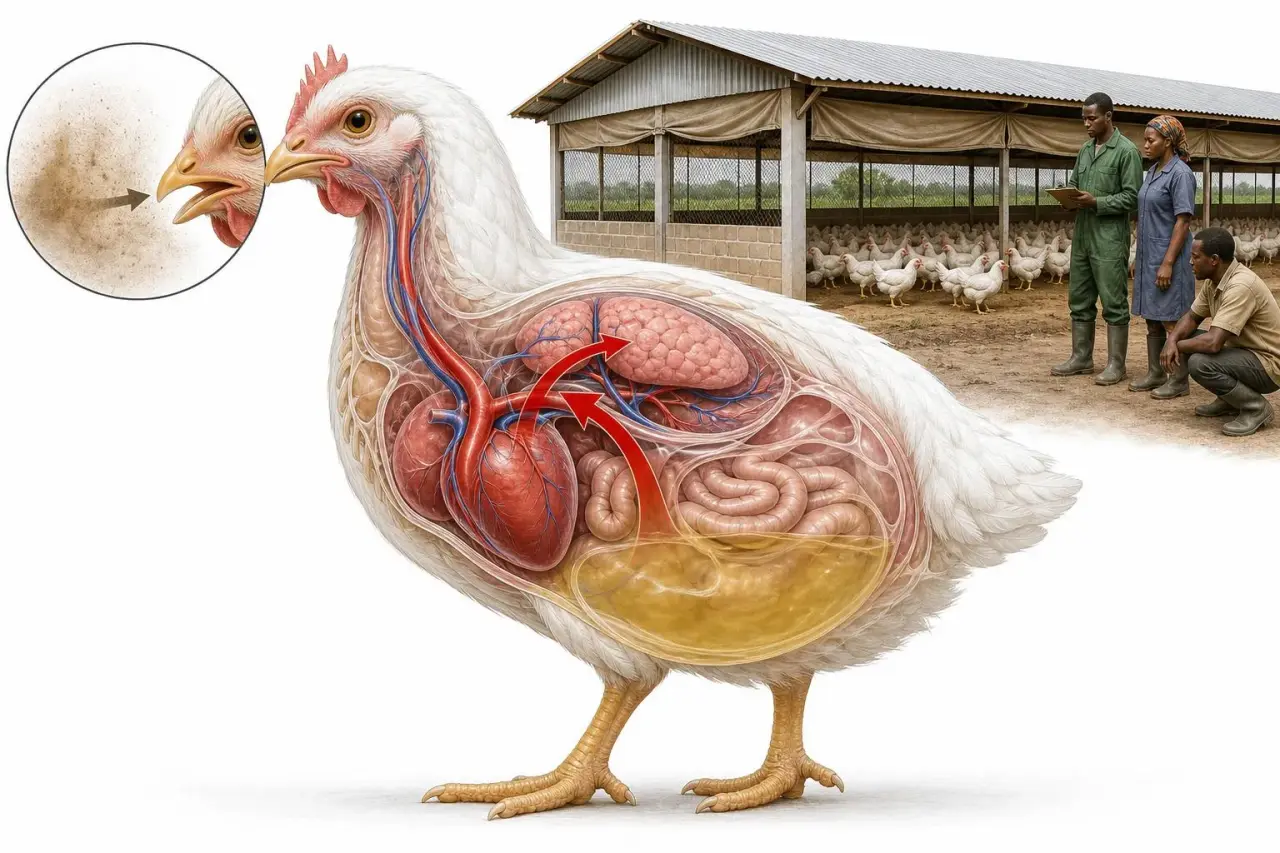
- Ascites: the heart that can no longer keep up
- Sudden death syndrome: the healthy bird that drops
- Deficiencies: when the feed lacks something
- Mycotoxicoses: the poison in the bag
- Going further
- •Metabolic or nutritional = no contagion: isolated cases, often the biggest, normal water and feed, link with a bag, a cold night, the light.
- •Ascites: yellow fluid in the abdomen, blue comb, dilated heart; husbandry causes: cold brooding, ammonia, weak ventilation, fast growth, salty water.
- •Sudden death: heavy male, 2 to 5 weeks, on its back, full crop, normal organs; 0.5 to 2% of mortality; favoured by continuous light and frights.
- •Deficiencies: nervous signs (E, B1), legs (D3, B2, manganese), eyes (A), shells (calcium); never conclude alone, describe the whole flock to the vet.
- •Mycotoxins: poison without smell or colour, liver affected, immunity weakened; storage on pallets, dry, first in first out, 2 to 3 weeks of stock, sample of every bag.
© NEXTEKCI, Agnibilékrou · Lessons protected by copyright · Terms of use · Privacy policy