
The written biosecurity plan: zones, flows, airlock, quarantine, rodents, flies, visitors
At level 3 you learned the ten barriers of biosecurity. Many farms know them; few write them down. Yet a rule that is not written depends on the memory and the mood of the technician on duty: it disappears with him, gets negotiated with the hurried visitor, gets forgotten in the selling season. A written biosecurity plan turns habits into a system: zones drawn, flows traced, people named, a register. It is what serious buyers, slaughterhouses and banks ask for. This lesson teaches you to write it; lesson 9 will have you draw your own farm's.
14 min read · 20-question assignment at the end (16 to pass)
 By Abdul Hussein ChoumanFounder of NEXTEKCI · Agnibilékrou hatchery since 2006
This lesson is part of Level 9 — Advanced health: understand, prevent, monitor. It opens to registered students who have passed the level 8 exam. Levels 1 to 5 remain readable by everyone.
At level 3 you learned the ten barriers of biosecurity. Many farms know them; few write them down. Yet a rule that is not written depends on the memory and the mood of the technician on duty: it disappears with him, gets negotiated with the hurried visitor, gets forgotten in the selling season. A written biosecurity plan turns habits into a system: zones drawn, flows traced, people named, a register. It is what serious buyers, slaughterhouses and banks ask for. This lesson teaches you to write it; lesson 9 will have you draw your own farm's.
- ✓Explain the three pillars of biosecurity and why the plan must be written
- ✓Divide a farm into three zones and trace the flows of people, animals, feed, equipment and waste
- ✓Organise an entry airlock, an effective footbath, a quarantine and the control of rodents and flies
- ✓Write the seven chapters of a biosecurity plan and keep it alive
- Three pillars, one document
- The three zones
- The flows: everything that moves
- The airlock and the footbath: the science of passing through
- Quarantine, rodents, flies, visitors
- Writing the plan: seven chapters on a few pages
- Going further
- •Three pillars: isolation, control of flows, cleaning-disinfection; a written plan can be handed over, checked, shown, revised.
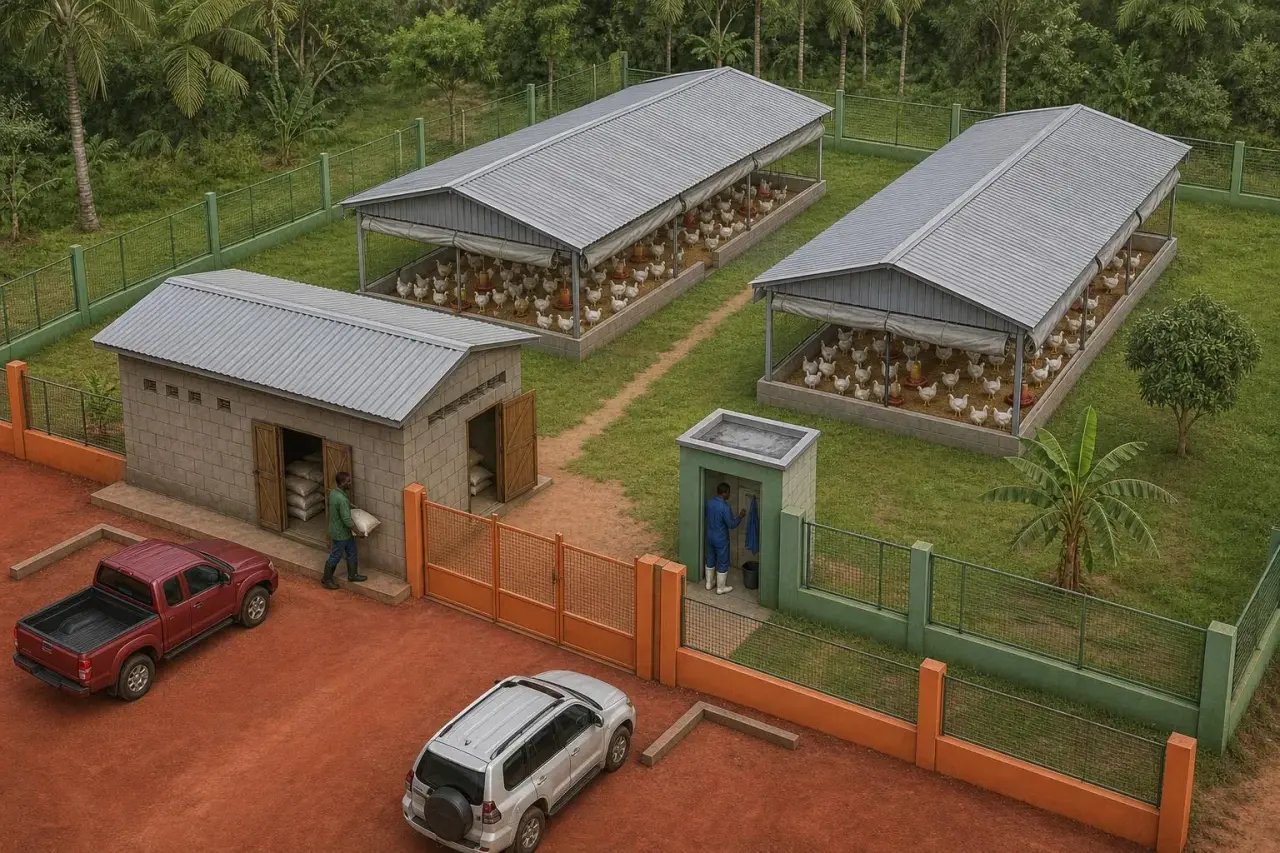
- •Three zones (red public, orange farm, green production) separated by a physical limit and a rule; double-door feed store on the boundary; pit and used litter far away, downwind.
- •A clean flow never crosses a dirty flow; nine flows to trace: people, incoming and outgoing birds, feed, water, equipment, carcasses, litter, vehicles.
- •Airlock with a bench; footbath brushed, covered, renewed every 1 to 2 days, ten seconds of dipping; quarantine of 3 to 4 weeks for any bird brought in.
- •Seven chapters: plan, entry rules, visitors register, pests, carcasses and waste, downtime, people in charge and contacts; posted, explained, checked every week, revised every flock.
© NEXTEKCI, Agnibilékrou · Lessons protected by copyright · Terms of use · Privacy policy