
Field exercise: list the non-compliance points of your farm
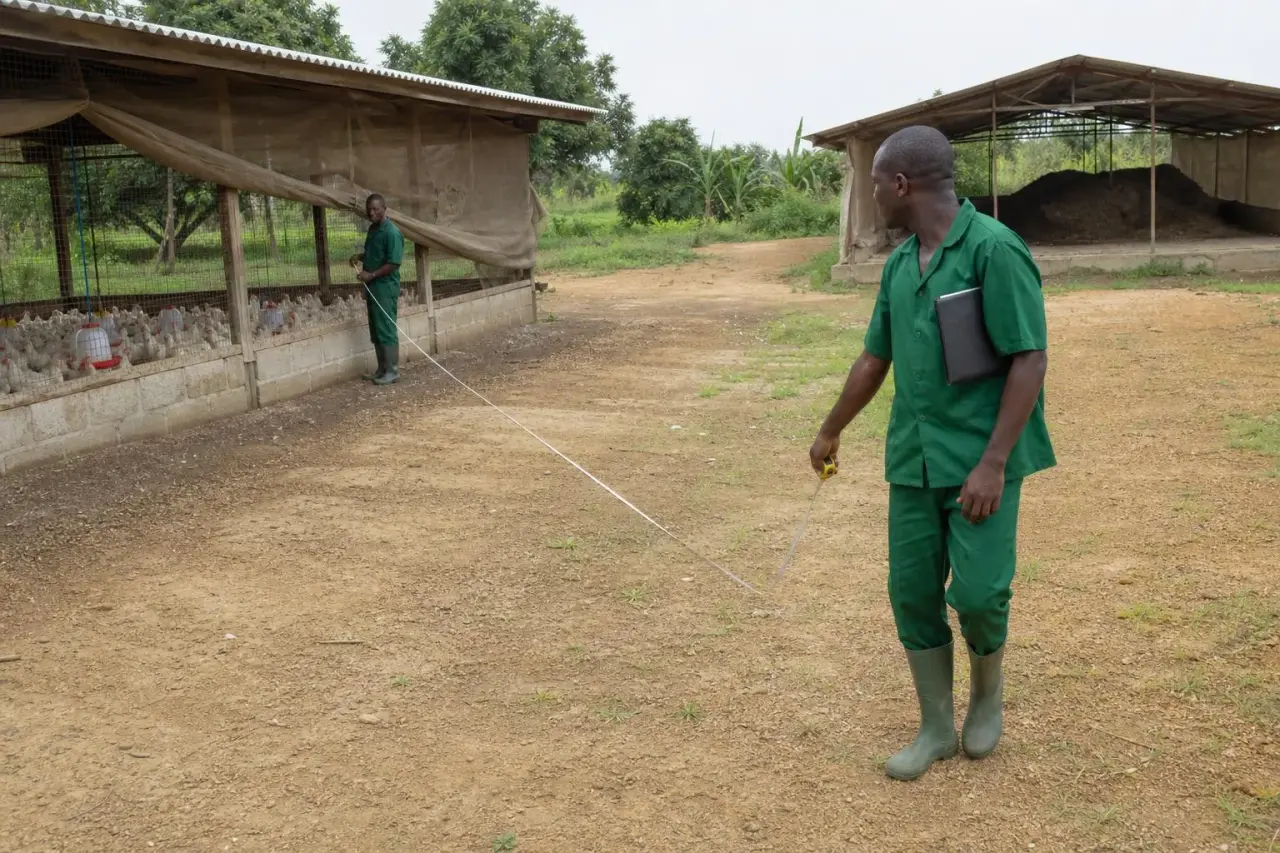
You now know the rules; this exercise puts you in front of your own farm, with a grid, a tape measure, a notebook and two hours. The aim is not to give you a good or bad mark: it is to produce a written list, ranked by seriousness, of everything that is not compliant, in order to make a plan of it. An inspector, a buyer or a bank would do this inventory in your place one day or another; better to do it yourself first. Lesson 10 will show you how to turn this list into 90 days of work.
14 min read · 20-question assignment at the end (16 to pass)
 By Abdul Hussein ChoumanFounder of NEXTEKCI · Agnibilékrou hatchery since 2006
This lesson is part of Level 14 — Environment, regulation and sustainability. It opens to registered students who have passed the level 13 exam. Levels 1 to 5 remain readable by everyone.
You now know the rules; this exercise puts you in front of your own farm, with a grid, a tape measure, a notebook and two hours. The aim is not to give you a good or bad mark: it is to produce a written list, ranked by seriousness, of everything that is not compliant, in order to make a plan of it. An inspector, a buyer or a bank would do this inventory in your place one day or another; better to do it yourself first. Lesson 10 will show you how to turn this list into 90 days of work.
- ✓Prepare the inventory: equipment, timing, route, people
- ✓Walk the farm with the eight-domain grid and note each finding in a verifiable way
- ✓Rank each non-compliance by seriousness and by ease of correction
- ✓Read the result, calculate the compliance score and draw the three priorities from it
- What a non-compliance is, and how it is noted
- Preparing the inventory
- The eight-domain grid
- In the field: how each criterion is checked
- The inventory sheet to fill in
- Reading the result: the score and the three priorities
- Going further
- •A non-compliance is noted in three parts: measured and dated finding with photo, rule, gap; C, P or NC; seriousness 1 to 3 (3 = people, whole flock, water).
- •Preparation: grid, tape measure, thermometer, torch, photos; at the end of a flock, on a rainy day; owner and technician together, an outside eye; documents taken out beforehand; route from clean to dirty.
- •Eight-domain grid (manure, dead birds and waste, water, neighbours, legal, welfare, resilience, risks), 40 criteria minimum, each checked by a measurement or a proof, never by "it is planned".
- •Seven-column inventory sheet; seriousness and ease (A one day, B one week, C one month); the 3-As today, the 3-Bs and 3-Cs at the top of the plan, the 1-As within the week.
- •Score = C ÷ criteria × 100; below 50% or one seriousness 3 = exposed farm; three dated priorities posted; inventory redone in six months on the same grid.
© NEXTEKCI, Agnibilékrou · Lessons protected by copyright · Terms of use · Privacy policy