
Technical guide · NEXTEKCI School
White broiler chicken rearing guide
Open-sided house, hot climate: from day-old chick to sale
Benchmarks: Cobb 500, Efficiency Plus (Hubbard), Ross 308
Download the guide (PDF)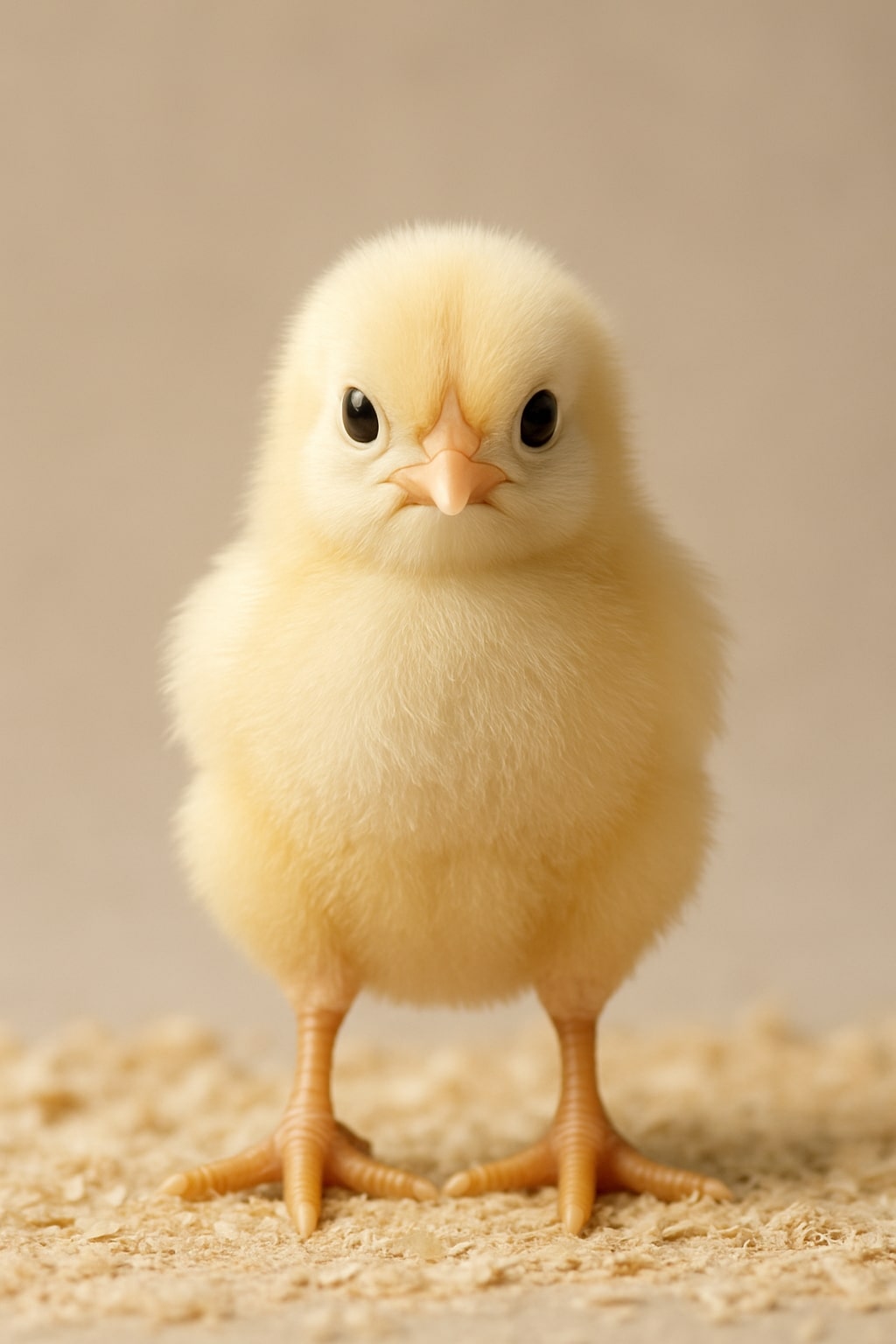
1. The NEXTEKCI white broiler
The white broiler is the fast-growing chicken: it is sold at around 35 to 45 days. NEXTEKCI chicks follow the same growth curves as the reference strains Cobb 500 and Efficiency Plus. This guide gives you the benchmarks to succeed with every flock in an open-sided house, in a hot climate.
The first 14 days decide the success of the flock: a chick that gets a poor start rarely catches up, but a good start carries through all the way to sale.
2. Growth targets
The tables below give the breeding companies’ targets, achieved under very good conditions (controlled-environment house, temperate climate). In an open-sided house, in strong heat, a good farmer often reaches 70 to 85% of these weights at the same age. Use them to compare your weighings and spot any delay early.
Cobb 500 targets (mixed males and females)
| Age | Liveweight | Cumulative feed per bird | Feed conversion ratio (FCR) |
|---|---|---|---|
| 28 days | 1.78 kg | 2.36 kg | 1.32 |
| 35 days | 2.52 kg | 3.64 kg | 1.44 |
| 42 days | 3.28 kg | 5.10 kg | 1.56 |
| 45 days | 3.60 kg | 5.78 kg | 1.61 |
Source: Cobb (Cobb500 Performance & Nutrition Supplement, 2022)
Week-by-week targets (Efficiency Plus strain)
| Age | Average liveweight | Feed per day | Cumulative feed | Feed conversion ratio (FCR) | Water per day (approx.) |
|---|---|---|---|---|---|
| 7 days | 211 g | 35 g | 172 g | — | 60 ml |
| 14 days | 527 g | 70 g | 550 g | — | 119 ml |
| 21 days | 1,008 g | 112 g | 1,203 g | 1.19 | 190 ml |
| 28 days | 1,604 g | 152 g | 2,148 g | 1.34 | 259 ml |
| 35 days | 2,269 g | 188 g | 3,359 g | 1.48 | 319 ml |
| 42 days | 2,948 g | 214 g | 4,783 g | 1.62 | 364 ml |
| 49 days | 3,606 g | 230 g | 6,350 g | 1.76 | 391 ml |
Efficiency Plus — performance objectives (Hubbard)
Weigh at least once a week, always on the same day and at the same time. The 7-day weight is the best indicator of brooding quality: at 7 days, a chick should weigh roughly 4 to 5 times its day-old weight.
3. The open-sided house
In Côte d’Ivoire, most broilers are reared in open-sided houses with curtains. A well-designed house keeps the birds cool during the day and protects them from cold and draughts at night.
- East-west orientation: the long sides do not face the sun during the hottest hours.
- Well-drained, well-ventilated site, away from other poultry.
- Light-coloured or reflective roof on the outside and, if possible, insulated: this is the most useful insulation.
- Roof overhang of about 1.25 m to shade the sides.
- Low wall of about 0.50 m, then wire mesh and curtains along the full length.
- Curtains tightly closed at the bottom, with no holes, overlapping the solid wall by at least 15 cm.
Recommended maximum stocking density
| Type of house | Maximum density | That is roughly, at sale |
|---|---|---|
| Open-sided house, natural ventilation, circulation fans | 30 kg of chicken per m² | 10 to 12 birds per m² sold at around 2.5 to 3 kg |
| Open-sided house with side fans | 35 kg per m² | 12 to 14 birds per m² |
Source: Cobb (Broiler Management Guide)
In the hot season, or if you sell heavy birds, stay at around 8 to 10 birds per m². Too many birds per m² means more heat, more mortality and wet litter.
4. Preparing for the chicks’ arrival
A successful flock starts before the chicks arrive: a clean, disinfected and dry house, litter in place, equipment ready, heating switched on in advance.
Cleaning and disinfection between two flocks
- 1Remove all birds, treat against insects immediately, keep up rodent control.
- 2Empty the remaining feed, take the litter out in covered vehicles, well away from the house.
- 3Remove dust, then wash with detergent, from top to bottom (roof, walls, curtains inside and out, floor).
- 4Clean the water tank and pipes: leave a cleaning solution in for at least 12 hours, then flush.
- 5Wash the dismantled equipment (feeders, drinkers), carry out repairs, clean the surroundings.
- 6Let it dry, then disinfect with a broad-spectrum product, from top to bottom.
- 7Leave the house empty and dry before the next flock (downtime period).
Source: Cobb (Broiler Management Guide)
Litter
| Material | Minimum depth | Comment |
|---|---|---|
| Rice hulls | 5 cm | Good choice, inexpensive |
| Softwood shavings | 2.5 cm | Excellent |
| Dry sawdust | 2.5 cm | Risk of dampness and mould |
| Chopped straw | 1 kg per m² | Acceptable |
Source: Cobb (Broiler Management Guide)
The hand test: take a handful of litter and squeeze. It should stick together slightly, then crumble. If it stays in a ball, it is too wet: risk of ammonia, footpad burns and disease.
The day before arrival
- Switch on the heating at least 48 hours beforehand: floor, air and humidity must be stable 24 hours before arrival.
- Floor at least 32 °C in the brooding area (about 40 °C directly under the brooders).
- 14 to 16 drinkers per 1,000 chicks (including mini-drinkers for the first days), filled with clean water at room temperature.
- 1 tray or sheet of feeder paper per 50 chicks, with crumbled starter feed (about 50 to 65 g per chick on the paper).
- Nothing under the heat source; no draughts at floor level.
Source: Cobb (Broiler Management Guide)
5. The first 14 days
Up to 5 days old, the chick cannot regulate its own body temperature; it only manages it fully at 14 days. It is up to you to give it the right heat.
On arrival
- Place the chicks quickly, in soft light, close to water and feed.
- Weigh a few boxes (about 5%) to know the starting weight.
- Check all the equipment 1 to 2 hours later.
Two simple checks
| When | How | Good result |
|---|---|---|
| 4 to 6 hours after arrival | Hold the feet of a few chicks against your neck or cheek | Feet warm. Cold feet = floor too cold |
| 24 hours after arrival | Feel the crop of 100 chicks | 95% of crops full and soft (water + feed) |
Source: Cobb (Broiler Management Guide)
Hard crop = the chick has eaten but not drunk enough: check the water. Soft crop swollen with water = it is drinking but cannot find the feed: add more paper or trays.
Temperature and humidity by age
| Age | Temperature | Relative humidity |
|---|---|---|
| Day 1 | 32 to 33 °C | 30 to 50% |
| 7 days | 29 to 30 °C | 40 to 60% |
| 14 days | 27 to 28 °C | 50 to 60% |
| 21 days | 24 to 26 °C | 50 to 60% |
| 28 days | 21 to 23 °C | 50 to 65% |
| 35 days and over | 19 to 21 °C (or as cool as possible) | 50 to 70% |
Source: Cobb (Broiler Management Guide)
In Côte d’Ivoire, after 21 days, it is often hotter than these recommended temperatures: the problem is no longer cold but heat (see chapter 8). The birds remain the best thermometer.
Maximum air speed on the birds
| Age | Air speed at bird level |
|---|---|
| 0 to 14 days | Still air (no draughts at all) |
| 15 to 21 days | 0.5 m/s maximum |
| 22 to 28 days | about 0.9 m/s |
| Over 28 days | 1.75 to 2.5 m/s (very useful in strong heat) |
Source: Cobb (Broiler Management Guide)
6. Water
Water is the chicken’s first nutrient. A broiler drinks about 1.6 to 2 times the weight of the feed it eats, and much more when it is hot. A drop in water intake is often the first sign of a problem: record consumption every day, at the same time.
Water intake by temperature
| House temperature | Litres of water per 1 kg of feed |
|---|---|
| 20 °C | 2 litres |
| 26 °C | 2.5 litres |
| 37 °C | 5 litres |
Source: Cobb (Broiler Management Guide)
- Keep tanks in the shade: warm water reduces drinking.
- Keep a water reserve for at least 48 hours.
- Nipple drinkers: about 10 to 12 birds per nipple; a bird should never have to walk more than 3 m to drink.
- Bell drinkers: rim at the height of the birds’ backs, cleaned every day.
- Flush the water lines regularly (at least 3 times a week).
- Have the water tested at least once a year: it must be fit for human consumption.
Source: Cobb (Broiler Management Guide)
Chlorine works better in slightly acidic water
| Water pH | Share of chlorine that actually disinfects |
|---|---|
| 8.0 | 21% |
| 7.5 | 48% |
| 7.0 | 72% |
| 6.5 | 90% |
| 6.0 | 96% |
Source: Cobb (Broiler Management Guide)
7. Feed
Feed is the biggest expense of the flock. Broilers receive three successive feeds: starter, grower and finisher. Crumbles and pellets give better results than mash.
Feed intake benchmarks per bird (Efficiency Plus strain)
| Period | Feed | Cumulative intake at end of period |
|---|---|---|
| 0 to 14 days | Starter (crumbles) | about 550 g |
| 15 to 28 days | Grower | about 2.15 kg |
| 29 to 42 days | Finisher | about 4.8 kg |
Efficiency Plus — performance objectives (Hubbard)
- During brooding: feed always available on paper or trays for 7 to 10 days, topped up 3 times a day.
- Feeders at the height of the birds’ backs; never let them run empty.
- Change feeds gradually, and keep a sample of each delivery until the sale.
- In strong heat: raise the feeders about 6 hours before the hottest time of day, then feed again when it is cooler.
Source: Cobb (Broiler Management Guide)
8. Heat and ventilation in an open-sided house
In strong heat, broilers pant, hold their wings away from the body, eat less and can die of heat stress, especially the heaviest birds at the end of the flock. Air moving over the birds cools them: it is the main weapon in an open-sided house.
Temperature felt by a broiler over 28 days old
| Temperature and humidity | Still air | Air at 1.1 m/s | Air at 2.5 m/s |
|---|---|---|---|
| 35 °C, 50% humidity | 35 °C | 26.6 °C | 22.2 °C |
| 35 °C, 70% humidity | 38.3 °C | 30.5 °C | 25 °C |
| 32 °C, 70% humidity | 35 °C | 28.8 °C | 23.3 °C |
| 29 °C, 80% humidity | 33.3 °C | 28.8 °C | 23.8 °C |
Source: Cobb (Broiler Management Guide)
What to do in strong heat
- Lower the curtains as far as possible on both sides to get as much air as possible over the birds (after 14 days).
- In the morning, open the leeward side first.
- Circulation fans of at least 90 cm, about 1 m above the floor, angled to push the air in the direction of the wind.
- Misting: start it at around 28 °C, never when the air is already very humid (over 70%).
- Raise the feeders during the hot hours; cool water available at all times.
- Walk slowly through the house: the birds get up, air circulates and they go and drink.
- Reduce the number of birds per m² in the hot season.
Source: Cobb (Broiler Management Guide)
Up to 14 days, renew the air without ever creating a draught at chick level: open the curtains from the top.
9. Lighting
- Day 1: light 24 hours a day, bright (about 25 lux) so the chicks find water and feed.
- From the 2nd night: a single dark period per 24 hours, always at the same time.
- When the chicks weigh 100 to 160 g, lengthen the dark period gradually: 6 hours of continuous darkness strengthens the birds’ defences.
- In an open-sided house with light-coloured curtains, lighting mainly follows daylight: natural night does the rest.
- In strong heat, let the birds eat during the cool hours (early morning, evening).
- In the last days before sale, shorten the dark period by one hour per day.
Source: Cobb (Broiler Management Guide)
10. Weighing and checking uniformity
A uniform flock is one in which almost all the birds have the same weight: it sells better and is easier to manage. Weigh about 100 birds at 3 different places in the house.
Reading uniformity
| Birds within ± 10% of average weight | Assessment |
|---|---|
| 80% and over | Uniform flock |
| 70% | Average |
| 60% or less | Poor: look for the cause (water, feed, space, heat, health) |
Source: Cobb (Broiler Management Guide)
11. Health, biosecurity and vaccination
Prevention always costs less than treatment. If birds fall sick or die abnormally, call the vet.
Vaccination: NEXTEKCI broiler chicks are not vaccinated at the hatchery. Vaccination is done on the farm, following the protocol of the vet in your area.
Biosecurity
- A single age group per farm, all-in all-out.
- Fenced farm, few visitors (with a visitors’ book), footbath at the entrance, clothing and boots kept for the house only.
- No backyard poultry or other animals around the house; rodent control.
- Dead birds collected every day and disposed of away from the house.
Source: Cobb (Broiler Management Guide)
Vaccinating correctly in the drinking water
- Vaccinate early in the morning, with a vaccine kept cold (2 to 8 °C).
- Stop chlorine and water treatments 72 hours beforehand.
- Withhold water from the birds for no more than 1 hour beforehand.
- Add 2.5 g of skimmed milk powder per litre of water, 20 minutes before the vaccine, to protect the vaccine.
- Prepare an amount of water drunk in 1 to 2 hours: about (number of thousands of birds × age in days × 2) litres.
- Check: coloured tongues in 75% of the birds after 1 hour and 95% after 2 hours (using a dye made for this purpose).
Source: Cobb (Broiler Management Guide)
12. Catching and sale
- Withdraw feed 8 to 12 hours before slaughter; leave water until catching begins.
- Catch at night or early in the morning, in dim light, calmly, to avoid bruising and fractures.
- Fewer birds per crate in the hot season; transport during the cool hours.
Source: Cobb (Broiler Management Guide)
Keeping records
- Every day: mortality, feed, water drunk, minimum and maximum temperature, treatments.
- Every week: average weight and uniformity.
- For the flock: chicks received, vaccines and medicines, feed delivered, sale weight and price.
Source: Cobb (Broiler Management Guide)
Need advice?
Our advisers answer on WhatsApp: +225 05 44 83 27 79 (information) · +225 07 07 72 78 67 (chick orders).