The legal framework in Côte d'Ivoire: licences, registers, vet, IPRAVI, inspections
Raising poultry means producing food for others: the State takes an interest, and that is normal. A farmer who does not know the framework he works in discovers the rules on the day of the inspection, or on the day his buyer asks for a document he does not have. This lesson presents, in broad outline, what governs poultry farming in Côte d'Ivoire: licences, the farm register, the role of the vet, the IPRAVI interprofession, inspections. It does not replace the administration: for the exact texts and procedures, the veterinary services of your zone are the only reliable source.
12 min read · 20-question assignment at the end (16 to pass)
 By Abdul Hussein ChoumanFounder of NEXTEKCI · Agnibilékrou hatchery since 2006
This lesson is part of Level 14 — Environment, regulation and sustainability. It opens to registered students who have passed the level 13 exam. Levels 1 to 5 remain readable by everyone.
Raising poultry means producing food for others: the State takes an interest, and that is normal. A farmer who does not know the framework he works in discovers the rules on the day of the inspection, or on the day his buyer asks for a document he does not have. This lesson presents, in broad outline, what governs poultry farming in Côte d'Ivoire: licences, the farm register, the role of the vet, the IPRAVI interprofession, inspections. It does not replace the administration: for the exact texts and procedures, the veterinary services of your zone are the only reliable source.
- ✓Situate the actors who govern poultry farming in Côte d'Ivoire and what each one does
- ✓Distinguish activities subject to a licence from those that require a declaration, and know whom to approach
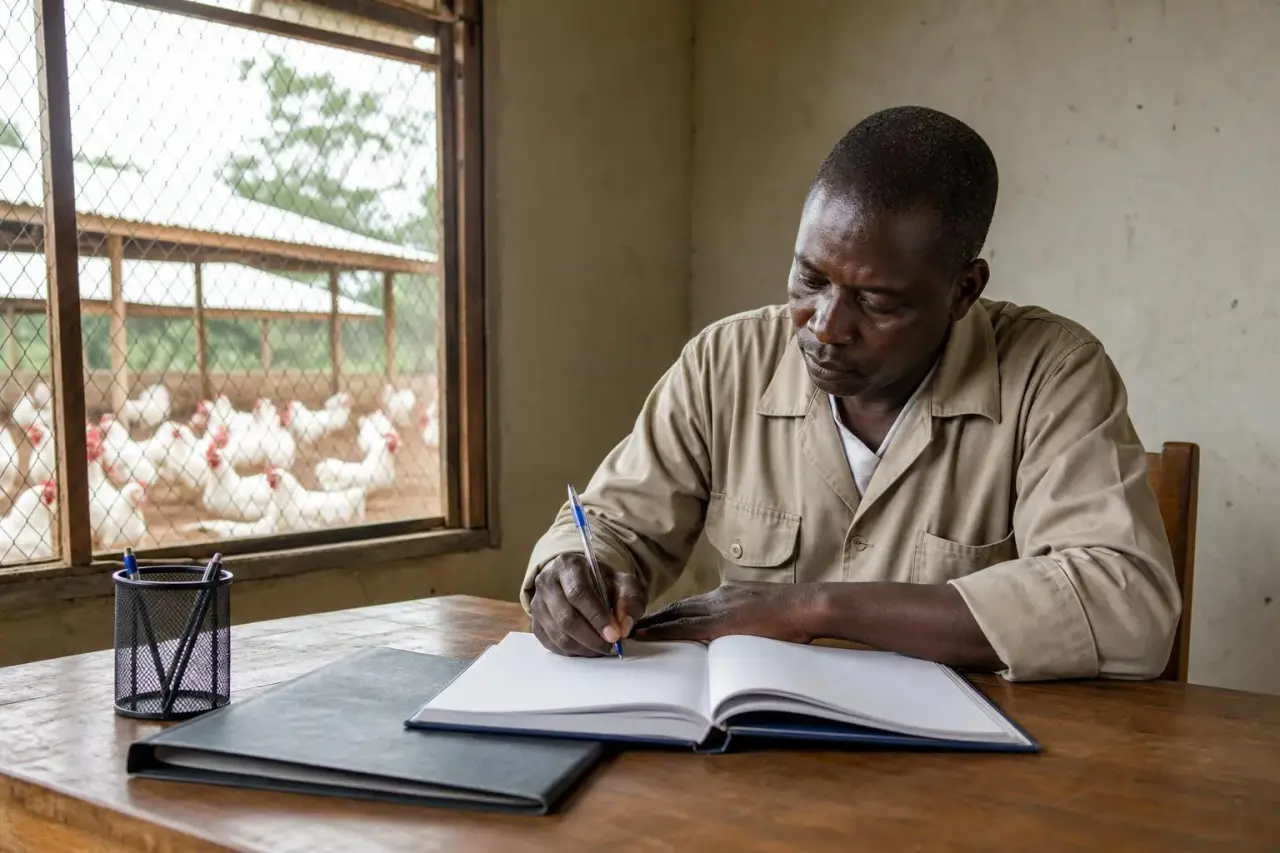
- ✓Keep a complete farm register and build the farm's compliance file
- ✓Prepare for and go through an inspection, and work with the vet and IPRAVI
- Why a framework, and who does what
- Licence, declaration, registration: three levels
- The farm register: your official memory
- The vet: more than a healer
- IPRAVI and the organised sector
- The inspection: preparing for it, going through it
- Going further
- •Three aims of the framework: public health, animal health, environment; actors: ministry, veterinary services of the zone, private vet, laboratory, IPRAVI, municipality, business administrations.
- •Licence for sensitive activities (chick production, feed mill, slaughterhouse, import, pharmacy); declaration and register for the farm; buy from licensed suppliers.
- •Farm register in nine chapters (identification, entries, mortality, health, feed, water, exits, visitors, waste) with attached documents, kept at least three years.
- •The vet writes the health programme, prescribes with a withdrawal period to respect, diagnoses, notifies what must be notified, guides the procedures; at least one visit per flock.
- •Inspection: binder ready, biosecurity imposed on the officer, remarks noted, corrections within the deadline with proof; never a backdated register or an arrangement.
© NEXTEKCI, Agnibilékrou · Lessons protected by copyright · Terms of use · Privacy policy