
Premixes and additives: what to know before adding anything (never a medicine without the vet)
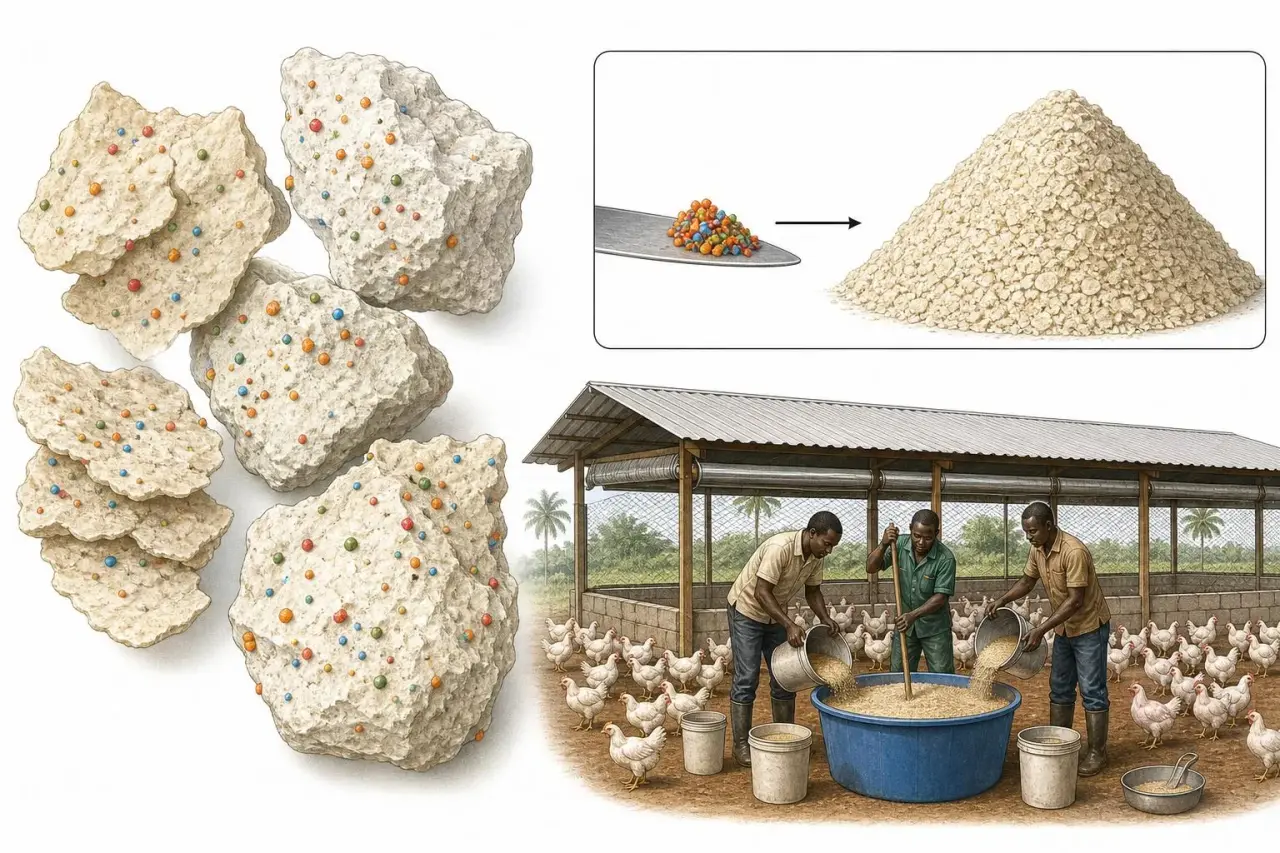
In a 100 kg formula, the premix weighs 500 grams and yet decides whether the bones hold, whether the feathers grow and whether the calcium is absorbed. It is the smallest bag, the most expensive per kilo, the most fragile and the most misused in farm workshops: forgotten, doubled "to be safe", stored in the sun, or replaced by a product nobody knows the contents of. This lesson explains what is inside, why you never compose it yourself, how you choose it, store it and weigh it, then goes through the additives you will one day be offered. And it sets the rule that is not up for discussion: no medicine in the feed without the vet's prescription.
13 min read · 20-question assignment at the end (16 to pass)
 By Abdul Hussein ChoumanFounder of NEXTEKCI · Agnibilékrou hatchery since 2006
This lesson is part of Level 11 — Making feed on the farm. It opens to registered students who have passed the level 10 exam. Levels 1 to 5 remain readable by everyone.
In a 100 kg formula, the premix weighs 500 grams and yet decides whether the bones hold, whether the feathers grow and whether the calcium is absorbed. It is the smallest bag, the most expensive per kilo, the most fragile and the most misused in farm workshops: forgotten, doubled "to be safe", stored in the sun, or replaced by a product nobody knows the contents of. This lesson explains what is inside, why you never compose it yourself, how you choose it, store it and weigh it, then goes through the additives you will one day be offered. And it sets the rule that is not up for discussion: no medicine in the feed without the vet's prescription.
- ✓Say what a vitamin-trace mineral premix contains and why its components are not weighed on the farm
- ✓Choose a premix suited to the phase, read its label, store it and calculate the quantity for a batch
- ✓Recognise the main families of additives, what they do and what you need to know before using them
- ✓Apply the rule "never a medicine in the feed without the vet" and explain why it exists
- The premix: what is in the 500 grams
- Choose, read, store, weigh
- Additives: the main families and what to know
- Never a medicine in the feed without the vet
- The workshop's premix and additives sheet
- Going further
- •The premix contains vitamins (A, D3, E, K, B group) and trace minerals (iron, zinc, copper, manganese, selenium, iodine) on a carrier; the quantities (selenium 0.3 g per tonne) and the toxicity margins forbid composing it on the farm.
- •Choose the premix of the phase, apply the manufacturer's rate (500 kg × 0.5% = 2.5 kg), remove limestone, phosphate and salt if the product contains them, store two months at most, bag closed again, in the shade and dry.
- •Additives: synthetic amino acids (nutrients), enzymes, antioxidants, clay binders, acidifiers and probiotics, pigments, anti-caking agents; data sheet, authorisation, measured trial against a control.
- •Never a medicine in the feed without the written prescription of the vet of the area: residues, resistance, mixing impossible on the farm, law; the workshop is not a pharmacy.
- •A premix and additives sheet posted in the workshop: product, type, rate, quantity per batch, lot and dates, extra contents, weighed by.
© NEXTEKCI, Agnibilékrou · Lessons protected by copyright · Terms of use · Privacy policy