
Cutting, packaging, labelling: what the customer and the inspector expect
Two identical carcasses, out of the same iced water: one is laid bare on a stall, the other is cut, bagged, weighed and labelled with a date and a name. The second sells for more, to customers who come back, and it passes inspection. This lesson teaches you to cut without contaminating, to package so the product stays safe and attractive, and to write a label that says everything the customer wants to know and everything the inspector must read, without inventing anything.
13 min read · 20-question assignment at the end (16 to pass)
 By Abdul Hussein ChoumanFounder of NEXTEKCI · Agnibilékrou hatchery since 2006
This lesson is part of Level 12 — From farm to customer: slaughter, eggs, sales. It opens to registered students who have passed the level 11 exam. Levels 1 to 5 remain readable by everyone.
Two identical carcasses, out of the same iced water: one is laid bare on a stall, the other is cut, bagged, weighed and labelled with a date and a name. The second sells for more, to customers who come back, and it passes inspection. This lesson teaches you to cut without contaminating, to package so the product stays safe and attractive, and to write a label that says everything the customer wants to know and everything the inspector must read, without inventing anything.
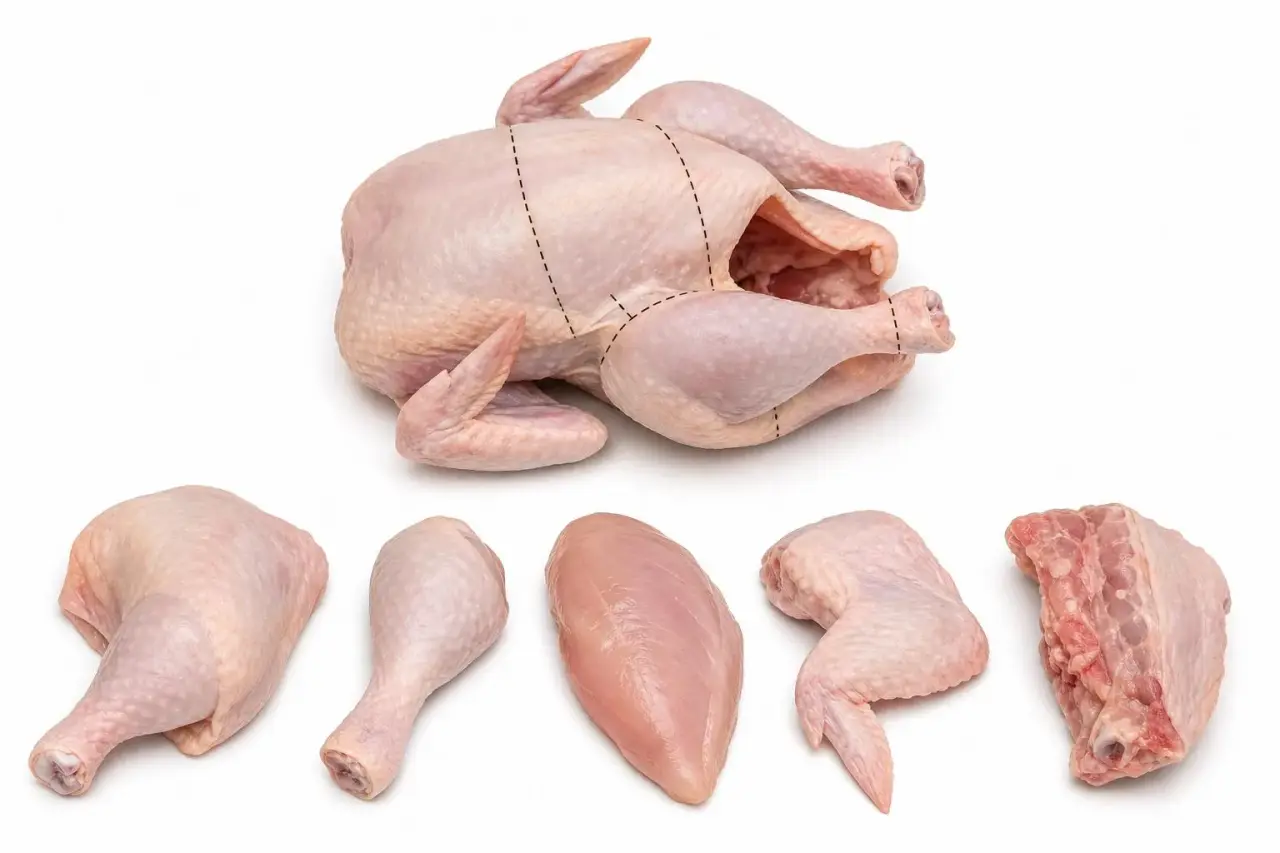
- ✓Cut a cold carcass into clean pieces and know the yield of each piece
- ✓Choose a packaging (bag, vacuum, tray) that protects the product and shows its net weight
- ✓Write a complete label: name, weight, dates, storage, lot, origin, licence
- ✓Know what the customer looks at and what the inspector checks, and organise traceability by lot
- Why cut: selling the chicken to each customer according to his need
- Cutting cleanly: cold, clean, fast
- Packaging: protect and show
- The label: what it must say, and what it must not say
- What the customer looks at, what the inspector checks
- What cutting and the label change in your margin
- Going further
- •Cutting yield of a broiler carcass: legs 30-33%, fillets 22-26%, wings 10-12%, back and neck 20-24%, offal 4-6%, losses 3-5%; calculate the carcasses needed before promising.
- •Cut cold (below 4 °C), clean (plastic board, tools and hands washed), fast (30 minutes out of the cold at most), in lots, in regular sizes.
- •New, food-grade, closed packaging; exact net weight, scale tared and checked every morning; back to the cold in 15 minutes; vacuum to extend shelf life.
- •Label: name, net weight, slaughter date, date limit (use-by for fresh, best-before for frozen), storage temperature and "do not refreeze", lot, name and address, licence, origin; nothing you cannot prove.
- •Traceability by lot: flock record and slaughter and sales book answer each other; cost of a kilo of carcass = cost of the live kilo / 0.71 + slaughter cost; margin as a percentage of your price.
© NEXTEKCI, Agnibilékrou · Lessons protected by copyright · Terms of use · Privacy policy