
Raw materials of Côte d'Ivoire: maize, soya, bran, fish meal, shells, and their pitfalls
Whether you buy your feed ready-made or make it on the farm, it is made of the same raw materials: maize for energy, soybean meal for protein, a little bran, fish meal, shells, and a premix. Each has its richness and its pitfalls: moisture, moulds, doubtful mixes, variability from one bag to the next. Knowing how to recognise them is knowing what you are feeding your birds.
13 min read · 20-question assignment at the end (16 to pass)
 By Abdul Hussein ChoumanFounder of NEXTEKCI · Agnibilékrou hatchery since 2006
This lesson is part of Level 7 — Feed and nutrition. It opens to registered students who have passed the level 6 exam. Levels 1 to 5 remain readable by everyone.
Whether you buy your feed ready-made or make it on the farm, it is made of the same raw materials: maize for energy, soybean meal for protein, a little bran, fish meal, shells, and a premix. Each has its richness and its pitfalls: moisture, moulds, doubtful mixes, variability from one bag to the next. Knowing how to recognise them is knowing what you are feeding your birds.
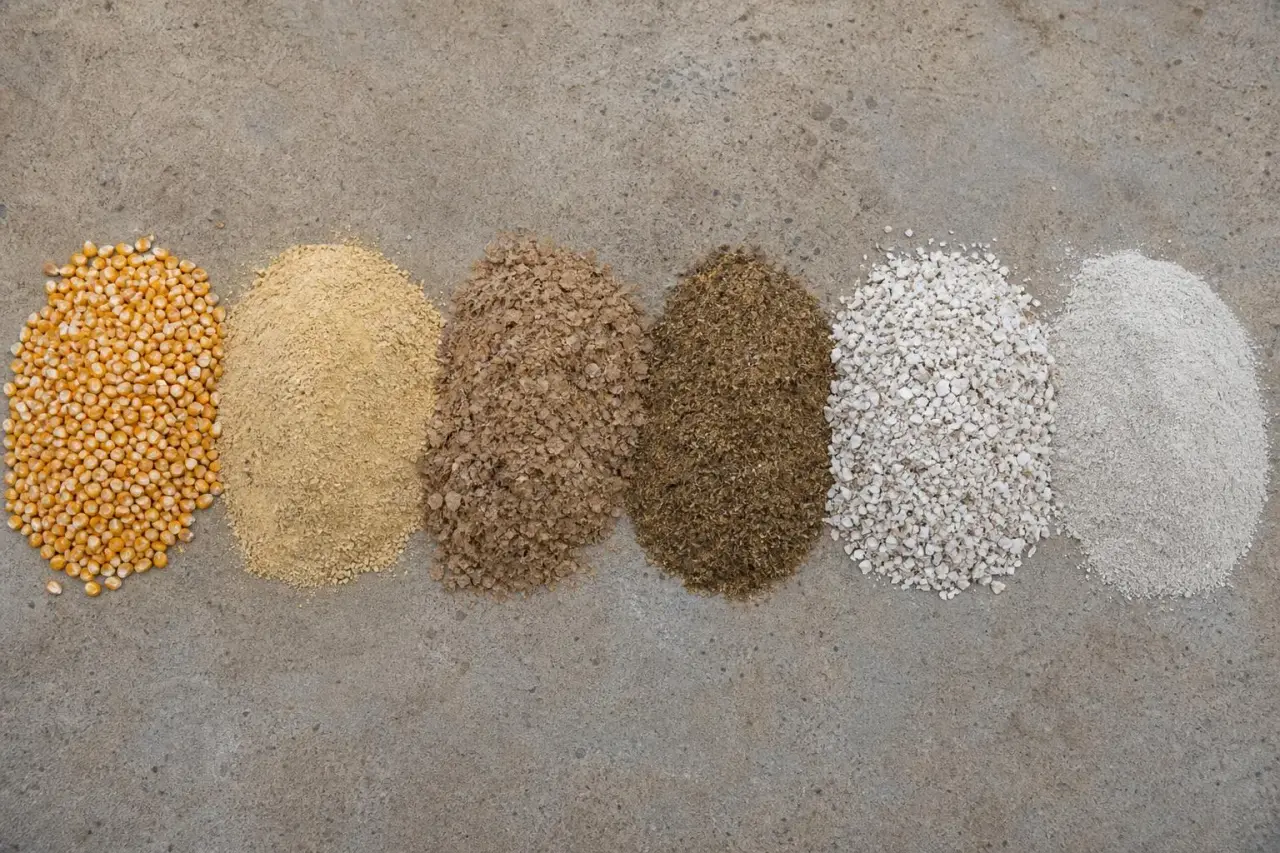
- ✓List the raw materials of a poultry feed in Côte d'Ivoire and what each one brings (energy, protein, minerals)
- ✓Recognise by eye, nose and hand a maize, a meal or a fish meal that is not suitable
- ✓Understand why the real composition of a raw material varies and what that changes in the feed
- ✓Apply the simple reception checks before accepting a batch
- A feed is a mix: the typical recipe
- Maize: the base of energy, and the king of pitfalls
- Soybean meal: the reference protein
- Brans: useful in small amounts, dangerous in excess
- Fish meal, shells, limestone, salt, premix
- Reception: the checks that take ten minutes
- Going further
- •Typical broiler recipe: maize 55-65%, soybean meal 20-30%, bran 3-10%, fish meal 2-5%, oil, limestone, phosphate, salt, premix 0.5-1%.
- •Maize: 14% moisture at most, no black or pink grains, no musty smell, less than 5% broken; its protein varies from 7 to 10% with the harvest.
- •Soybean meal: 44-48% protein; under-cooked soya blocks digestion, burnt soya has lost its lysine; check colour and smell.
- •Bran: dilutes the feed; more than 5-6% fibre on a broiler feed = too much bran; rice bran often cut with husk and quickly rancid.
- •Fish meal 55-65% protein, 2 to 5% at most; shells and limestone 36-38% calcium, in coarse pieces for layers; premix is perishable.
© NEXTEKCI, Agnibilékrou · Lessons protected by copyright · Terms of use · Privacy policy