
What would you like to watch? Tap a category.
The NEXTEKCI Academy
The founder’s lessons, in the order of the programme. Start with the first one: at the end of each video, the next one starts by itself.
Closing up at night without suffocating the flock
 Presented by Abdul Hussein ChoumanFounder of NEXTEKCI · Agnibilékrou hatchery since 2006

Lesson text
Eight o’clock in the evening, the rain drums on the corrugated iron. You lower all the curtains, pulled tightly closed.
Your chickens are sheltered from the wind and rain. You’ll sleep peacefully.
The next day, you lift the curtain at the entrance. Heavy, pungent air hits you in the face.
You protected them from the cold, that’s true. But you also shut them in with their own breath.
All night, every chicken breathes. It releases carbon dioxide and water vapour.
Of the water it drinks, seventy to eighty per cent comes out in the droppings or through its breath.
And the litter gives off ammonia. When the air stops moving, all three build up.
You can’t smell carbon dioxide. It doesn’t sting. A breeder sets its limit at three thousand parts per million.
Above that, the birds move less and eat less. Their growth slows down.
Above three thousand five hundred, a broiler guide says it causes ascites, a condition in which the abdomen fills with fluid.
Ammonia, meanwhile, damages the lungs before the nose detects it. And with the curtains closed, it has no way out.
And the night-time water vapour settles on the litter. Wet litter means even more ammonia tomorrow.
So a little fresh air is needed from the very first day. But never let a draught blow across the birds’ backs.
The trap is the first week. We seal everything up for the chicks, and the gases build up.
I advise you to adjust things from the bottom up. Keep the bottom of the curtains closed, where they sleep.
At the top, leave a strip open along the entire length. Fresh air comes in above them, not across their backs.
The roof overhang protects this opening from the rain. If the wind is strong, open the sheltered side instead.
If the chicks all huddle on the same side, a draught is driving them away. Close that side.
Every morning, check how the night went as soon as you reach the door. Judge the smell by the first breath. After that, your nose gets used to it.
Drops under the curtains and the corrugated iron? That’s the night-time vapour that couldn’t get out.
Birds struggling to breathe when it’s cool are a warning sign. Ventilate, and if it continues, call your veterinarian.
Just one of these signs is enough. That same evening, open the top of the curtains a little more.
And when you open up in the morning, what greets you at the door?
Send us a photo of your poultry house closed up for the night. WhatsApp, 05 44 83 27 79, for your information. And receive our flock record book, free of charge.
The 07 07 72 78 67 takes your chick orders. Subscribe, and next we’ll open up the water line, from the inside.
It is in Agnibilékrou that we hatch your chicks. With Nextekci, every customer is a satisfied poultry farmer.
 The Flock's Waiting LineNEXTEKCI · Lesson 22
 The flock that drops a week before it showsNEXTEKCI · Lesson 33
 Correct weight, vanished feed: the invisible leakNEXTEKCI · Lesson 44
 When hens attack each otherNEXTEKCI · Lesson 55
 Torticollis and sudden deaths: the Newcastle signalNEXTEKCI · Lesson 66
 The vaccine given in chlorinated water protects no oneNEXTEKCI · Lesson 77
 The tail of the flockNEXTEKCI · Lesson 88
 Sell by the kilo, not by the headNEXTEKCI · Lesson 99
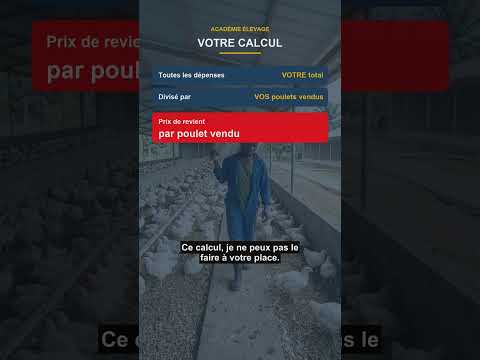 The cost price of a chickenNEXTEKCI · Lesson 1010
 The extra kilo of feedNEXTEKCI · Lesson 1111
 Weighing to ManageNEXTEKCI · Lesson 1212
 The last days before saleNEXTEKCI · Lesson 1313
 The worst place to saveNEXTEKCI · Lesson 1414
 Homemade feedNEXTEKCI · Lesson 1515
 The feed storeNEXTEKCI · Lesson 1616
 Changing feedNEXTEKCI · Lesson 1717
 The feeder, where the feed goesNEXTEKCI · Lesson 1818
 The Morning DroppingsNEXTEKCI · Lesson 1919
 When deaths increaseNEXTEKCI · Lesson 2020
 When deaths increaseNEXTEKCI · Lesson 2021
 Heat, in the right orderNEXTEKCI · Lesson 2122
 Heat, in the right orderNEXTEKCI · Lesson 2123
 Litter, the chain that starts from a leakNEXTEKCI · Lesson 2224
 Litter, the chain that starts with a leakNEXTEKCI · Lesson 2225
 Close the night without suffocating the flockNEXTEKCI · Lesson 23▶
 Closing up at night without suffocating the flockNEXTEKCI · Lesson 2327
 The water line, from the insideNEXTEKCI · Lesson 2428
 The farm entranceNEXTEKCI · Lesson 2529
 The sanitary break, step by stepNEXTEKCI · Lesson 2630
 The pullet, the weight that decidesNEXTEKCI · Lesson 2731
 The pullet, the weight that decidesNEXTEKCI · Lesson 2732
 Making it to the first eggNEXTEKCI · Lesson 2833
 Making it to the first eggNEXTEKCI · Lesson 2834
 Reading your laying curveNEXTEKCI · Lesson 2935
 Egg production drops, the investigation in orderNEXTEKCI · Lesson 3036
 Lighting during layNEXTEKCI · Lesson 3137
 The shell: reading the egg to make correctionsNEXTEKCI · Lesson 3238
 Nests and egg collectionNEXTEKCI · Lesson 3339
 Culling, when the flock no longer paysNEXTEKCI · Lesson 35