
What would you like to watch? Tap a category.
The NEXTEKCI Academy
The founder’s lessons, in the order of the programme. Start with the first one: at the end of each video, the next one starts by itself.
The Morning Droppings
 Presented by Abdul Hussein ChoumanFounder of NEXTEKCI · Agnibilékrou hatchery since 2006

Lesson text
Six o'clock. The flock is barely waking up. And on the litter, the night has left its report.
These fresh droppings, no one has crushed them yet. I will show you how to read them, in a precise order.
In chickens, everything comes out through the same orifice, the cloaca. The dark part comes from the intestine. The white on top is urine.
A normal dropping is shaped. It retains its form. Keep this image in mind. Everything else is compared to it.
First look, the texture. Shaped, all is well. Spread out like a puddle, you move on to the second look.
Second look, the moisture around the dropping. A dropping that is too wet always ends up in the litter.
Above twenty-one degrees, it drinks six to seven percent more per degree. And the water that goes in must come out properly.
Too wet? Think about the heat, the salt in the feed, or an irritated intestine.
Third look, the whole feed grains. They come out almost as they went in.
Two possibilities. A grind that is too coarse, or a transit that is too fast, often with a wet dropping.
Pour a bit of your feed into your hand. Big chunks of corn? The grinding needs to be reviewed.
Fourth look, the colour. Liquid and greenish, or whitish, in several birds?
There, it is no longer a question of feed. Especially if birds are huddled together, their feathers fluffed up.
Several serious diseases start like this. You take note, and you call the veterinarian the same day.
Fifth look, blood or mucus. Red, or a sticky mucus, in several droppings.
This sign suggests coccidiosis, an intestinal parasite. Think about it, without concluding. The veterinarian can check.
Between the parasite ingested in the litter and its exit, it takes four to seven days. The problem started earlier.
Now, a false alarm to know. A very dark and sticky dropping, from time to time?
It comes from the caeca, two fermentation pouches. They empty separately. Nothing to panic about.
A single dropping proves nothing. Repetition does. Every morning, five words in the book, one for each look.
What comes from the heat, the water or the feed, you correct. An isolated sign, you monitor.
Blood, deaths or culled birds? The veterinarian. And no product before their advice.
And at your place, does the first look in the morning go to the ground, or to the feeders?
Your veterinarian first. Then send your notes to 05 44 83 27 79 on WhatsApp, to get guidance. Flock record book provided.
Your chicks can be ordered at 07 07 72 78 67. Subscribe, the next part talks about increasing deaths.
From egg to chick, everything happens with us, in Agnibilékrou. With Nextekci, every customer is a satisfied poultry farmer.
 The tail of the flockNEXTEKCI · Lesson 82
 Sell by the kilo, not by the headNEXTEKCI · Lesson 93
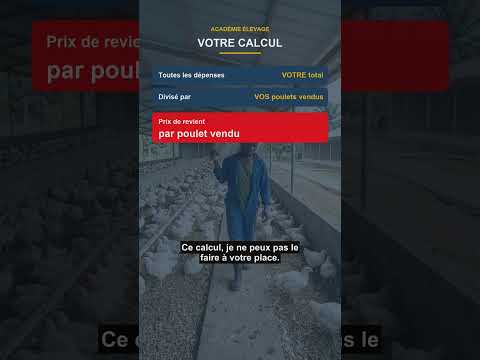 The cost price of a chickenNEXTEKCI · Lesson 104
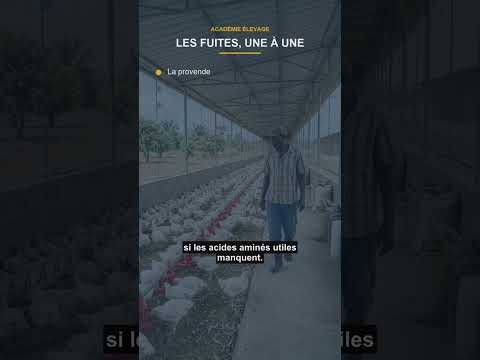 The extra kilo of feedNEXTEKCI · Lesson 115
 Weighing to ManageNEXTEKCI · Lesson 126
 The last days before saleNEXTEKCI · Lesson 137
 The worst place to saveNEXTEKCI · Lesson 148
 Homemade feedNEXTEKCI · Lesson 159
 The feed storeNEXTEKCI · Lesson 1610
 The feed storeNEXTEKCI · Lesson 1611
 Changing feedNEXTEKCI · Lesson 1712
 Changing feedNEXTEKCI · Lesson 1713
 The feeder, where the feed goesNEXTEKCI · Lesson 18▶
 The Morning DroppingsNEXTEKCI · Lesson 1915
 When deaths increaseNEXTEKCI · Lesson 2016
 When deaths increaseNEXTEKCI · Lesson 2017
 Heat, in the right orderNEXTEKCI · Lesson 2118
 Heat, in the right orderNEXTEKCI · Lesson 2119
 Litter, the chain that starts from a leakNEXTEKCI · Lesson 2220
 Litter, the chain that starts with a leakNEXTEKCI · Lesson 2221
 Close the night without suffocating the flockNEXTEKCI · Lesson 2322
 Closing up at night without suffocating the flockNEXTEKCI · Lesson 2323
 The water line, from the insideNEXTEKCI · Lesson 2424
 The farm entranceNEXTEKCI · Lesson 2525
 The sanitary break, step by stepNEXTEKCI · Lesson 2626
 The pullet, the weight that decidesNEXTEKCI · Lesson 2727
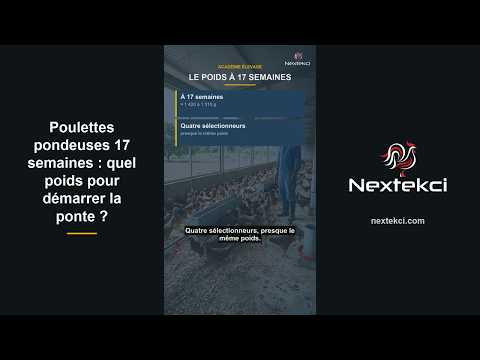 The pullet, the weight that decidesNEXTEKCI · Lesson 2728
 Making it to the first eggNEXTEKCI · Lesson 2829
 Making it to the first eggNEXTEKCI · Lesson 2830
 Reading your laying curveNEXTEKCI · Lesson 2931
 Egg production drops, the investigation in orderNEXTEKCI · Lesson 3032
 Lighting during layNEXTEKCI · Lesson 3133
 The shell: reading the egg to make correctionsNEXTEKCI · Lesson 3234
 Nests and egg collectionNEXTEKCI · Lesson 3335
 Culling, when the flock no longer paysNEXTEKCI · Lesson 35