
What would you like to watch? Tap a category.
The NEXTEKCI Academy
The founder’s lessons, in the order of the programme. Start with the first one: at the end of each video, the next one starts by itself.
The pullet, the weight that decides
 Presented by Abdul Hussein ChoumanFounder of NEXTEKCI · Agnibilékrou hatchery since 2006

Lesson text
Seventeen weeks. The pullets have their brown feathers. And all around you, everyone is waiting for the first egg.
Me, before the first egg, I get out the scales. Because laying does not start from a date. It starts from a weight.
At seventeen weeks, brown breeds aim for between one kilo four hundred and twenty and one kilo five hundred and ten. Four breeders, almost the same weight.
This weight is built week after week. About three hundred and sixty grams at five weeks, eight hundred and seventy at ten weeks.
So I weigh them. Pullets picked at random, in several places in the poultry house, always at the same time.
Then I see whether they look alike. Before laying, the breeder asks for eighty-five out of one hundred to be close to the flock average.
Close means within a tenth, at most. Average of one kilo four hundred? Count those from one kilo two hundred and sixty to one kilo five hundred and forty.
Too many pullets outside the range? Your flock is not uniform, and one decision changes.
Increasing the light starts laying. The breed guide does this at a weight of one kilo three hundred and fifty to one kilo four hundred.
The calendar says eighteen weeks, but the scales say no? Then I wait. The lamps stay as they are.
A flock that is too light, or with fewer than eighty out of one hundred in the range, must wait for the light to be increased.
Yes, waiting means extra bags of feed. But a pullet started too light pays for it throughout her laying period.
Her laying peak may not rise as high. And her laying period may not last as long.
Another breeder goes further. The lighter the hen is when she starts laying, the smaller her egg remains, throughout the laying period.
Where we are, this weight has an enemy that comes back every afternoon. Heat. A pullet that is hot eats less.
A study compared pullets at twenty degrees and at thirty-three. At twenty-one weeks, those kept in the heat weighed one hundred and eighteen grams less.
Their eggs stayed smaller right to the end. The heat in the poultry house is still paid for in egg production.
I weigh the pullets well before the seventeenth week, so I have time to react.
I count those that are in the range. And I increase the light based on weight, never the date.
The calendar suggests. The scales decide. The first egg is prepared on the scales.
And you, do you weigh your pullets before switching on the lights, or do you follow the calendar?
Send us the flock's age and ten weights at 05 44 83 27 79, on WhatsApp. We will give you our laying record book.
You can order your layer chicks at 07 07 72 78 67. Subscribe. Next lesson: making it through to the first egg.
Our layer chicks come out of the hatcher in Agnibilékrou. With Nextekci, every customer is a satisfied poultry farmer.
 The Flock's Waiting LineNEXTEKCI · Lesson 22
 The flock that drops a week before it showsNEXTEKCI · Lesson 33
 Correct weight, vanished feed: the invisible leakNEXTEKCI · Lesson 44
 When hens attack each otherNEXTEKCI · Lesson 55
 Torticollis and sudden deaths: the Newcastle signalNEXTEKCI · Lesson 66
 The vaccine given in chlorinated water protects no oneNEXTEKCI · Lesson 77
 The tail of the flockNEXTEKCI · Lesson 88
 Sell by the kilo, not by the headNEXTEKCI · Lesson 99
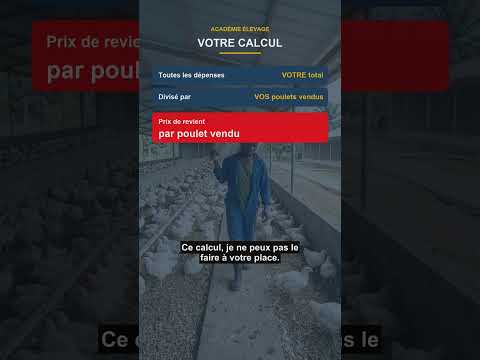 The cost price of a chickenNEXTEKCI · Lesson 1010
 The extra kilo of feedNEXTEKCI · Lesson 1111
 Weighing to ManageNEXTEKCI · Lesson 1212
 The last days before saleNEXTEKCI · Lesson 1313
 The worst place to saveNEXTEKCI · Lesson 1414
 Homemade feedNEXTEKCI · Lesson 1515
 The feed storeNEXTEKCI · Lesson 1616
 Changing feedNEXTEKCI · Lesson 1717
 The feeder, where the feed goesNEXTEKCI · Lesson 1818
 The Morning DroppingsNEXTEKCI · Lesson 1919
 When deaths increaseNEXTEKCI · Lesson 2020
 Heat, in the right orderNEXTEKCI · Lesson 2121
 Litter, the chain that starts from a leakNEXTEKCI · Lesson 2222
 Close the night without suffocating the flockNEXTEKCI · Lesson 2323
 The water line, from the insideNEXTEKCI · Lesson 2424
 The farm entranceNEXTEKCI · Lesson 2525
 The sanitary break, step by stepNEXTEKCI · Lesson 2626
 The pullet, the weight that decidesNEXTEKCI · Lesson 27▶
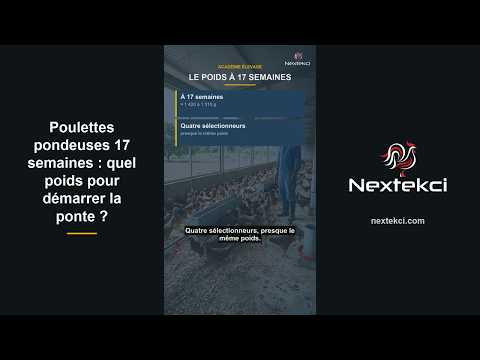 The pullet, the weight that decidesNEXTEKCI · Lesson 2728
 Making it to the first eggNEXTEKCI · Lesson 2829
 Making it to the first eggNEXTEKCI · Lesson 2830
 Reading your laying curveNEXTEKCI · Lesson 2931
 Egg production drops, the investigation in orderNEXTEKCI · Lesson 3032
 Lighting during layNEXTEKCI · Lesson 3133
 The shell: reading the egg to make correctionsNEXTEKCI · Lesson 3234
 Nests and egg collectionNEXTEKCI · Lesson 3335
 Culling, when the flock no longer paysNEXTEKCI · Lesson 35