
What would you like to watch? Tap a category.
The NEXTEKCI Academy
The founder’s lessons, in the order of the programme. Start with the first one: at the end of each video, the next one starts by itself.
Litter, the chain that starts from a leak
 Presented by Abdul Hussein ChoumanFounder of NEXTEKCI · Agnibilékrou hatchery since 2006

Lesson text
A dripping drinker. You pass by it every morning. No one thinks about the burned feet it prepares.
This wet patch is the first link in a chain. I will unfold it for you, then I will show you where to cut it.
First link, water that reaches the ground. And it has more entry points than you think.
A leak, a poorly adjusted drinker, too many chickens, stagnant air, liquid droppings, rain.
Second link, the litter absorbs water. Good litter retains twenty to twenty-five percent of water.
Beyond that, it compacts, it sticks, it forms a crust. And litter that remains wet releases ammonia.
Third link, ammonia. It is measured in parts per million. The ideal is less than ten.
Your nose only detects it from fifteen or twenty. If it smells, you are already above the ideal.
At twenty-five, growth slows. Between fifty and a hundred, for days, it is the eyes that are affected.
And your chicken breathes at the level of this litter, day and night. It cannot go out for fresh air.
Fourth link, the feet. On wet litter, the pads burn. This is called pododermatitis.
These burns do not stay in the chicken coop. They are still visible on the day of slaughter.
Fifth link, coccidiosis. Wet and warm, the litter makes the parasite dangerous.
So, where to cut this chain? At the first link. Before adding a single bag of shavings, find out where the water comes from.
Walk around the building. Look at the shape of the wet areas. It tells you where the water comes from.
A wet circle under a drinker? A leak, a drinker that is too low, or too much pressure.
Tighten, raise, lower the pressure. Then check the same spot the next morning.
A wet strip along one side? That’s the rain. There, it’s the tarp or the roof overhang that needs to be reviewed.
Wet everywhere at once? Look at the density and the air. If the droppings are liquid, talk to your veterinarian.
Once the cause is resolved, the crusted plate comes out. Dry shavings replace it. In that order.
I advise you to make this round every time you pass by, not just on the day it smells. A fixed drop is one link less.
And at your place, is the wet patch under a drinker, or everywhere?
Photograph the litter under your drinkers, and send it via WhatsApp to 05 44 83 27 79. The flock record book is offered to you.
And order your chicks at 07 07 72 78 67. Subscribe. Then, close at night without suffocating the batch.
Every Monday and Thursday evening, our chicks leave our hatchery in Agnibilékrou. With Nextekci, every customer is a satisfied poultry farmer.
 The tail of the flockNEXTEKCI · Lesson 82
 Sell by the kilo, not by the headNEXTEKCI · Lesson 93
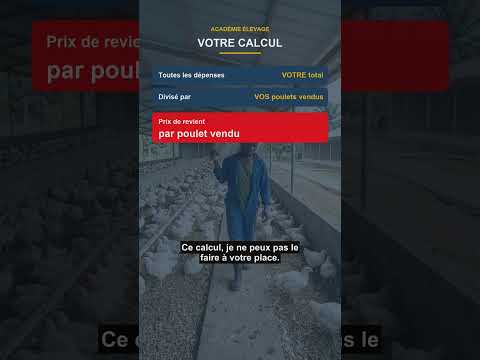 The cost price of a chickenNEXTEKCI · Lesson 104
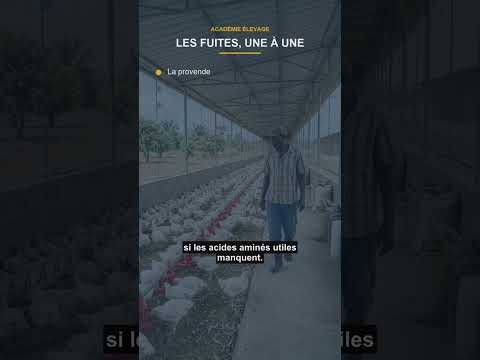 The extra kilo of feedNEXTEKCI · Lesson 115
 Weighing to ManageNEXTEKCI · Lesson 126
 The last days before saleNEXTEKCI · Lesson 137
 The worst place to saveNEXTEKCI · Lesson 148
 Homemade feedNEXTEKCI · Lesson 159
 The feed storeNEXTEKCI · Lesson 1610
 The feed storeNEXTEKCI · Lesson 1611
 Changing feedNEXTEKCI · Lesson 1712
 Changing feedNEXTEKCI · Lesson 1713
 The feeder, where the feed goesNEXTEKCI · Lesson 1814
 The Morning DroppingsNEXTEKCI · Lesson 1915
 When deaths increaseNEXTEKCI · Lesson 2016
 When deaths increaseNEXTEKCI · Lesson 2017
 Heat, in the right orderNEXTEKCI · Lesson 2118
 Heat, in the right orderNEXTEKCI · Lesson 21▶
 Litter, the chain that starts from a leakNEXTEKCI · Lesson 2220
 Litter, the chain that starts with a leakNEXTEKCI · Lesson 2221
 Close the night without suffocating the flockNEXTEKCI · Lesson 2322
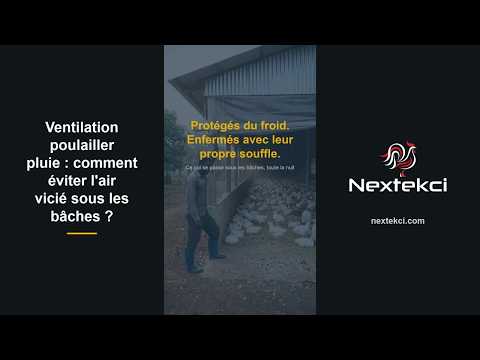 Closing up at night without suffocating the flockNEXTEKCI · Lesson 2323
 The water line, from the insideNEXTEKCI · Lesson 2424
 The farm entranceNEXTEKCI · Lesson 2525
 The sanitary break, step by stepNEXTEKCI · Lesson 2626
 The pullet, the weight that decidesNEXTEKCI · Lesson 2727
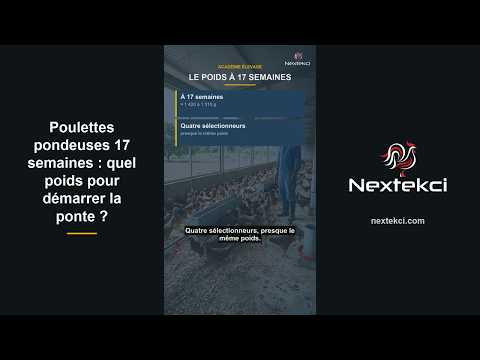 The pullet, the weight that decidesNEXTEKCI · Lesson 2728
 Making it to the first eggNEXTEKCI · Lesson 2829
 Making it to the first eggNEXTEKCI · Lesson 2830
 Reading your laying curveNEXTEKCI · Lesson 2931
 Egg production drops, the investigation in orderNEXTEKCI · Lesson 3032
 Lighting during layNEXTEKCI · Lesson 3133
 The shell: reading the egg to make correctionsNEXTEKCI · Lesson 3234
 Nests and egg collectionNEXTEKCI · Lesson 3335
 Culling, when the flock no longer paysNEXTEKCI · Lesson 35