
When deaths increase

Lesson text
Monday, two deaths. Tuesday, two. Wednesday, nine. Are you waiting for Thursday to see?
This nine, on its own, doesn't say much. It's the sequence of days that indicates whether to run.
I will teach you how to read this sequence. There are three patterns, and each calls for its response.
First pattern, the spike. Almost nothing yesterday. This morning, numerous deaths.
This is urgent. The veterinarian, immediately. Even after a very hot day. It is not for you to decide.
In the meantime, isolate the building. No visits at all. Not a bird, not a bag, not a tool leaves elsewhere.
Some serious diseases travel from one farm to another with people, equipment and litter. Newcastle is one of them.
Second pattern, the bell curve. Deaths rise for a few days, then fall back.
Gumboro, for example, often shows this bell curve. Birds downed, motionless, with watery diarrhoea.
Deaths rise for two days, then fall back in two or three days. Often five to ten percent of the flock.
Call during the rise, do not wait for the fall. The veterinarian needs to see birds showing the signs.
And when the bell curve falls, the flock remains fragile for a while. The rest of the flock needs to be monitored closely.
Third pattern, the low rumble. One or two deaths almost every day, without ever a peak.
This pattern often indicates the environment. Water, litter, air, space. Microbes take advantage of a worn flock.
Here, it is you who have control. Water, litter, air, space. And you discuss it with the veterinarian at their next visit.
To read a pattern, you need points. So every day, a line in the record book.
The date, the age of the flock, the number of deaths, the water consumed, the feed served, and what you observed in the morning.
On the day you call, you read these lines, instead of recounting them from memory.
If they ask for birds, one alone does not represent the flock. Up to three weeks, ten to twelve. Beyond that, five or six.
Take them from those showing the signs of the flock. Not the thinnest, they carry old problems.
A recent death travels cold, never in the freezer, and arrives in less than twenty-four hours.
And include the record book, with the vaccination programme, the health of the flock and its production since the beginning.
And at your place, are the daily deaths written down, or kept in mind until the end of the flock?
Your veterinarian first. Then, on WhatsApp, send your daily deaths to 05 44 83 27 79 for guidance. Flock record book provided.
To reserve your chicks, 07 07 72 78 67. Subscribe. Then, the heat, in the right order.
Our chicks come from our own breeders, and they hatch in our hatchery, in Agnibilékrou. With Nextekci, every customer is a satisfied poultry farmer.
 The Flock's Waiting LineNEXTEKCI · Lesson 22
 The flock that drops a week before it showsNEXTEKCI · Lesson 33
 Correct weight, vanished feed: the invisible leakNEXTEKCI · Lesson 44
 When hens attack each otherNEXTEKCI · Lesson 55
 Torticollis and sudden deaths: the Newcastle signalNEXTEKCI · Lesson 66
 The vaccine given in chlorinated water protects no oneNEXTEKCI · Lesson 77
 The tail of the flockNEXTEKCI · Lesson 88
 Sell by the kilo, not by the headNEXTEKCI · Lesson 99
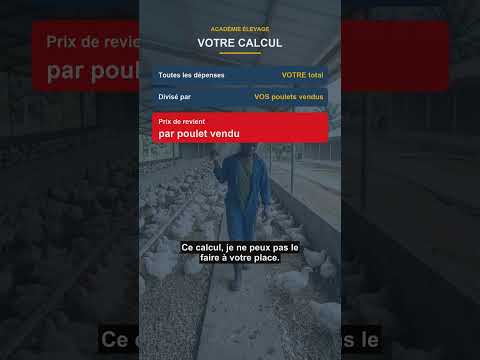 The cost price of a chickenNEXTEKCI · Lesson 1010
 The extra kilo of feedNEXTEKCI · Lesson 1111
 Weighing to ManageNEXTEKCI · Lesson 1212
 The last days before saleNEXTEKCI · Lesson 1313
 The worst place to saveNEXTEKCI · Lesson 1414
 Homemade feedNEXTEKCI · Lesson 1515
 The feed storeNEXTEKCI · Lesson 1616
 Changing feedNEXTEKCI · Lesson 1717
 The feeder, where the feed goesNEXTEKCI · Lesson 1818
 The Morning DroppingsNEXTEKCI · Lesson 19▶
 When deaths increaseNEXTEKCI · Lesson 20
Other lists
 5 videosThe big betMini-drama · 5 episodesPlay the list
 3 videosThe maquis contractMini-drama · 3 episodesPlay the list
 2 videosThe farmer's notebook — complete seasonsMini-drama · 2 episodesPlay the list
 9 videosRosine's notebookMini-drama · 9 episodesPlay the list
 5 videosThe boss lady's planMini-drama · 5 episodesPlay the list
 20 videosMariam's dowryMini-drama · 20 episodesPlay the list
 9 videosChick moneyMini-drama · 9 episodesPlay the list
 3 videosTrue storiesMini-drama · 3 episodesPlay the list
 1 videosStubborn UncleMini-drama · 1 episodePlay the list
 221 videosTips of the day221 short videos · most recent firstPlay the list
 31 videosPractical questions31 short answers · ordering, collection, towns…Play the list