
What would you like to watch? Tap a category.
The NEXTEKCI Academy
The founder’s lessons, in the order of the programme. Start with the first one: at the end of each video, the next one starts by itself.
Changing feed
 Presented by Abdul Hussein ChoumanFounder of NEXTEKCI · Agnibilékrou hatchery since 2006

Lesson text
The grower feed arrived yesterday. This morning, the feeders are still full.
Nothing serious, you might say. They will get used to it. But every ignored meal is weight that isn’t gained.
I see a change of feed as a turning point. If taken too quickly, the flock goes off course.
According to the selector, a broiler flock has three feeds. Starter until ten days, grower until twenty-four, then finisher.
Between the three, there are two transitions. And on each transition, several things change on the same day.
The shape, the size of the grain, and the richness of the ration. For the broiler, it’s another meal.
When everything changes at once, it may eat less. The breed guide therefore advises to manage this transition carefully.
However, a broiler that eats less grows less. The delay is then reflected on the scales.
For us, this transition is often double. We move from the purchased crumbs to a flour made on the farm.
New shape and new recipe on the same day. It’s the tightest turn for the flock.
First action, do not empty the feeders to change. Pour the new feed over the old.
The mixing happens automatically in the dish. It finds both and switches from one to the other without a hitch.
Second action, if you buy the grower feed, take the first bag in crumbs or very small pellets.
Third action, no gap between two bags. The flock must never wait for its new feed.
Fourth action, change by weight, not just by date. A light flock at ten days keeps its starter longer.
And monitor the water and droppings, before, during and after. A drop in water intake often signals issues before anything else.
Note the water consumed the day before, then the following days. If it drops, or if the droppings change significantly, discuss it with your veterinarian.
The same method applies around the twenty-fifth day, for finishing. This is when the largest volume of feed is consumed.
A successful change, the flock doesn’t even notice it. It eats the next day just like the day before.
And how does the new feed arrive at your place? Mixed with the old, or all at once, one morning?
Send your change days and the weight at ten days via WhatsApp, to 05 44 83 27 79. The flock record book is on us.
The chicks for your next flock? 07 07 72 78 67. Subscribe. Then, the feeder, where the feed goes.
They come out of our hatchery, in Agnibilékrou. With Nextekci, every customer is a satisfied poultry farmer.
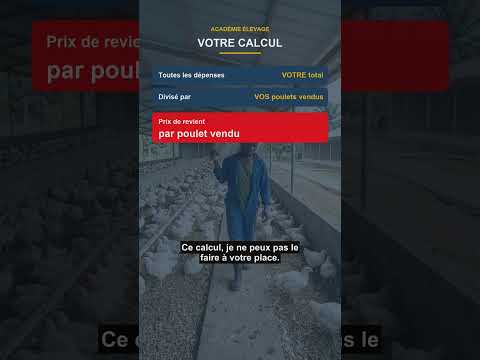 The cost price of a chickenNEXTEKCI · Lesson 102
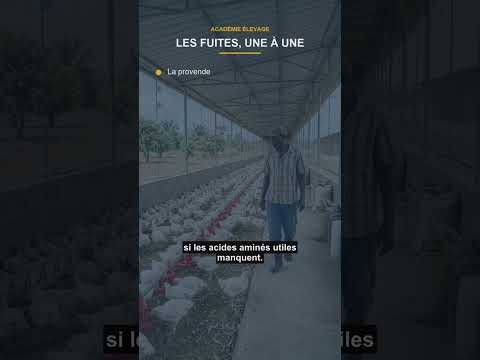 The extra kilo of feedNEXTEKCI · Lesson 113
 Weighing to ManageNEXTEKCI · Lesson 124
 The last days before saleNEXTEKCI · Lesson 135
 The worst place to saveNEXTEKCI · Lesson 146
 Homemade feedNEXTEKCI · Lesson 157
 The feed storeNEXTEKCI · Lesson 168
 The feed storeNEXTEKCI · Lesson 16▶
 Changing feedNEXTEKCI · Lesson 1710
 Changing feedNEXTEKCI · Lesson 1711
 The feeder, where the feed goesNEXTEKCI · Lesson 1812
 The Morning DroppingsNEXTEKCI · Lesson 1913
 When deaths increaseNEXTEKCI · Lesson 2014
 When deaths increaseNEXTEKCI · Lesson 2015
 Heat, in the right orderNEXTEKCI · Lesson 2116
 Heat, in the right orderNEXTEKCI · Lesson 2117
 Litter, the chain that starts from a leakNEXTEKCI · Lesson 2218
 Litter, the chain that starts with a leakNEXTEKCI · Lesson 2219
 Close the night without suffocating the flockNEXTEKCI · Lesson 2320
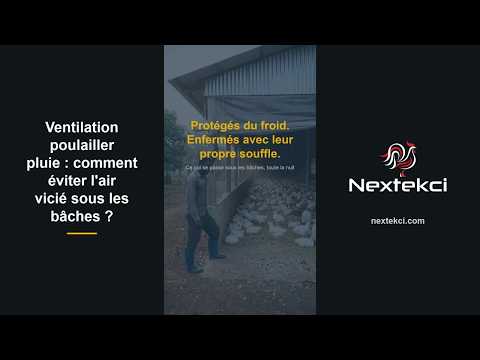 Closing up at night without suffocating the flockNEXTEKCI · Lesson 2321
 The water line, from the insideNEXTEKCI · Lesson 2422
 The farm entranceNEXTEKCI · Lesson 2523
 The sanitary break, step by stepNEXTEKCI · Lesson 2624
 The pullet, the weight that decidesNEXTEKCI · Lesson 2725
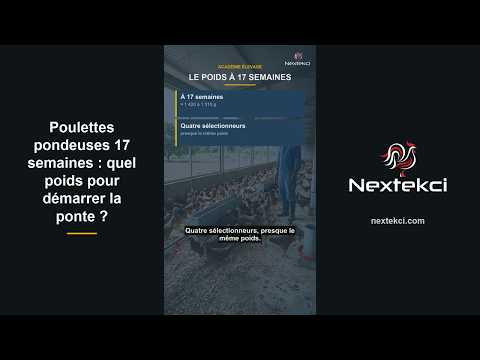 The pullet, the weight that decidesNEXTEKCI · Lesson 2726
 Making it to the first eggNEXTEKCI · Lesson 2827
 Making it to the first eggNEXTEKCI · Lesson 2828
 Reading your laying curveNEXTEKCI · Lesson 2929
 Egg production drops, the investigation in orderNEXTEKCI · Lesson 3030
 Lighting during layNEXTEKCI · Lesson 3131
 The shell: reading the egg to make correctionsNEXTEKCI · Lesson 3232
 Nests and egg collectionNEXTEKCI · Lesson 3333
 Culling, when the flock no longer paysNEXTEKCI · Lesson 35