
What would you like to watch? Tap a category.
The NEXTEKCI Academy
The founder’s lessons, in the order of the programme. Start with the first one: at the end of each video, the next one starts by itself.
Making it to the first egg
 Presented by Abdul Hussein ChoumanFounder of NEXTEKCI · Agnibilékrou hatchery since 2006

Lesson text
Sixteen weeks of sacks going out. And still nothing in the nests.
That’s where, I think, a layer project is decided. Not on technique. On stamina.
Before eighteen weeks, not a single egg to sell. The first ones arrive between eighteen and twenty-two weeks.
And the first egg still doesn’t fill a tray. Laying then increases over weeks, not in a day.
One hen in two laying every day? Brown breeds get there at around one hundred and forty, one hundred and fifty days. Twenty, twenty-one weeks.
This period is planned in sacks and weeks. Never by guesswork.
Take out the record book for your last flock. Count the sacks eaten, week by week, up to the first trays.
Once laying starts, take a flock of five hundred hens. An adult brown layer eats about one hundred and twenty grams a day.
Nearly sixty kilos a day, or eight to nine sacks of fifty each week, throughout the whole laying period.
You set the price of those sacks. And you need to keep up with that total every week.
I do this calculation before buying the chicks. How many weeks can you feed them without selling an egg?
The answer gives you the flock size. Not the other way round. First the weeks and the sacks, plus a reserve. Only then, the number of chicks.
In Côte d'Ivoire, the FAO counted a lack of working capital among the difficulties faced by layer poultry farmers.
A flock that suits your means, fed right through, is better than a large flock that runs short of sacks.
And there’s a second thing to choose before buying. The start date. Because of the heat.
In Niger, a technical fact sheet from Zinder recommends starting the chicks in March or April, so they don’t come into lay in the height of the heat.
Why? In the heat, a hen eats less. About one point six per cent less energy per degree, above twenty degrees.
In Niger, the FAO noted that laying drops sharply during the hottest weather, and that pullets come into lay without reaching the right weight.
Our hot months are not the same as those in Zinder. But the reasoning applies. Identify your hardest months, and keep the start of laying outside them.
Then count back about twenty weeks. That date is the day your chicks should arrive.
And at your place, for your last layer flock, how many weeks’ worth of sacks had you planned for?
Write the number of hens and the month you’re aiming for to 05 44 83 27 79, on WhatsApp. In return, the laying record book, free.
Once you’ve chosen the date, order at 07 07 72 78 67. Subscribe for the next part, to read its laying curve.
These chicks leave our hatchery in Agnibilékrou. With Nextekci, every customer is a satisfied poultry farmer.
 The tail of the flockNEXTEKCI · Lesson 82
 Sell by the kilo, not by the headNEXTEKCI · Lesson 93
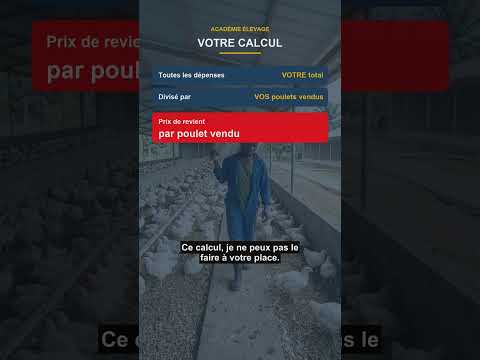 The cost price of a chickenNEXTEKCI · Lesson 104
 The extra kilo of feedNEXTEKCI · Lesson 115
 Weighing to ManageNEXTEKCI · Lesson 126
 The last days before saleNEXTEKCI · Lesson 137
 The worst place to saveNEXTEKCI · Lesson 148
 Homemade feedNEXTEKCI · Lesson 159
 The feed storeNEXTEKCI · Lesson 1610
 The feed storeNEXTEKCI · Lesson 1611
 Changing feedNEXTEKCI · Lesson 1712
 Changing feedNEXTEKCI · Lesson 1713
 The feeder, where the feed goesNEXTEKCI · Lesson 1814
 The Morning DroppingsNEXTEKCI · Lesson 1915
 When deaths increaseNEXTEKCI · Lesson 2016
 When deaths increaseNEXTEKCI · Lesson 2017
 Heat, in the right orderNEXTEKCI · Lesson 2118
 Heat, in the right orderNEXTEKCI · Lesson 2119
 Litter, the chain that starts from a leakNEXTEKCI · Lesson 2220
 Litter, the chain that starts with a leakNEXTEKCI · Lesson 2221
 Close the night without suffocating the flockNEXTEKCI · Lesson 2322
 Closing up at night without suffocating the flockNEXTEKCI · Lesson 2323
 The water line, from the insideNEXTEKCI · Lesson 2424
 The farm entranceNEXTEKCI · Lesson 2525
 The sanitary break, step by stepNEXTEKCI · Lesson 2626
 The pullet, the weight that decidesNEXTEKCI · Lesson 2727
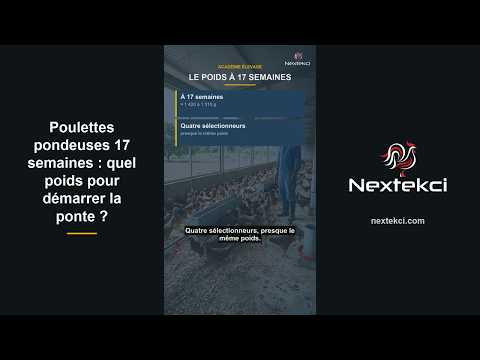 The pullet, the weight that decidesNEXTEKCI · Lesson 2728
 Making it to the first eggNEXTEKCI · Lesson 28▶
 Making it to the first eggNEXTEKCI · Lesson 2830
 Reading your laying curveNEXTEKCI · Lesson 2931
 Egg production drops, the investigation in orderNEXTEKCI · Lesson 3032
 Lighting during layNEXTEKCI · Lesson 3133
 The shell: reading the egg to make correctionsNEXTEKCI · Lesson 3234
 Nests and egg collectionNEXTEKCI · Lesson 3335
 Culling, when the flock no longer paysNEXTEKCI · Lesson 35