
What would you like to watch? Tap a category.
The NEXTEKCI Academy
The founder’s lessons, in the order of the programme. Start with the first one: at the end of each video, the next one starts by itself.
The feed store
 Presented by Abdul Hussein ChoumanFounder of NEXTEKCI · Agnibilékrou hatchery since 2006

Lesson text
Rainy season. You lift a bag from the back of the store. The ground underneath is damp. The bag itself has no smell.
So you pour it into the feeders, like the others. And the problem may start there.
First trap, smell proves nothing. It can be contaminated without odour, and without visible mould.
Moulds produce poisons there, mycotoxins. Invisible in the bag, they pass into the chicken.
They damage the liver and kidneys. They weaken the defences. The batch then responds less well to its vaccinations.
And some cause the feed to be refused. The feeder remains full, and you look for the cause elsewhere.
Moulds start when the air reaches about sixty-five percent humidity. And they love heat, above twenty-five degrees.
A warm, damp, and airless store is all they like. Even without mould, heat already destroys some vitamins.
Second trap, keeping too long. For the FAO, a compound feed lasts one to two months.
A ground raw material, the same under our climate. Whole grains last three to four months.
So I advise buying at the pace of the flock. Not six months of stock sitting in the heat.
Now, the actions for the store. Bags are placed on pallets, and they never touch an outside wall.
Several small stacks are better than one large pile. Air passes between them, and each bag remains visible.
The door is locked, and the openings are screened. Neither rats nor birds can enter.
And the first bag in is the first bag out. A date on each bag, and none is forgotten.
And a silo does not protect on its own. Temperature fluctuations create moisture, and moulds follow.
A questionable bag, however, leaves the circuit. It never mixes with the good ones.
Mixed with ten good bags, it does not disappear. You simply have eleven questionable bags.
In the building, follow the appetite of the batch. If it eats less for no reason, keep the bag separate, and call your veterinarian.
And at home, what do the bags rest on? On the floor, on boards, or on pallets?
Take a photo of your store, and send it to us on WhatsApp at 05 44 83 27 79. Our farm record book is waiting for you, free of charge.
An order for chicks? Call 07 07 72 78 67. Subscribe, and we will see how to change feed later.
Our day-old chicks are sorted one by one, in Agnibilékrou. With Nextekci, every customer is a satisfied poultry farmer.
 The tail of the flockNEXTEKCI · Lesson 82
 Sell by the kilo, not by the headNEXTEKCI · Lesson 93
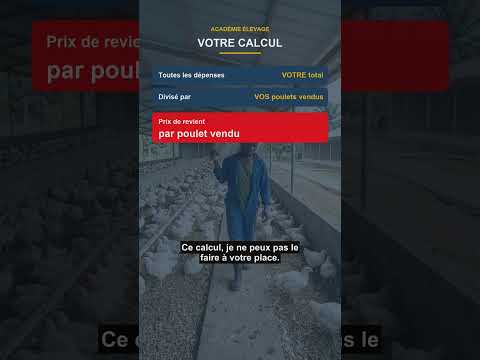 The cost price of a chickenNEXTEKCI · Lesson 104
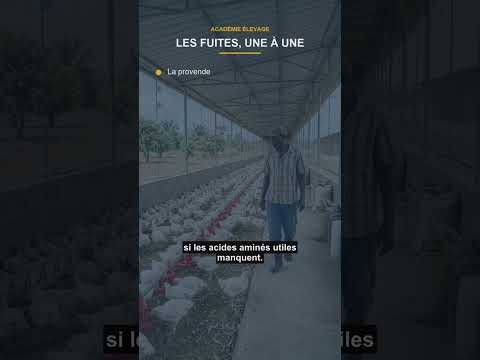 The extra kilo of feedNEXTEKCI · Lesson 115
 Weighing to ManageNEXTEKCI · Lesson 126
 The last days before saleNEXTEKCI · Lesson 137
 The worst place to saveNEXTEKCI · Lesson 148
 Homemade feedNEXTEKCI · Lesson 15▶
 The feed storeNEXTEKCI · Lesson 1610
 The feed storeNEXTEKCI · Lesson 1611
 Changing feedNEXTEKCI · Lesson 1712
 Changing feedNEXTEKCI · Lesson 1713
 The feeder, where the feed goesNEXTEKCI · Lesson 1814
 The Morning DroppingsNEXTEKCI · Lesson 1915
 When deaths increaseNEXTEKCI · Lesson 2016
 When deaths increaseNEXTEKCI · Lesson 2017
 Heat, in the right orderNEXTEKCI · Lesson 2118
 Heat, in the right orderNEXTEKCI · Lesson 2119
 Litter, the chain that starts from a leakNEXTEKCI · Lesson 2220
 Litter, the chain that starts with a leakNEXTEKCI · Lesson 2221
 Close the night without suffocating the flockNEXTEKCI · Lesson 2322
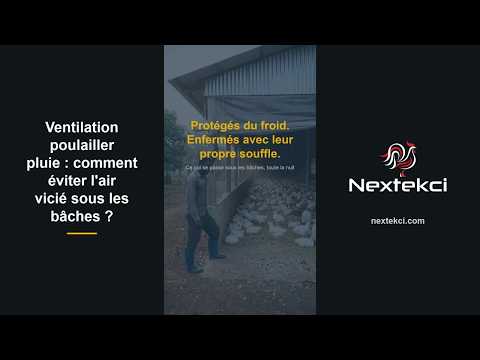 Closing up at night without suffocating the flockNEXTEKCI · Lesson 2323
 The water line, from the insideNEXTEKCI · Lesson 2424
 The farm entranceNEXTEKCI · Lesson 2525
 The sanitary break, step by stepNEXTEKCI · Lesson 2626
 The pullet, the weight that decidesNEXTEKCI · Lesson 2727
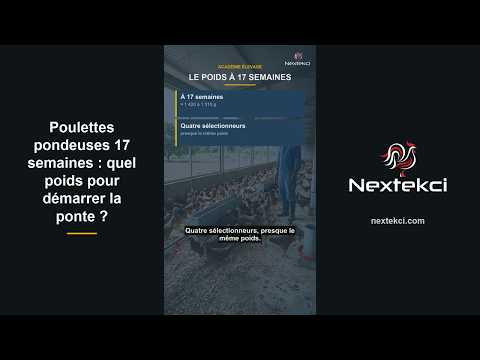 The pullet, the weight that decidesNEXTEKCI · Lesson 2728
 Making it to the first eggNEXTEKCI · Lesson 2829
 Making it to the first eggNEXTEKCI · Lesson 2830
 Reading your laying curveNEXTEKCI · Lesson 2931
 Egg production drops, the investigation in orderNEXTEKCI · Lesson 3032
 Lighting during layNEXTEKCI · Lesson 3133
 The shell: reading the egg to make correctionsNEXTEKCI · Lesson 3234
 Nests and egg collectionNEXTEKCI · Lesson 3335
 Culling, when the flock no longer paysNEXTEKCI · Lesson 35