
When hens attack each other

Lesson text
When a hen bleeds, the others come back to peck, and the flock quickly gets out of control.
At first, it may just be a pulled feather, then the skin appears.
Very quickly, you spend your time isolating, monitoring, and picking up the injured.
Before thinking complicated, first correct three things: light, space, and occupation.
Too strong a light makes defects visible and encourages pecking.
In a warm building, an agitated flock can tolerate an aggressive lighting atmosphere even less.
When hens are constantly touching each other, every feeder becomes a point of dispute.
For layers, density is counted in hens per square metre of floor, not by guesswork.
For ground-based layers in a warm climate, the breed guide counts six to seven hens per square metre.
When it is hot, reducing density also helps to calm aggression.
A flock without occupation looks for something to do, and sometimes ends up on its neighbours.
The idea is simple: give the beak something else to search for than skin.
A dry litter helps normal behaviour, while a wet litter degrades the atmosphere.
Wet litter promotes ammonia, and ammonia already irritates the respiratory tract.
A leaking drinker wets the litter, and the problem comes back from behind.
As soon as an injury appears, isolate quickly, then look for the cause in the building.
Less pecking means fewer losses, less care, and less time wasted.
Start simple: reduce visual aggression, create space, and occupy the beak.
And at your place, do the pecks start at the feeder, or near the laying boxes?
Describe your building on WhatsApp, at 05 44 83 27 79. The laying record book is offered to you.
For your layer chicks, call 07 07 72 78 67. Subscribe, every week a lesson for your hens.
They are born in our hatchery Nextekci, in Agnibilékrou. With Nextekci, every customer is a satisfied poultry farmer.
 The Flock's Waiting LineNEXTEKCI · Lesson 22
 The flock that drops a week before it showsNEXTEKCI · Lesson 33
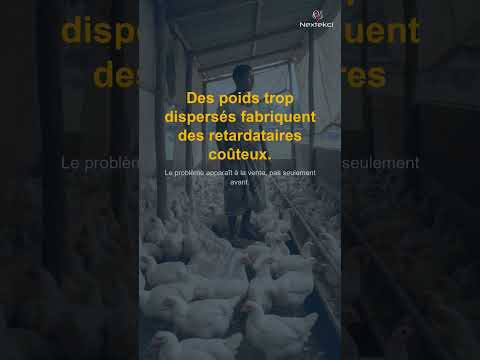 Correct weight, vanished feed: the invisible leakNEXTEKCI · Lesson 4▶
 When hens attack each otherNEXTEKCI · Lesson 55
 Torticollis and sudden deaths: the Newcastle signalNEXTEKCI · Lesson 66
 The vaccine given in chlorinated water protects no oneNEXTEKCI · Lesson 77
 The tail of the flockNEXTEKCI · Lesson 88
 Sell by the kilo, not by the headNEXTEKCI · Lesson 99
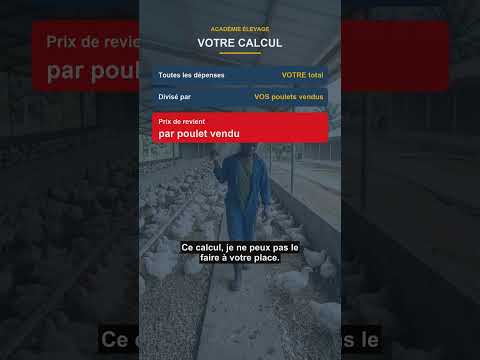 The cost price of a chickenNEXTEKCI · Lesson 1010
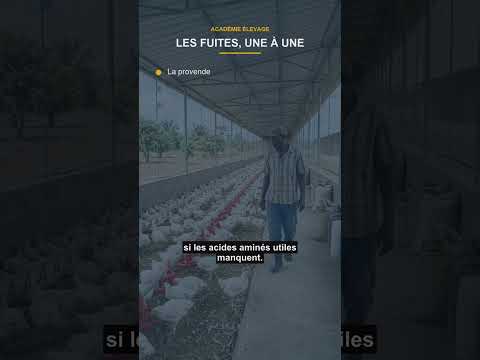 The extra kilo of feedNEXTEKCI · Lesson 1111
 Weighing to ManageNEXTEKCI · Lesson 1212
 The last days before saleNEXTEKCI · Lesson 1313
 The worst place to saveNEXTEKCI · Lesson 1414
 Homemade feedNEXTEKCI · Lesson 1515
 The feed storeNEXTEKCI · Lesson 1616
 Changing feedNEXTEKCI · Lesson 1717
 The feeder, where the feed goesNEXTEKCI · Lesson 1818
 The Morning DroppingsNEXTEKCI · Lesson 1919
 When deaths increaseNEXTEKCI · Lesson 20
Other lists
 5 videosThe big betMini-drama · 5 episodesPlay the list
 3 videosThe maquis contractMini-drama · 3 episodesPlay the list
 2 videosThe farmer's notebook — complete seasonsMini-drama · 2 episodesPlay the list
 9 videosRosine's notebookMini-drama · 9 episodesPlay the list
 5 videosThe boss lady's planMini-drama · 5 episodesPlay the list
 20 videosMariam's dowryMini-drama · 20 episodesPlay the list
 9 videosChick moneyMini-drama · 9 episodesPlay the list
 3 videosTrue storiesMini-drama · 3 episodesPlay the list
 1 videosStubborn UncleMini-drama · 1 episodePlay the list
 221 videosTips of the day221 short videos · most recent firstPlay the list
 31 videosPractical questions31 short answers · ordering, collection, towns…Play the list