
What would you like to watch? Tap a category.
The NEXTEKCI Academy
The founder’s lessons, in the order of the programme. Start with the first one: at the end of each video, the next one starts by itself.
Correct weight, vanished feed: the invisible leak
 Presented by Abdul Hussein ChoumanFounder of NEXTEKCI · Agnibilékrou hatchery since 2006

Lesson text
At sale, the weight seems good, but the feed has run faster.
You are selling correct chickens, yet the bags finish too soon.
Weight alone can be misleading, because it does not tell the whole story.
The key figure is the feed conversion ratio: eating to produce.
Two chickens of the same weight may have eaten very different amounts.
For 1.8 kilos live weight, the field observes about one kilo of extra feed.
It goes into heat, waste, delay, and heterogeneity.
In humid heat, the bird pants, eats less, and converts less well.
Strain guides show that with age, each day costs more.
A chicken kept too long mainly continues to fill the feeder.
With my clients, the last ones generally stay no more than ten days.
This wait adds about one kilo six of feed per tail chicken.
Often, the buyer takes the nice ones and leaves the smaller ones behind.
A dispersed lot indicates just this tail of the flock that eats alone.
Part of it also goes to the ground, especially with poorly adjusted feeders.
A bad start pays off for a long time, even if the final weight catches up.
The guides indicate a clear benchmark: at seven days, weight quadrupled.
Water is the first nutrient, and its decrease alerts before the rest.
So count the bags, weigh at fixed times, and note the delays.
When the weight is good, especially look for the feed, the days, and the small ones.
And at your place, are the bags of the flock counted, or just the weight at sale?
Do the count and send it on WhatsApp, to 05 44 83 27 79. We offer you the flock record book.
Order your broiler chicks at 07 07 72 78 67. Subscribe so you don't miss the next lesson.
Our hatchery, in Agnibilékrou, hatches every chick. With Nextekci, every customer is a satisfied farmer.
 The tail of the flockNEXTEKCI · Lesson 82
 Sell by the kilo, not by the headNEXTEKCI · Lesson 93
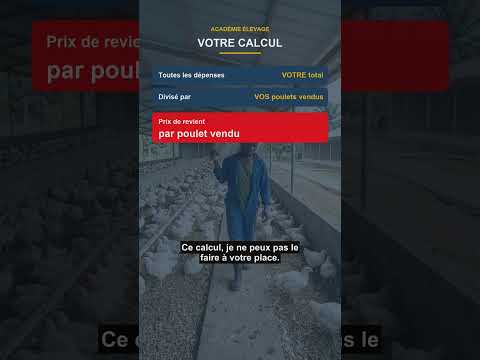 The cost price of a chickenNEXTEKCI · Lesson 104
 The extra kilo of feedNEXTEKCI · Lesson 115
 Weighing to ManageNEXTEKCI · Lesson 126
 The last days before saleNEXTEKCI · Lesson 137
 The worst place to saveNEXTEKCI · Lesson 148
 Homemade feedNEXTEKCI · Lesson 159
 The feed storeNEXTEKCI · Lesson 1610
 The feed storeNEXTEKCI · Lesson 1611
 Changing feedNEXTEKCI · Lesson 1712
 Changing feedNEXTEKCI · Lesson 1713
 The feeder, where the feed goesNEXTEKCI · Lesson 1814
 The Morning DroppingsNEXTEKCI · Lesson 1915
 When deaths increaseNEXTEKCI · Lesson 2016
 When deaths increaseNEXTEKCI · Lesson 2017
 Heat, in the right orderNEXTEKCI · Lesson 2118
 Heat, in the right orderNEXTEKCI · Lesson 2119
 Litter, the chain that starts from a leakNEXTEKCI · Lesson 2220
 Litter, the chain that starts with a leakNEXTEKCI · Lesson 2221
 Close the night without suffocating the flockNEXTEKCI · Lesson 2322
 Closing up at night without suffocating the flockNEXTEKCI · Lesson 2323
 The water line, from the insideNEXTEKCI · Lesson 2424
 The farm entranceNEXTEKCI · Lesson 2525
 The sanitary break, step by stepNEXTEKCI · Lesson 2626
 The pullet, the weight that decidesNEXTEKCI · Lesson 2727
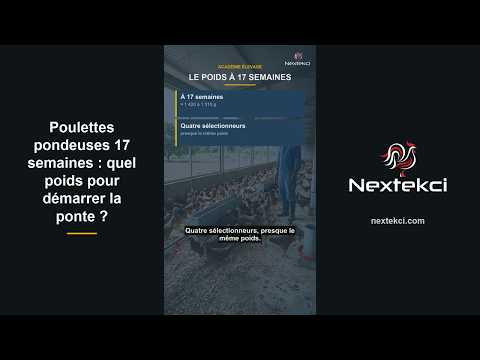 The pullet, the weight that decidesNEXTEKCI · Lesson 2728
 Making it to the first eggNEXTEKCI · Lesson 2829
 Making it to the first eggNEXTEKCI · Lesson 2830
 Reading your laying curveNEXTEKCI · Lesson 2931
 Egg production drops, the investigation in orderNEXTEKCI · Lesson 3032
 Lighting during layNEXTEKCI · Lesson 3133
 The shell: reading the egg to make correctionsNEXTEKCI · Lesson 3234
 Nests and egg collectionNEXTEKCI · Lesson 3335
 Culling, when the flock no longer paysNEXTEKCI · Lesson 35