
Poultry encyclopedia · NEXTEKCI School · Species and breeds
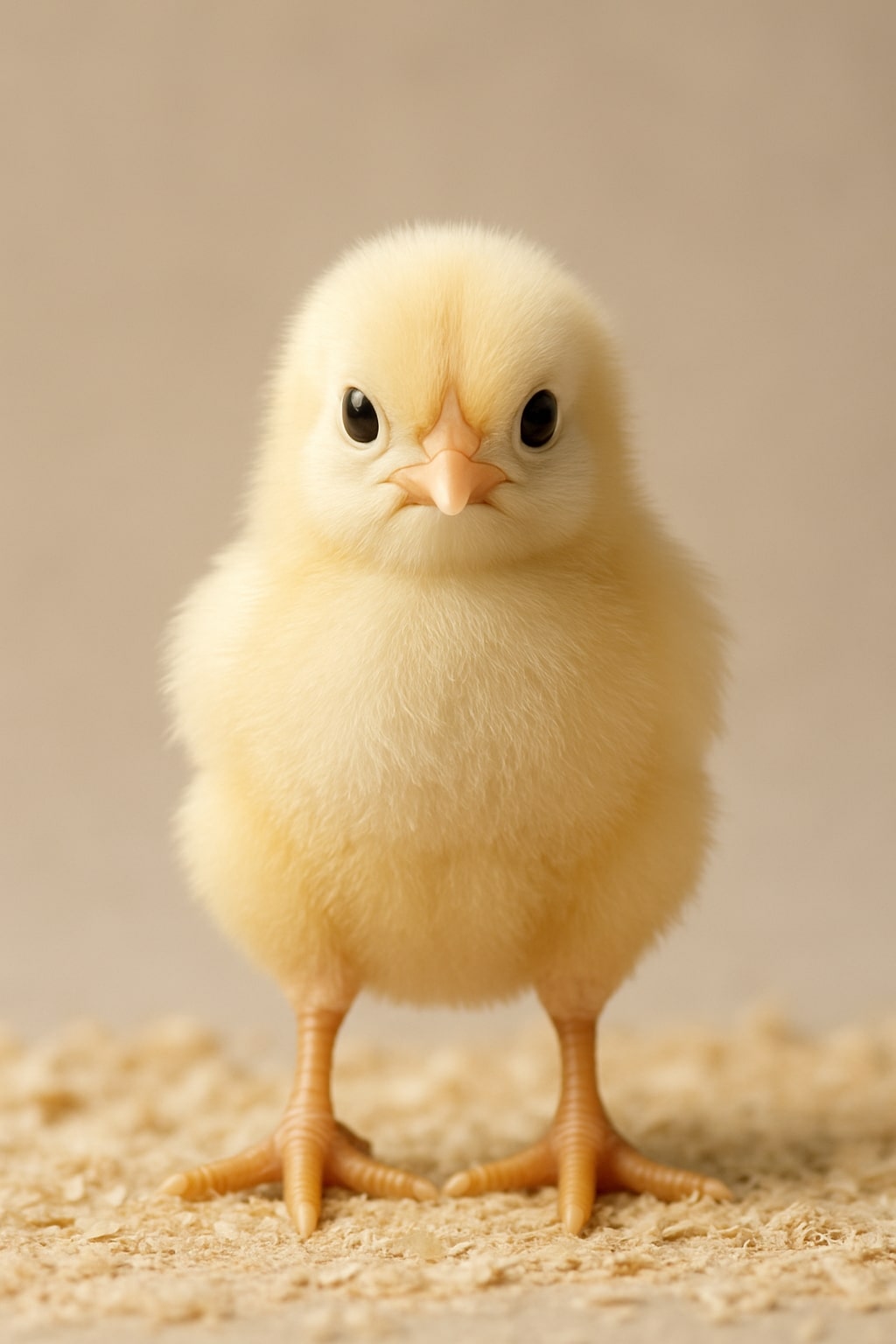
The white broiler
The white broiler is the fast-growing chicken, raised only for its meat and sold at around 35 to 45 days. It is the fastest business in poultry farming, but also the most demanding: a well-run house, complete feed and a buyer ready on the day of sale.
Key facts
- Rearing period
- About 35 to 45 days
- Target weight at 35 days (Cobb 500)
- 2.52 kg, under ideal conditions
- Open-sided house, hot weather
- Often 70 to 85% of target weights
- Maximum stocking density, open-sided house
- 30 kg of birds per m²
- Temperature on day one
- 32 to 33 °C
- Vaccination
- On the farm, following the vet in your area
What is a white broiler?
The white broiler is a chicken selected to turn feed into meat very quickly. It has white feathers, a broad breast and very fast growth: within a few weeks, the day-old chick becomes a bird ready for sale.
The world’s reference strains include Cobb 500, Ross 308 and Efficiency Plus. NEXTEKCI white broiler chicks, hatched at the Agnibilékrou hatchery, follow the same growth curves as Cobb 500 and Efficiency Plus. These curves are obtained in controlled houses in temperate climates: in Côte d’Ivoire, they serve as a benchmark to compare your own weighings.
Uses and market
White broilers are sold live or slaughtered, whole or in portions: market traders, local eateries (maquis), restaurants, hotels, supermarkets and slaughterhouses. Demand rises sharply at the end-of-year holidays, at Easter and at Tabaski.
Its strength is speed; its weakness is that it cannot wait. Once selling weight is reached, it keeps eating every day and the margin melts away. That is why a broiler farmer first secures a buyer, then sets the date for placing the flock.
Rearing in Côte d’Ivoire
Most broilers are reared on the floor, on litter, in open-sided curtain houses facing east-west. The start is decisive: a clean, pre-heated house, a floor at least 32 °C in the brooding area, water and feed available on arrival, and a crop check at 24 hours.
The bird receives three successive feeds: starter, grower and finisher. It drinks about 1.6 to 2 times the weight of the feed it eats, and much more in hot weather. After three weeks the main danger is no longer cold but heat: air moving over the birds, cool water and a reasonable stocking density are the best defences.
Health and biosecurity
NEXTEKCI white broiler chicks are not vaccinated at the hatchery: vaccination is done on the farm, following the protocol of the vet in your area. Ask for it before the chicks arrive.
The basic rule is “all in, all out”: a single age group per farm, then cleaning, disinfection and a rest period. A fenced farm, a footbath, few visitors and no backyard poultry around the house. Diseases to watch closely include coccidiosis, Gumboro disease, Newcastle disease and heat stress.
Common mistakes
Placing chicks without a confirmed buyer. Receiving chicks in a cold or poorly prepared house. Stocking too many birds per m², especially in the hot season. Letting water heat up in the sun or leaving feeders empty. Never weighing, and discovering poor growth on the day of sale. Keeping several ages on the same farm.
Each of these mistakes costs feed, dead birds or lost kilos. The School’s profitability calculator lets you cost your flock with your own prices before ordering.