
Poultry encyclopedia · NEXTEKCI School · Species and breeds
The quail
The Japanese quail is a very small, early-maturing bird raised for its small speckled eggs and its meat. It needs little space and produces quickly, but its market is narrow: find your customers before you start.
Key facts
- Scientific name
- Coturnix japonica (Japanese quail)
- Incubation
- 17 to 18 days
- Early maturity
- Starts laying at about 6 to 8 weeks of age
- Housing
- Cages or small pens, little space
- Products
- Small speckled eggs, small carcasses
What is the quail?
The farmed quail is the Japanese quail, domesticated long ago. It is one of the smallest poultry species: it grows very fast, matures within a few weeks and lays almost every day under good conditions.
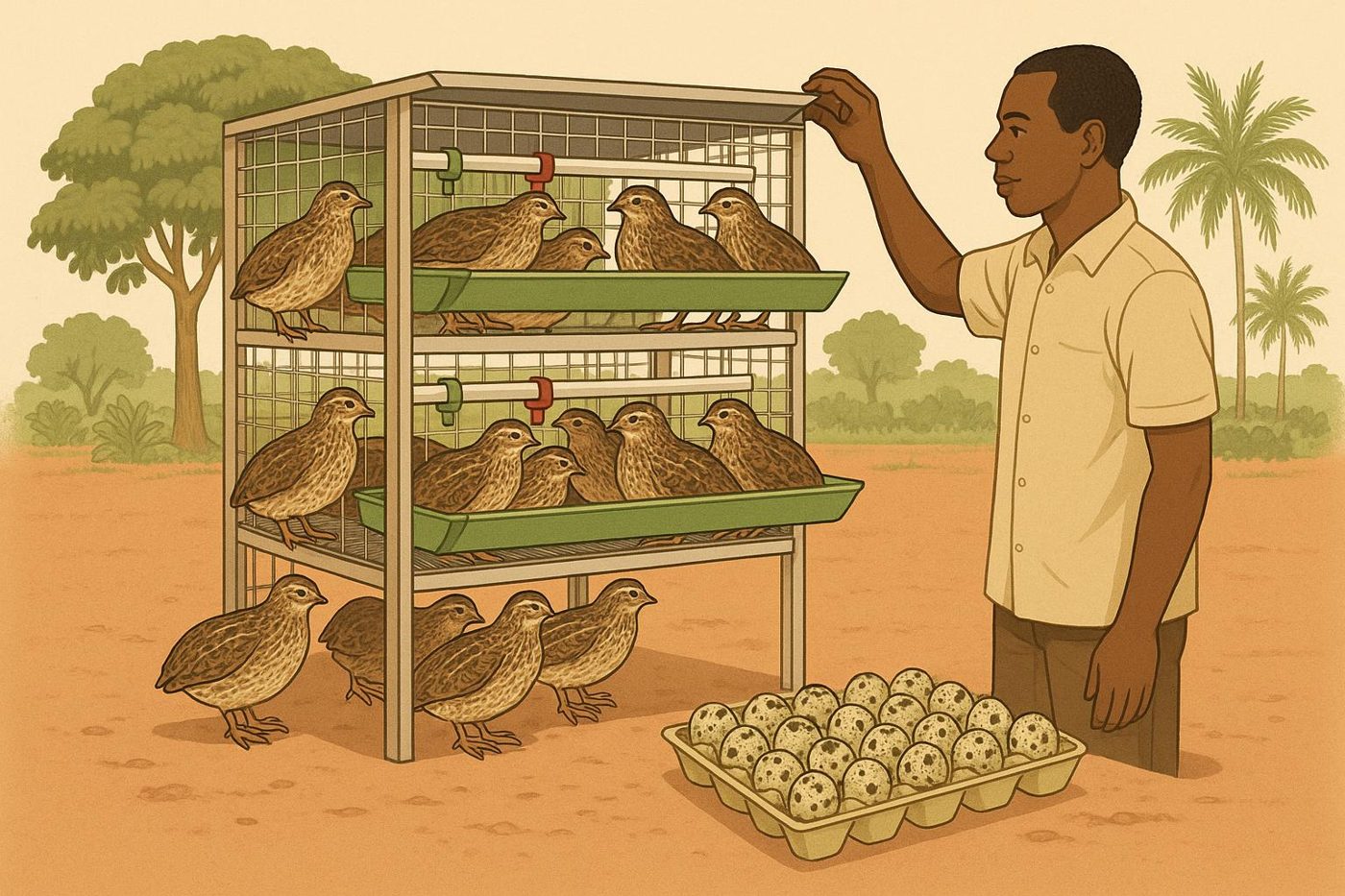
Its small, brown-speckled eggs are easy to recognise.
Uses and market
Quail eggs are sold in small packs to snack bars, restaurants, hotels and caterers; the meat as small whole carcasses. It is a niche production, high in value per egg but with a small customer base.
The classic trap is producing before you have buyers: eggs then pile up fast. Start small and grow the farm with demand.
Rearing conditions
Quail are kept in cages or small pens, in a well-ventilated, quiet building protected from rats, snakes and cats. They are nervous: when startled, they fly straight up and injure their heads; a low ceiling or soft netting prevents these injuries.
They need a protein-rich feed, clean water in drinkers suited to their small size and regular lighting to lay well. Quail chicks are brooded warm, with drinkers they cannot drown in.
Health and common mistakes
Quail are fairly resilient, but clean cages, rat control and clean water remain essential. The health programme is decided with the vet in your area.
Common mistakes: producing without customers; giving too poor a feed; using drinkers in which chicks drown; setting up the farm in a noisy place; handling eggs carelessly, although their shells are fragile.