
Poultry encyclopedia · NEXTEKCI School · Species and breeds
The ostrich
The ostrich, the largest living bird, is native to Africa. It is farmed for its lean red meat, leather, feathers and eggs. It is a specialised enterprise requiring large enclosures, heavy investment and a great deal of patience.
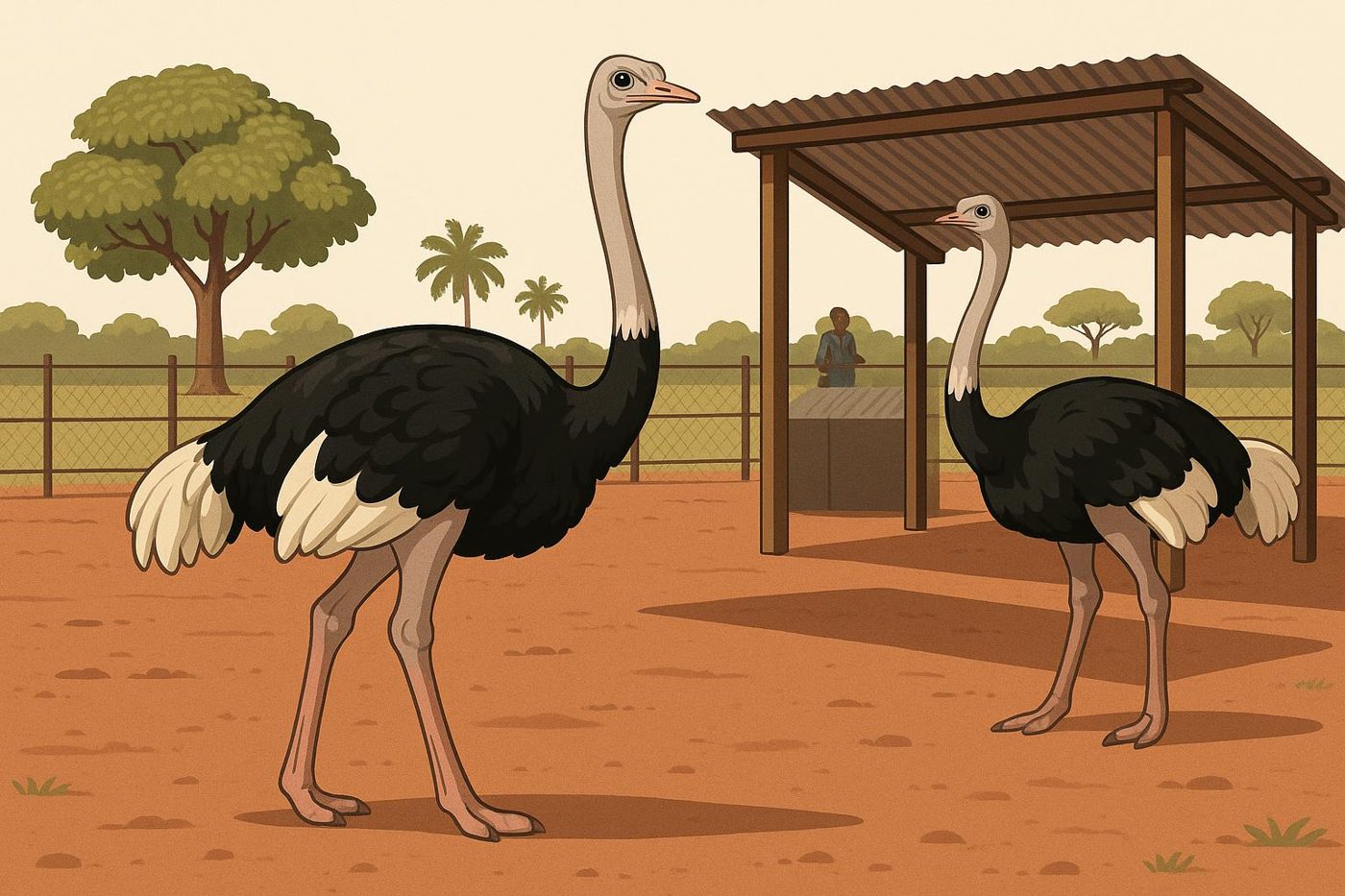
Key facts
- Scientific name
- Struthio camelus
- Incubation
- About 42 days
- Products
- Lean red meat, leather, feathers, eggs
- Maturity
- Several years before first laying
- Housing
- Large enclosures with high, strong fences
What is the ostrich?
The ostrich is a large, flightless running bird. Native to the savannahs of Africa, it copes well with heat and lives a long time. The young are called ostrich chicks.
Adults are powerful: a kick can cause serious injury. They are handled methodically and with care.
Uses and market
Ostriches provide lean red meat, highly valued leather, decorative feathers and very large eggs, whose shells are also used in crafts. These are specialist markets, often linked to upmarket catering, tourism or export.
Before any project, identify these outlets and check with the official livestock services which rules apply.
Rearing conditions
Ostriches live in large grassy enclosures with high, strong fences, shade, shelter and clean water. They eat grass, topped up with a suitable feed and minerals.
Ostrich chicks are fragile for the first months: warmth, clean, dry ground and daily monitoring are needed. The health programme is decided with a vet who knows the species.
Common mistakes
Underestimating the investment and the time before the first income. Building fences that are too weak. Neglecting the safety of people who handle adults. Starting without outlets or information on the regulations.