
Poultry encyclopedia · NEXTEKCI School · Species and breeds
The turkey
The turkey is the largest of the common poultry species, raised for its meat and in high demand at the end-of-year holidays. Rearing it requires patience at the start, space, good protection from heat and strict separation from chickens.
Key facts
- Scientific name
- Meleagris gallopavo
- Incubation
- 28 days
- Young
- Poults are slow to find water and feed
- Starter feed
- Higher in protein than chicken starter
- Specific risk
- Histomoniasis (blackhead)
- Market
- Mainly the end-of-year holidays
What is the turkey?
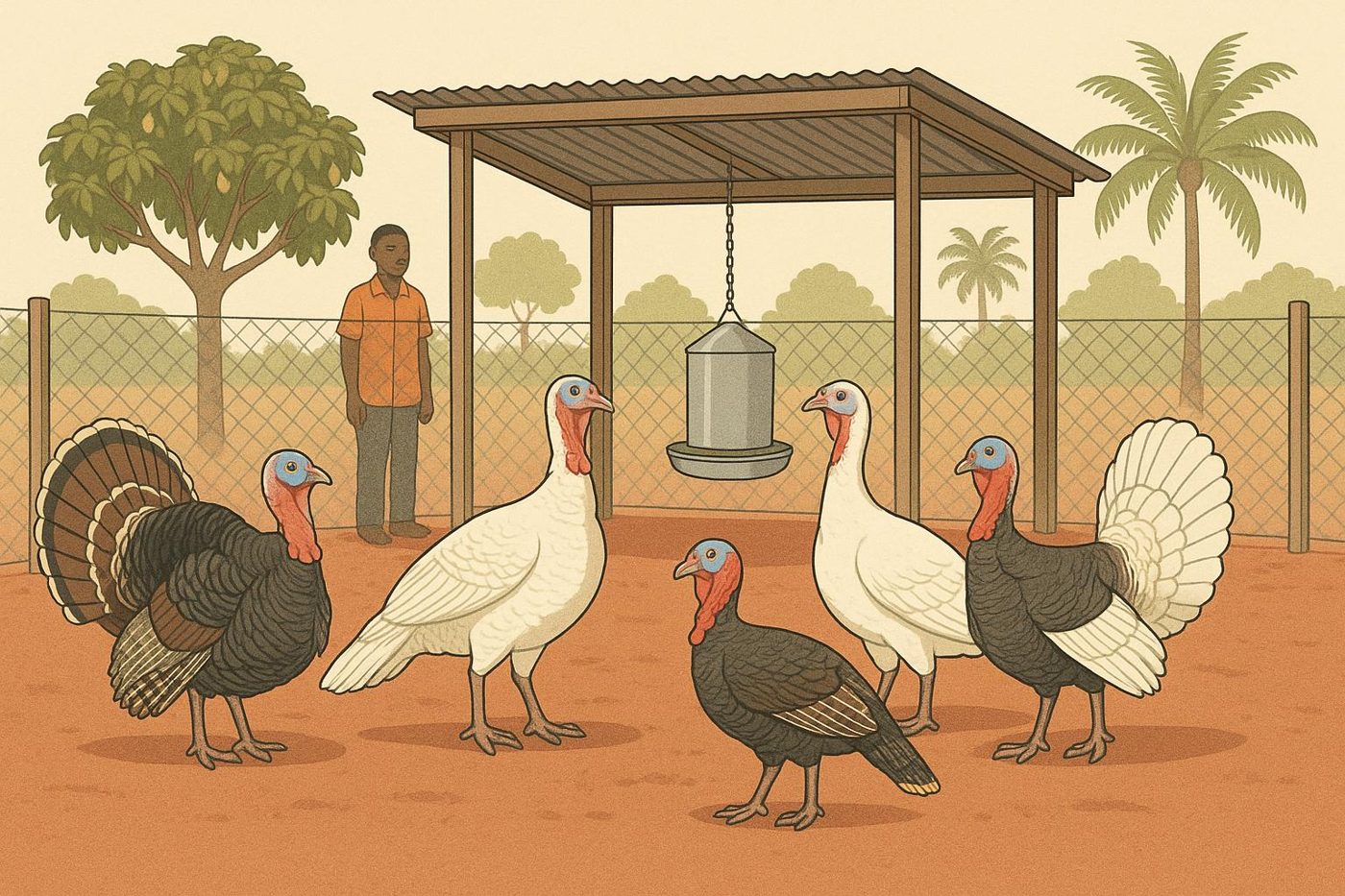
The domestic turkey descends from the wild turkey of North America. There are local turkeys, smaller, hardy and often black or bronze, and improved white-feathered turkeys, which are much heavier. The male is much larger than the female.
The young are called poults.
Uses and market
Turkeys are raised for meat. Demand is very seasonal: it peaks at Christmas and New Year, then at major festivals and ceremonies. Outside these periods, turkey is also sold in portions to the catering trade.
The cycle is long: plan the placement so the birds are ready just before the target festivals.
Rearing conditions
Poults are slow to learn to eat and drink: in the first days, provide plenty of water and feed points, put feed on paper and attract their attention by tapping. They need warmth at the start and a feed higher in protein than chicken feed.
As adults, turkeys need plenty of space, perches and a well-ventilated house. Heavy and well feathered, they suffer in high heat: shade, moving air and cool water at all times are essential.
Health
Turkeys are highly susceptible to histomoniasis, or blackhead, which chickens can carry without being affected. This is the main reason never to keep turkeys and chickens together, nor on ground previously used by chickens.
As for all poultry, the vaccination and deworming programme is decided with the vet in your area, and biosecurity remains the best protection.
Common mistakes
Keeping turkeys with chickens. Brooding poults like chicks without helping them find water. Giving too poor a feed. Lacking space and shade in hot weather. Placing birds too late for the festive season.