
Poultry encyclopedia · NEXTEKCI School · Species and breeds
The duck (Muscovy and common duck)
Two ducks are raised in West Africa: the Muscovy, hardy and quiet, very common in villages, and the common duck, which matures earlier. Both give popular meat and are easy to raise, provided water and litter are well managed.
Key facts
- Muscovy duck
- Cairina moschata; 35-day incubation
- Common duck
- Domestic Anas platyrhynchos; 28-day incubation
- Water
- It must be able to dip its whole head
- Pond
- Not essential
- Weak points
- Mouldy feed, wet litter
Two different ducks
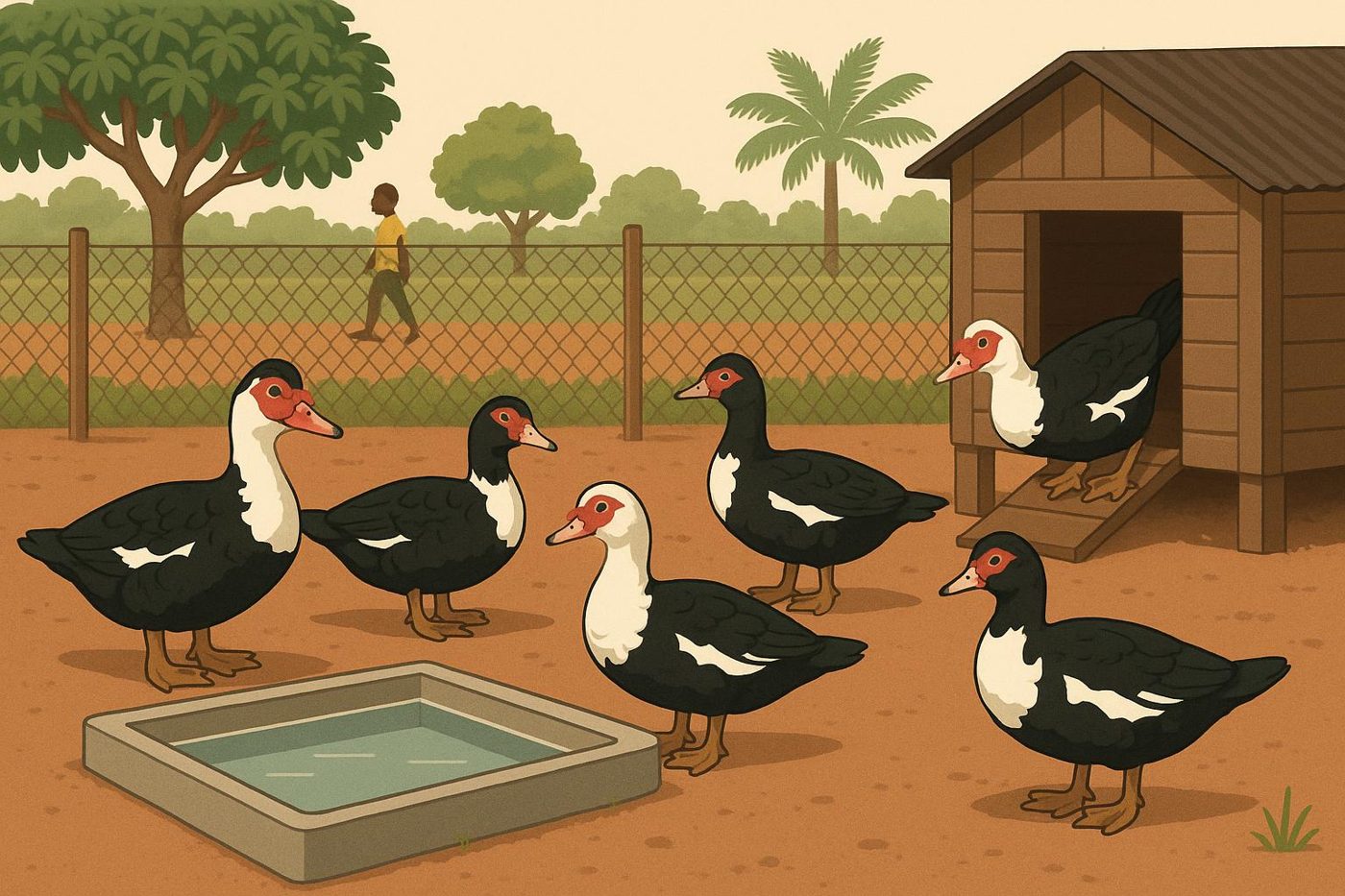
The Muscovy duck, native to South America, is recognised by the red caruncles around its eyes. It is hardy, almost silent, a good sitter, and the drake is much heavier than the duck. It is the most common duck in West African villages.
The common duck descends from the mallard. Noisier, it grows faster and some breeds lay many eggs; on the other hand it is less willing to sit.
Uses and market
Ducks are raised mainly for meat, redder and fattier than chicken, enjoyed at home, in local eateries and for festivals. Duck eggs are larger than hen’s eggs and are also eaten.
Demand is real but narrower than for chicken: identify your buyers before producing in numbers.
Rearing systems
Traditionally, ducks live in small free-ranging groups around homes and water points, with a shelter for the night. In improved systems they have a well-ventilated house and a fenced grassy run.
A pond is not essential, but the duck must be able to dip its whole head in water to clean its eyes and nostrils: provide drinkers deep enough. Ducklings are brooded warm and dry, like chicks, and must not bathe before they have their feathers.
Feeding, litter and health
Ducks eat complete feed, grain and greens, and enjoy snails and insects on the run. They are very sensitive to mouldy feed: never use maize or feed that has become damp.
Ducks splash a great deal: put drinkers on slatted floors or outside, and replace wet litter. They can carry some diseases, including avian influenza, without looking ill: keep them away from chickens and wild birds, and decide the vaccination programme with the vet in your area.
Common mistakes
Keeping ducks and chickens together. Providing drinkers that are too shallow. Letting litter turn to mud. Giving mouldy feed. Letting ducklings get wet too early.