
Poultry encyclopedia · NEXTEKCI School · Species and breeds
The guinea fowl
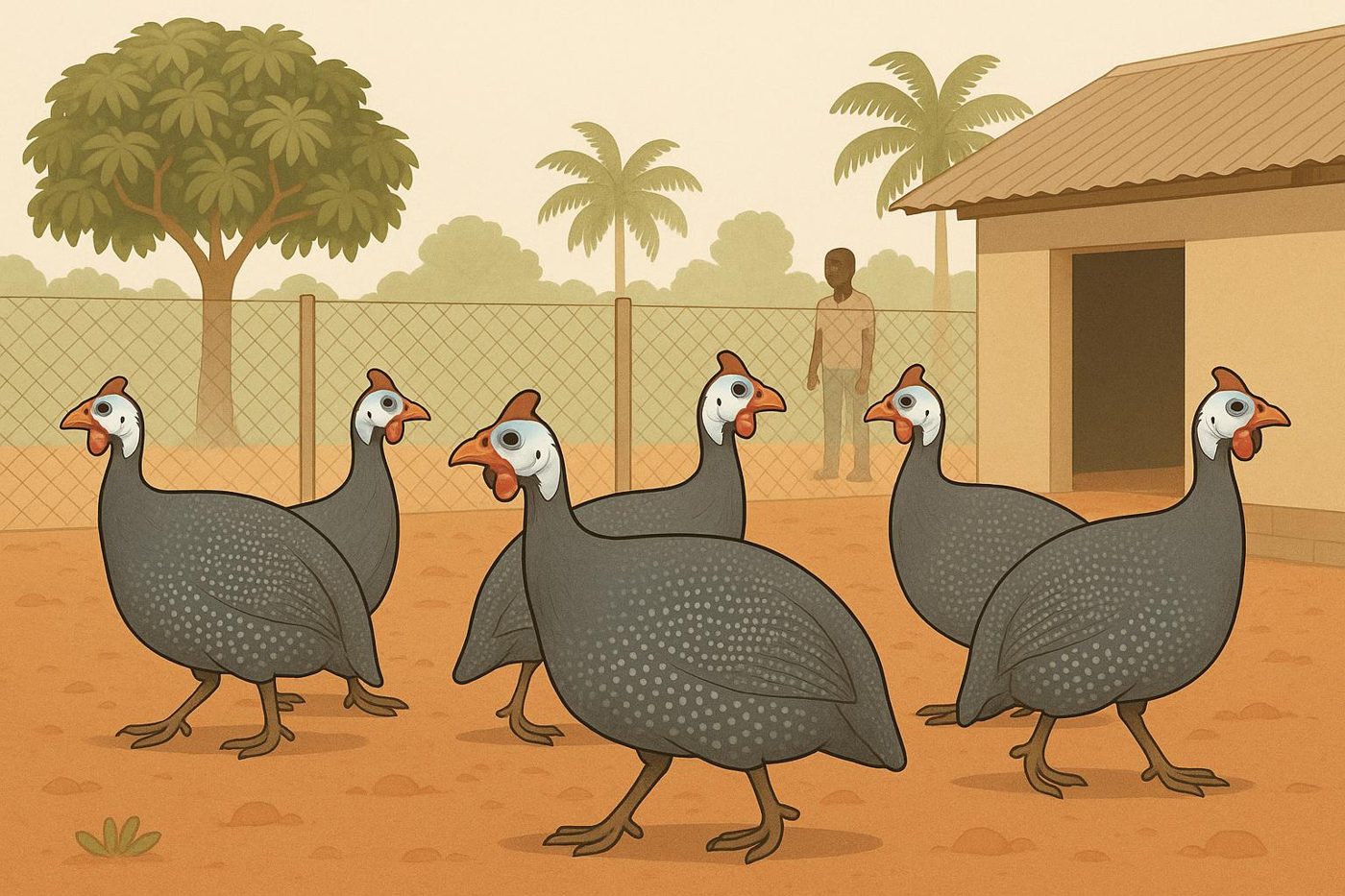
Native to Africa, the guinea fowl is a hardy, noisy and watchful bird, valued for its strongly flavoured meat. Common in northern Côte d’Ivoire and the Sahel countries, it needs special care during its first weeks.
Key facts
- Scientific name
- Numida meleagris
- Origin
- Africa
- Incubation
- 26 to 28 days
- Young
- Keets are fragile in their first weeks
- Strengths
- Hardiness, tasty meat, thick-shelled eggs
- Behaviour
- Noisy, watchful, flies easily
What is the guinea fowl?
The domestic guinea fowl descends from Africa’s wild helmeted guinea fowl. Its grey plumage dotted with white, bare head and bony casque make it easy to recognise. It remains close to the wild bird: shy, a good flier and quick to give alarm calls at the slightest danger, which makes it a good “guard” for the yard.
The young are called keets.
Uses and market
Guinea fowl are raised mainly for their meat, darker and more flavoursome than chicken, close to game. They are sought after for festivals, ceremonies and gifts. Their eggs, small and very thick-shelled, keep well and are also eaten.
It is a niche production with loyal customers: check local demand before you start.
Rearing systems in West Africa
In traditional systems, guinea fowl roam by day and lay seasonally, mostly in the rainy season, often in nests hidden in the grass. Domestic guinea hens are poor sitters: their eggs are often placed under broody chicken hens or in an incubator.
In improved systems, keets are brooded indoors, then the adults live in a well-ventilated house with an aviary or a fenced, covered run, because they fly and escape easily.
Rearing conditions
Keets fear cold, damp and draughts for much longer than chicken chicks: warmth, dry litter and shelter from rain are essential during the first weeks. They need a protein-rich starter feed and clean water in drinkers they cannot drown in.
Guinea fowl suffer from most chicken diseases. The vaccination and deworming programme is decided with the vet in your area, and guinea fowl should not live in contact with other poultry of different ages.
Common mistakes
Letting keets get soaked by rain or dew. Feeding them too poor a diet. Mixing them with backyard chickens. Leaving the run uncovered and losing birds that fly off. Collecting eggs too late when they are laid in the bush.