
Poultry encyclopedia · NEXTEKCI School · Species and breeds
The goose
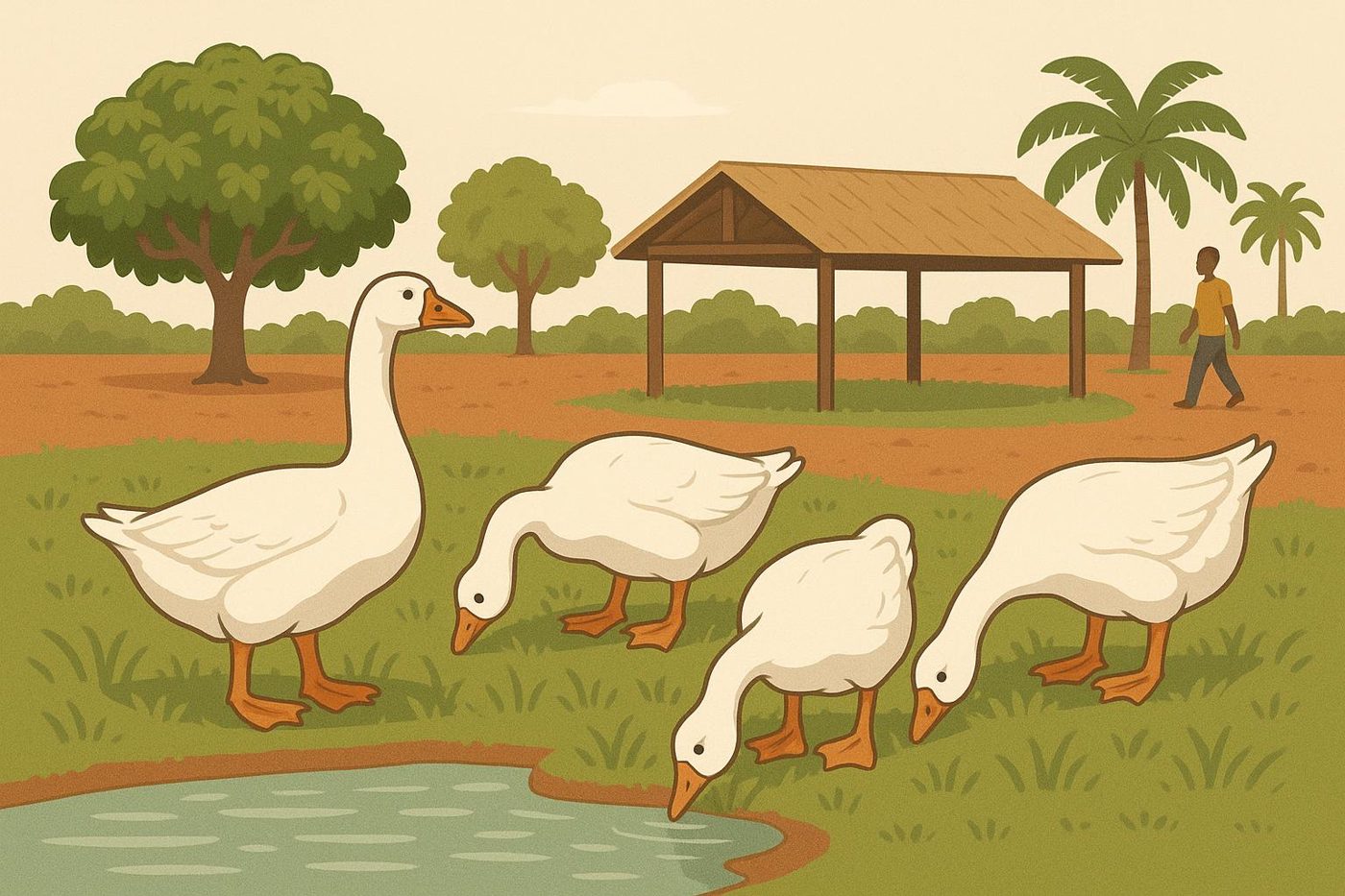
The goose is a large bird that feeds largely on grass. Rarely raised in Côte d’Ivoire, it remains a curiosity, but it is hardy, long-lived and keeps a noisy watch over the farm.
Key facts
- Domestic species
- Domestic greylag goose, Chinese (swan) goose
- Incubation
- 28 to 33 days depending on breed
- Feeding
- Largely grass (grazing)
- Laying
- Seasonal, few eggs
- Behaviour
- Noisy, a good guard
What is the goose?
Domestic geese descend from the greylag goose and the swan goose, also called the Chinese goose, recognisable by the knob on its bill. They are large, long-lived birds that form pairs or small stable groups.
The young are called goslings.
Uses and market
Geese are raised for their fatty, flavoursome meat, and sometimes for their down. They also act as guards, raising a loud alarm when a stranger arrives.
In Côte d’Ivoire, goose meat is little known and demand remains low: it is a small sideline or hobby flock, not a production to launch without identified customers.
Rearing conditions
The goose is above all a grazer: a pasture of young grass covers much of its needs, topped up with feed or grain. It needs shade, a night shelter and water deep enough to dip its head; a pond is appreciated but not required.
Goslings are brooded warm, dry and sheltered from rain for the first weeks, then gradually let out to graze. The health programme is decided with the vet in your area, and geese are kept away from other poultry.
Common mistakes
Raising geese without pasture, on feed alone. Leaving goslings out in the rain. Forgetting shade in the hot season. Starting without checking that there are buyers for goose meat.