
Poultry encyclopedia · NEXTEKCI School · Species and breeds
The pigeon (raising pigeons for meat)
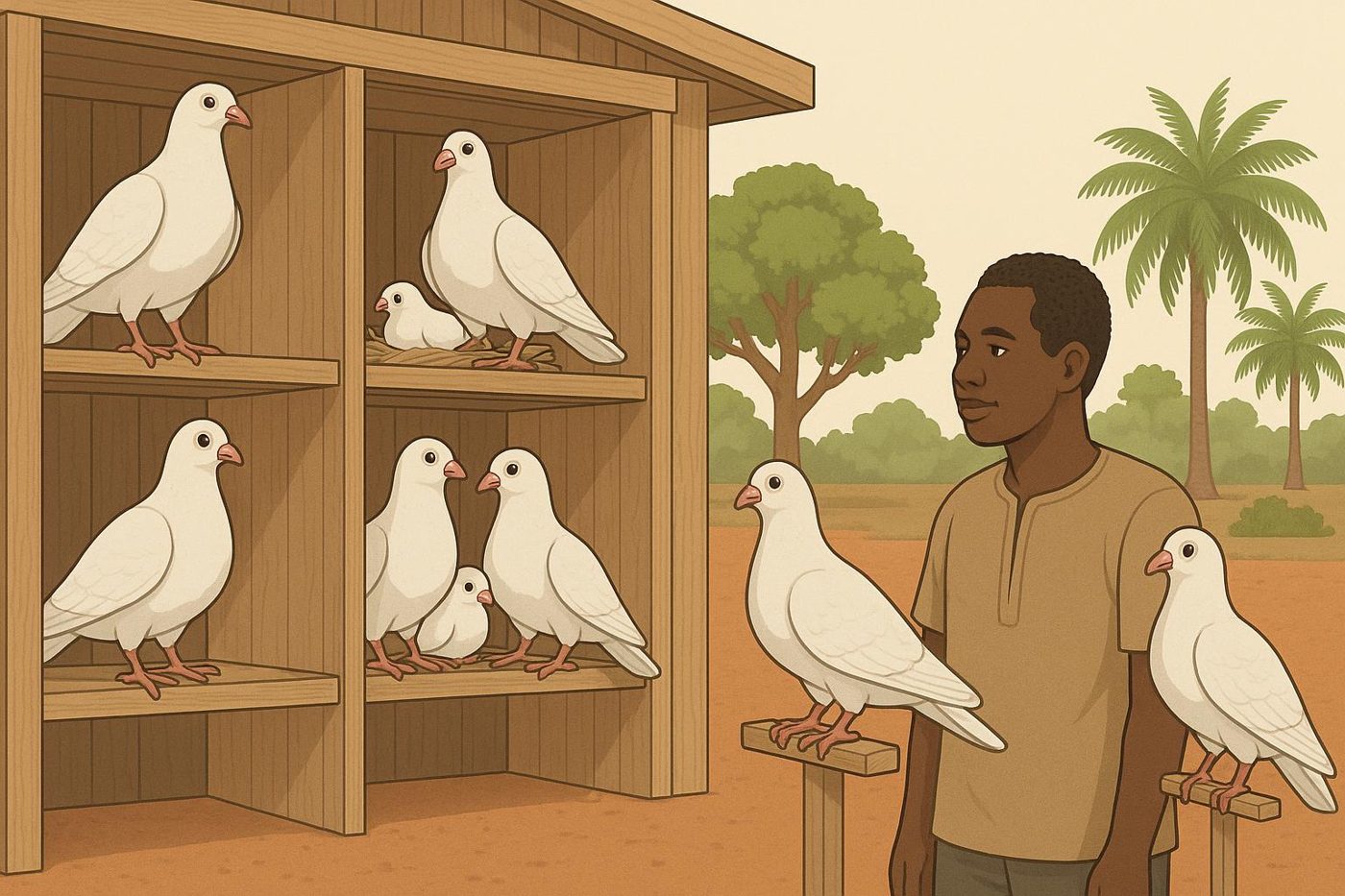
Meat pigeons are raised for their squabs, sold young for their tender meat. The farm relies on stable pairs, housed in a healthy loft, that feed their young themselves. It is a niche production that needs little space.
Key facts
- Scientific name
- Columba livia (domestic pigeon)
- Incubation
- 17 to 18 days
- Laying
- 2 eggs per clutch
- Pairs
- Faithful; both parents sit and feed
- Feeding the young
- “Crop milk” produced by the parents
- Housing
- Loft with two nests per pair
What is meat pigeon farming?
Domestic pigeons live in faithful pairs. The hen lays two eggs, which the cock and hen take turns to incubate. Both parents then feed the young with “crop milk”, a paste they produce in their crop, followed by softened grain.
The squab is sold young, before it leaves the nest, when its meat is at its most tender. Meanwhile the pair can already prepare the next clutch.
Uses and market
Squabs give fine, tender meat, appreciated by some restaurants and for home consumption. The market exists but remains narrow: check local demand and start with a few pairs.
Pigeons also have the advantage of needing little space and little daily work, since the parents raise their own young.
Rearing conditions
The loft must be dry, ventilated without draughts, shaded and closed against rats, snakes, cats and birds of prey. Provide two nests per pair, so the pair can lay again while the young are growing, as well as perches and an aviary.
Feeding is based on mixed grains or a suitable complete feed, with minerals (grit) available at all times and clean water changed daily. Pigeons also like to bathe: a tray of clean water, removed after bathing, helps keep their plumage healthy.
Health and biosecurity
Pigeons can carry diseases that spread to chickens, including a form of Newcastle disease. A pigeon loft must therefore never be near a chicken flock, and free-flying pigeons must not have access to poultry houses.
The health programme is decided with the vet in your area. A clean, dry loft, with droppings removed regularly, prevents most problems.
Common mistakes
Forming “pairs” of two cocks or two hens through not knowing how to tell them apart. Overcrowding the loft. Leaving it damp and dirty. Forgetting minerals. Letting pigeons mix with the farm’s chickens.