
Poultry encyclopedia · NEXTEKCI School · Species and breeds
Coloured and hybrid chickens
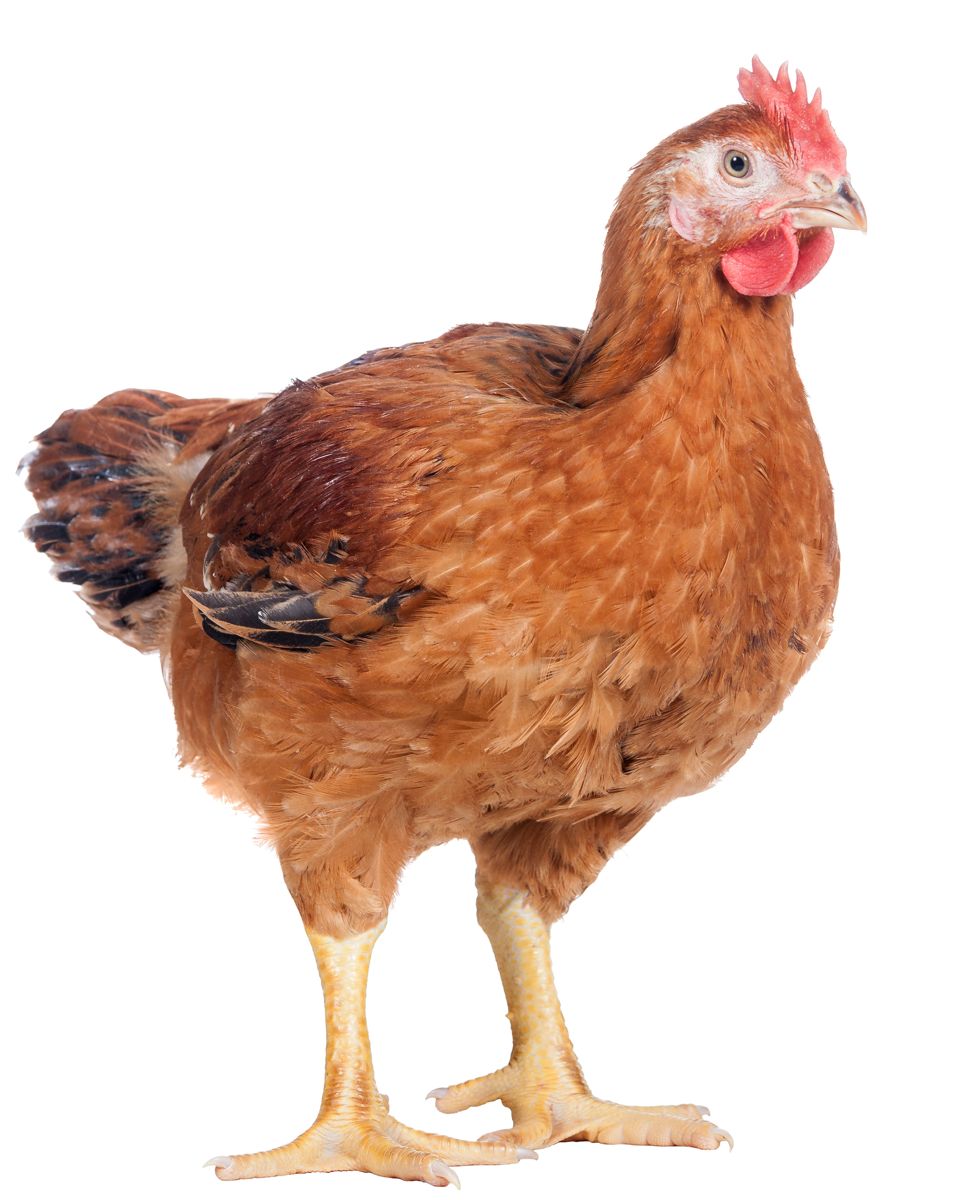
Red broilers, barred grey, naked-neck hybrids: coloured chickens grow more slowly than white broilers, but they are hardy, cope better with heat and give firm meat close to that of village chickens. They are sold between 8 and 14 weeks, when the farmer chooses.
Key facts
- Rearing period
- 8 to 14 weeks depending on target weight
- Red broiler (Redbro) at 56 days
- About 2.4 kg (target)
- Hybrids at 70 days
- About 2 kg (target)
- Stocking density indoors
- 6 to 8 birds per m²
- Outdoor run
- Possible from 4 to 5 weeks, on a protected farm
- Vaccination
- On the farm, following the vet in your area
What is a coloured chicken?
Coloured chickens are meat chickens with red, grey or black plumage that grow more slowly than white broilers. The Hubbard Premium reference range (Redbro, Hubbard JA) serves as the benchmark: red broiler, naked-neck red broiler, barred grey, white-skinned red hybrid, naked-neck red hybrid and naked-neck black hybrid.
The naked neck is not a defect: these birds have fewer feathers, shed heat more easily and suffer less in very hot weather. NEXTEKCI red broiler, barred grey and hybrid chicks follow the same curves as the Hubbard Premium range.
Uses and market
Their firm, tasty meat is highly valued in Côte d’Ivoire, where they are sometimes called “improved village chicken”. They are sold by the bird or by weight at markets, local eateries, restaurants and for festivals, often fetching more than white broilers.
Their great advantage is flexibility: the farmer can sell when it suits, before a festival or when a customer turns up. Hybrids suit birds of 1.5 to 2 kg, red broilers and barred greys suit birds of 2 to 2.5 kg, and red broilers suit large festive birds.
Rearing management
Brooding is done exactly as for white broilers: a clean, pre-heated house, a floor at 32 °C, water and feed straight away, and a crop check at 24 hours. Then come the grower and finisher feeds, with clean water at all times and dry litter.
Coloured chickens do well in open-sided houses, at 6 to 8 birds per m². An outdoor run is possible from 4 to 5 weeks if the farm is fenced, with shelter, shade, water and protection against predators. In open-sided houses in hot weather, weights are often 10 to 25% below target: weigh every week to find out.
Choosing the selling age
The longer you keep a bird, the heavier it gets, but the more it eats for each kilo gained: the feed conversion ratio rises with age. The right selling age is the one at which the price you get comfortably covers the last week’s feed.
Compare several selling ages with your own prices before placing the flock, and set your target with your customer.
Health and common mistakes
NEXTEKCI coloured chicks are not vaccinated at the hatchery. Because they stay on the farm longer than white broilers, ask the vet in your area for a protocol suited to the length of your flock.
Common mistakes: feeding them like village chickens, on poor feed, and then being surprised by slow growth; opening an unfenced run; letting backyard poultry come near the flock; keeping birds several extra weeks without doing the sums.