
Poultry encyclopedia · NEXTEKCI School · Farm equipment
Nipple drinkers and drinker lines
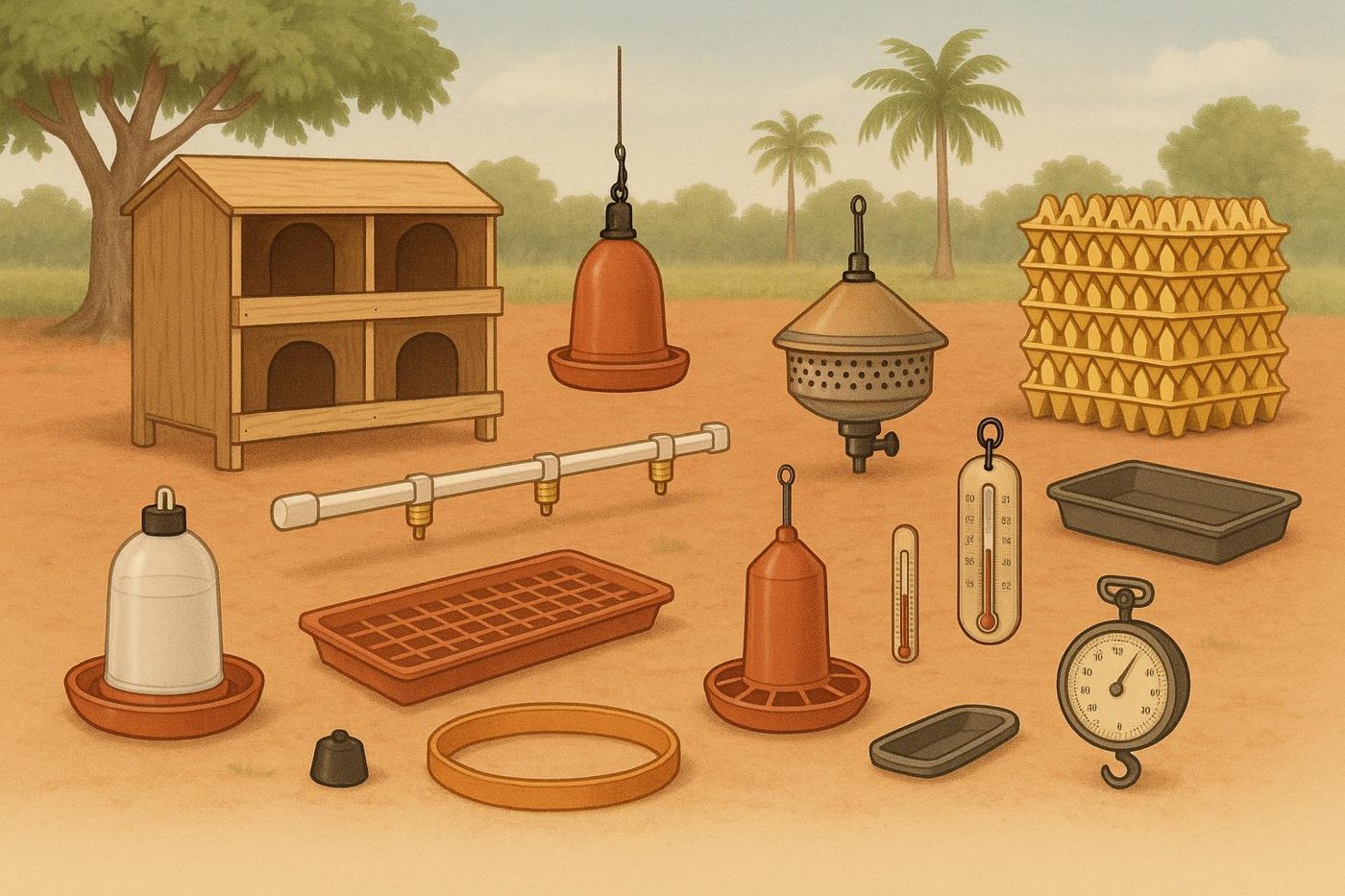
Small valves fitted to a pipe: the bird touches the pin and receives a drop of water. As a closed system, the water stays clean and the litter drier. Allow about 10 to 12 broilers per nipple, and 1 nipple for 10 hens at 30 °C.
Key facts
- Low flow (50 to 60 ml per minute)
- About 10 broilers per nipple
- High flow (80 to 90 ml per minute), with drip cup
- About 12 broilers per nipple
- Layers
- 1 nipple for 10 hens at 30 °C (1 for 20 at 25 °C)
- Spacing
- No more than 35 cm between two nipples
- Height
- At chicks’ eye level for the first 2 to 3 hours, then just above the head
- Line flushing
- At high pressure (1 to 2 bar), ideally daily, at least 3 times a week
What they are for
A nipple is a small valve screwed under a rigid pipe. When the bird pushes the pin with its beak, a few drops fall; when it lets go, the valve closes. The water never touches the air or the litter: it is a closed system.
The advantages: cleaner water, drier litter, and no daily washing as with open drinkers. In return, you must check regularly that every nipple actually delivers water: a quick glance is not enough.
How many nipples
For broilers: about 10 birds per low-flow nipple (50 to 60 ml per minute), i.e. about 100 nipples per 1,000 broilers; about 12 birds per high-flow nipple with drip cup (80 to 90 ml per minute), i.e. about 84 nipples per 1,000.
For layers, the need depends on the heat: 1 nipple for 10 hens at 30 °C, 1 for 20 at 25 °C. In every case, nipples are no more than 35 cm apart and no bird should have to walk more than 3 m to drink.
Height and pressure
On arrival, the nipple is at the chicks’ eye level for the first 2 to 3 hours so they find it. After that, set it just above the head: the bird stretches its neck slightly to drink, with its feet flat on the litter. The line is raised every week as the birds grow and stays perfectly level.
Set the pressure so that a drop hangs at the tip of the nipple without running. Wet litter under the line: nipples too low or pressure too high. Birds drinking poorly and very dry litter: line too high or pressure too low at the end of the line.
Line maintenance
A slimy deposit, the biofilm, forms inside the pipes, and germs hide in it. Flush the lines at high pressure (1 to 2 bar), ideally every day and at least 3 times a week, by opening the end of each line. Check and clean the water filter every week. Hard water forms scale that blocks the nipples.
Between flocks: drain the pipework and the tank, scrub the tank, run a cleaning solution into each line following the manufacturer’s instructions (gloves and goggles), leave it for at least 12 hours if it cannot circulate, then drain and rinse thoroughly before the chicks arrive.
Common mistakes
Assuming a full line delivers water everywhere: a blocked nipple cannot be seen, you have to touch it. Leaving the line too low or the pressure too high, which wets the litter. Forgetting to raise the line. Never flushing: biofilm builds up and digestive diseases follow.
Anything added to the water (vitamins, vaccine, treatment) goes in only on the vet’s prescription, at the vet’s dose and for the stated time, and never with a disinfectant in the water on a vaccination day: the disinfectant kills the vaccine.
Choosing them
Choose first by flow rate: high-flow nipples with drip cups serve more birds each, and the cup protects the litter. Make sure there is an easy-to-reach pressure adjustment, a filter on the inlet and a simple way to raise the line. Nipples need good-quality water: have the water tested at least once a year.