
Poultry encyclopedia · NEXTEKCI School · Farm equipment
Siphon drinker (chick drinker)
A small drinker that sits on the litter and is filled by hand, giving chicks their water during the first days. You need 14 to 16 per 1,000 chicks, kept clean, filled with water at room temperature and never placed under the heat source.
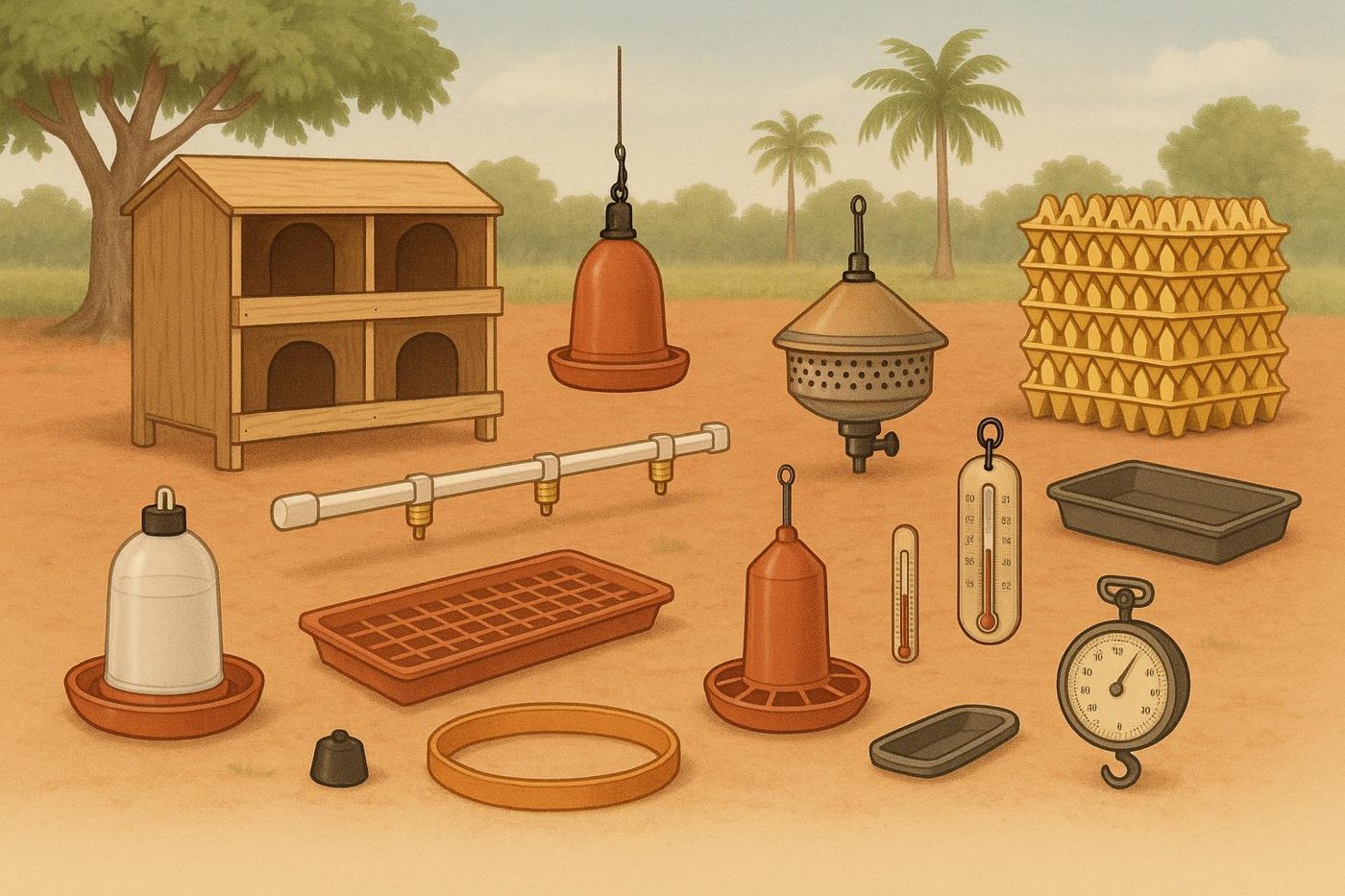
Key facts
- Number
- 14 to 16 per 1,000 chicks in the brooding area
- Usual capacity
- 4 to 5 litres
- Height
- On the litter for the first days, then slightly raised (on a brick)
- Water on arrival
- Clean, at about 20 to 25 °C, put in place 2 hours beforehand
- Distance
- No chick more than 3 m from a drinking point
- Cleaning
- Every day, with a brush
What it is for
A siphon drinker is a reservoir turned upside down over a small trough: water flows into the trough as the chicks drink. It puts water at chick height, where the chick can see it, and is used for the first days, before moving on to bell drinkers or nipples.
On arrival, water comes before feed: dip the beaks of a few chicks into the drinker and the others follow. A chick that drinks quickly starts well; a chick that cannot find water dehydrates and dies in the first days.
How many to install
Allow 14 to 16 starter drinkers per 1,000 chicks in the brooding area, mini-drinkers included. Install the number needed for the chicks ordered, not “to start with”: one drinker too many costs almost nothing, one drinker too few costs chicks.
Alternate the equipment (feeder, drinker, feeder) so that no chick has more than 3 m to walk to drink.
Setting it up
For the first days, the drinker sits directly on the litter, perfectly level, inside the chick guard. After that, raise it slightly, for example on a brick or a plank: less litter falls into the water and the trough stays level with the backs of the growing chicks.
Place the drinkers between the feed trays and near the heat, but never directly under the brooder: the water warms up there and the chicks drink less of it. Fill them with clean water 2 hours before arrival so it is at room temperature, neither cold nor hot.
Cleaning and maintenance
An open drinker is scrubbed every day. The slimy layer that forms inside is a film of bacteria that contaminates the whole flock. The water is changed several times a day.
In the hot hours, empty the lukewarm water and replace it with cool water from the reserve: above 30 °C, birds drink far less. Between flocks, drinkers are taken apart, washed with detergent, rinsed, disinfected and dried.
Common mistakes
Too few drinkers for the number of chicks; drinkers placed under the brooder or in the sun; water too cold on arrival or heated in a pipe in the sun; trough full of litter; drinkers empty in the early morning.
A ring of wet litter around the drinker means it is badly placed, tipped over or leaking: adjust it and replace the wet litter at once. A chick with a hard crop has eaten but not drunk enough: bring the drinkers closer and check the water temperature.
Choosing one
Choose a drinker made of smooth plastic, easy to take apart and scrub, with a wide, stable base that does not tip. The trough should be shallow so the chick can drink without getting wet or risking drowning. The closure must hold when the full reservoir is turned over.