
Poultry encyclopedia · NEXTEKCI School · Farm equipment
Chick guard (brooder ring)
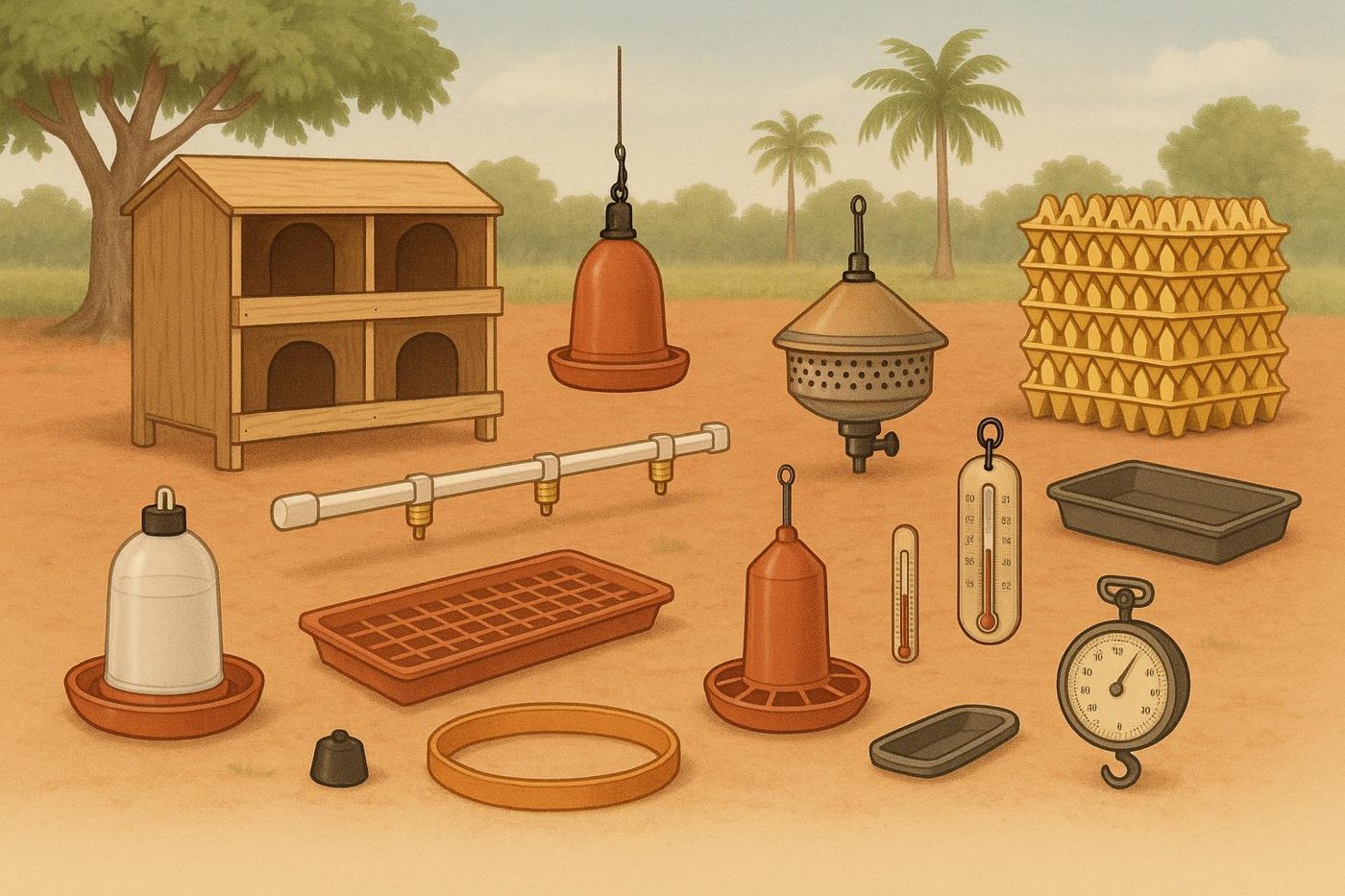
A ring of cardboard, metal sheet or tarpaulin set around the heat source, keeping chicks close to heat, water and feed. 40 to 60 cm high, 2.5 to 3 m across for 300 to 500 chicks, enlarged every day and removed at about 7 to 10 days.
Key facts
- Height
- 40 to 60 cm
- Diameter
- 2.5 to 3 m for 300 to 500 chicks on day one
- Materials
- Thick cardboard, metal sheet or tarpaulin
- Enlarging
- Every day
- Removal
- At about 7 to 10 days
- New area
- Heated and aired at least 24 hours before letting the chicks in
What it is for
The chick guard is a small world to start with. It keeps chicks close to heat, water and feed, shields them from floor draughts, and removes the corners where they would pile up and smother. A chick that wanders away from the heat on the first night does not always find its way back.
Sizing and setting up
The guard is 40 to 60 cm high. A circle 2.5 to 3 m across holds 300 to 500 chicks on day one. Set it around the heat source, perfectly round with no corners, resting on the litter with no gap underneath.
Inside, alternate drinkers and feed trays around the heat but never directly beneath it. Everything is in place, warmed and filled before the chicks arrive.
Enlarging it, then removing it
Every day, enlarge the guard to give the growing chicks more room. Remove it at about 7 to 10 days, once the chicks move freely around the whole space and find heat, water and feed on their own.
Brooding in part of the house
In large houses, brooding is also done in part of the house only: about half up to 7 days, half to three quarters from 8 to 10 days, three quarters from 11 to 14 days, then the whole house.
The division is made with a curtain from floor to roof, with a 20 cm solid barrier at floor level in front of it to stop draughts. Heat and air the new section for at least 24 hours before letting the chicks in.
Hygiene and common mistakes
A cardboard or fibre guard cannot be washed: destroy it at the end of brooding and never reuse it. A metal or tarpaulin guard is washed, disinfected and dried with the rest of the equipment between flocks.
Frequent mistakes: a guard too small for the number of chicks, so they pile up; a guard that is never enlarged; a gap under the guard that lets the draught through; a guard with square corners where chicks stack up.