
Technical guide · NEXTEKCI School
Day-old chick guide: from hatchery to farm
Choosing, ordering, transporting and receiving your chicks: the right steps, from the Agnibilékrou hatchery to the end of the first week
Benchmarks: Cobb (Broiler Management Guide) and NEXTEKCI School lessons · NEXTEKCI hatchery, Agnibilékrou
Download the guide (PDF)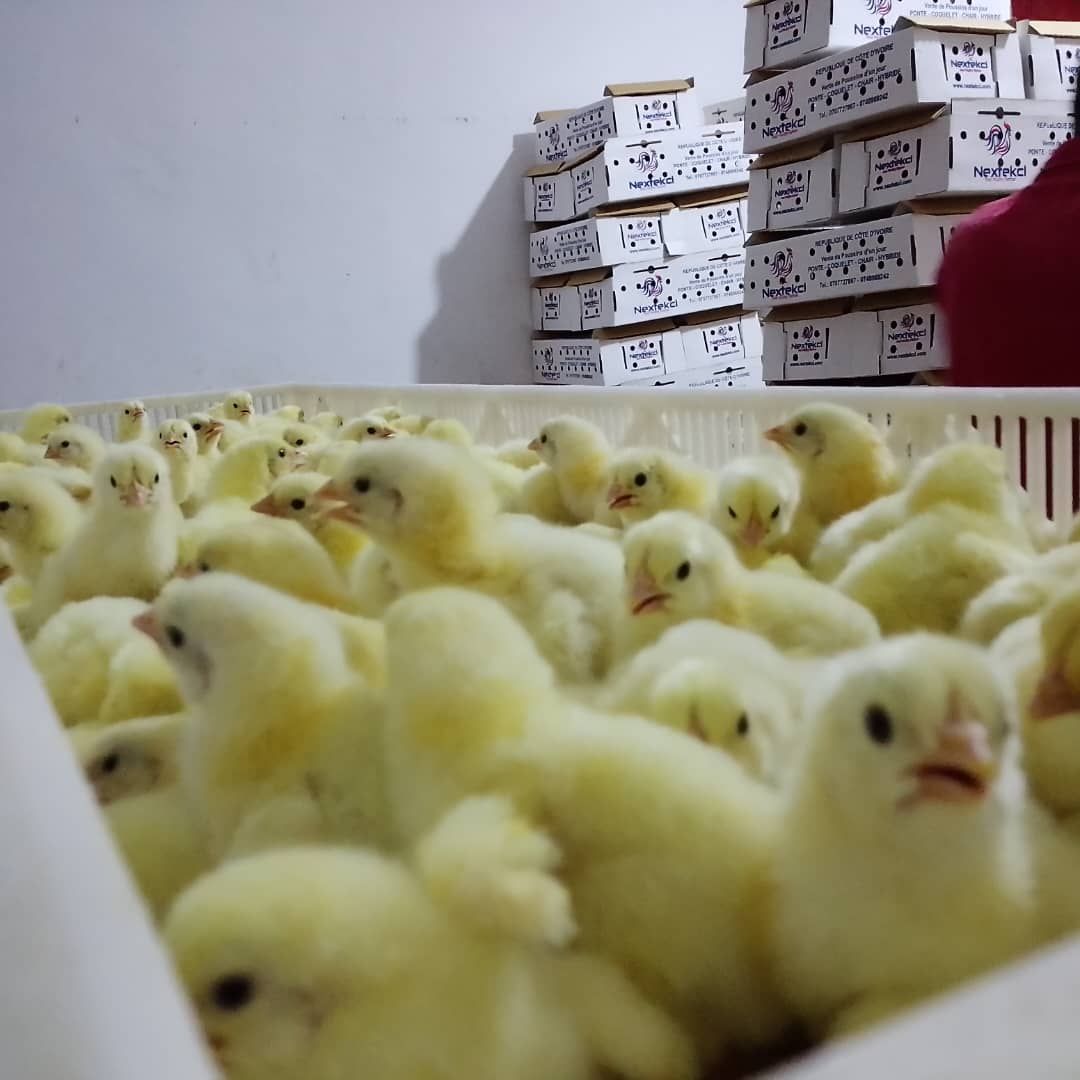
1. Hatchery work in brief
A hen’s egg takes 21 days to hatch. The hatchery’s job is to recreate, over those 21 days, the conditions of a good broody hen (warmth, humidity, egg turning), then to grade, count and box the chicks so that they leave in the best possible condition.
From egg to box
- 1Hatching eggs: they are selected before incubation (clean, intact, of regular shape and size).
- 2Incubation: for 21 days, temperature, humidity and egg turning are monitored constantly.
- 3Hatching: just before leaving the egg, the chick absorbs the rest of its yolk. This reserve feeds it during its first hours and during the journey.
- 4Hand grading: every chick is graded by hand; only lively, well-formed chicks leave the hatchery.
- 5Counting and boxing: the chicks are placed in ventilated boxes of 50, labelled with chick type and date.
- 6Departure: collection at the hatchery, or evening departure with the professional carriers, so that the chicks travel in the cool hours.
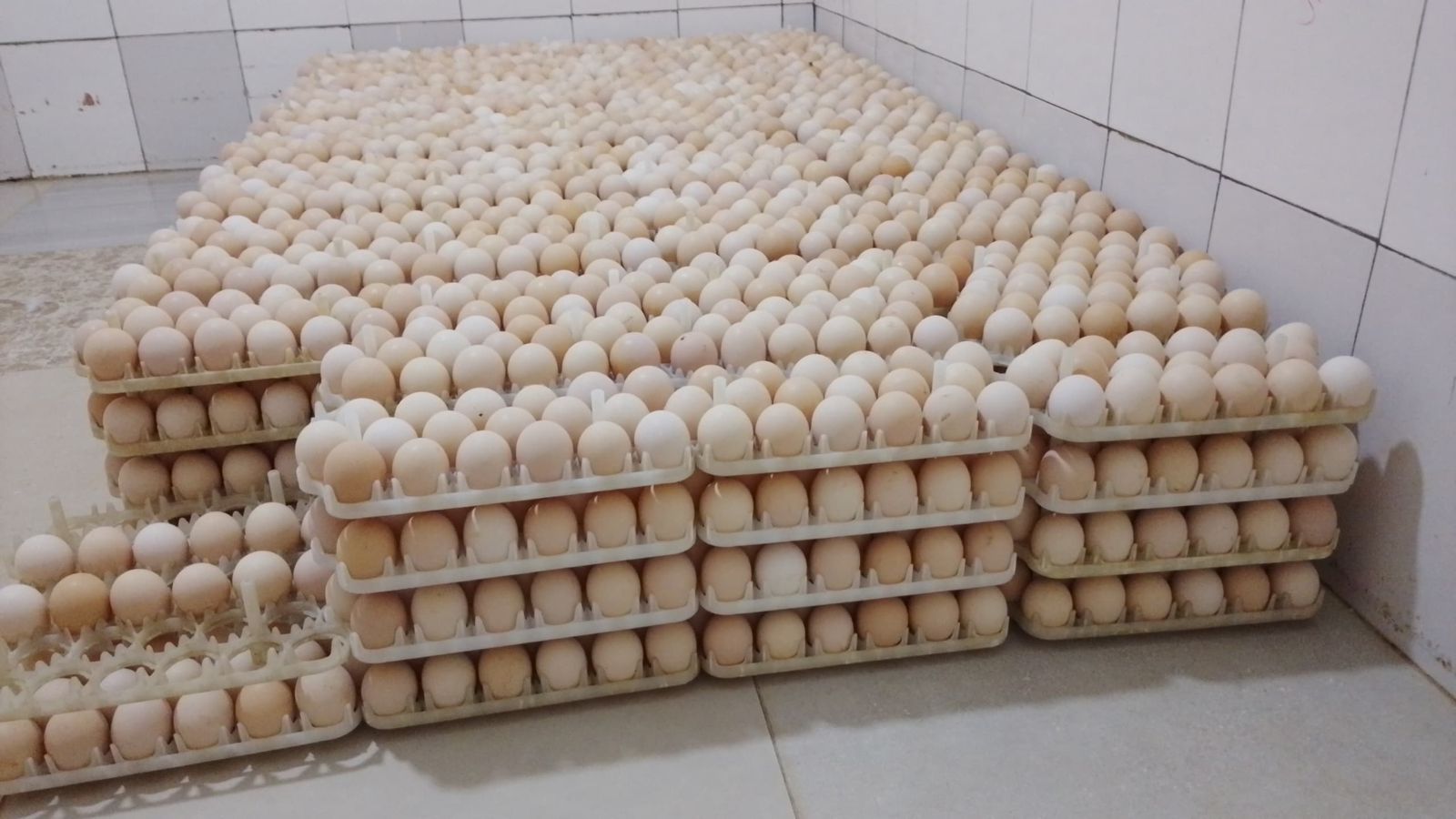
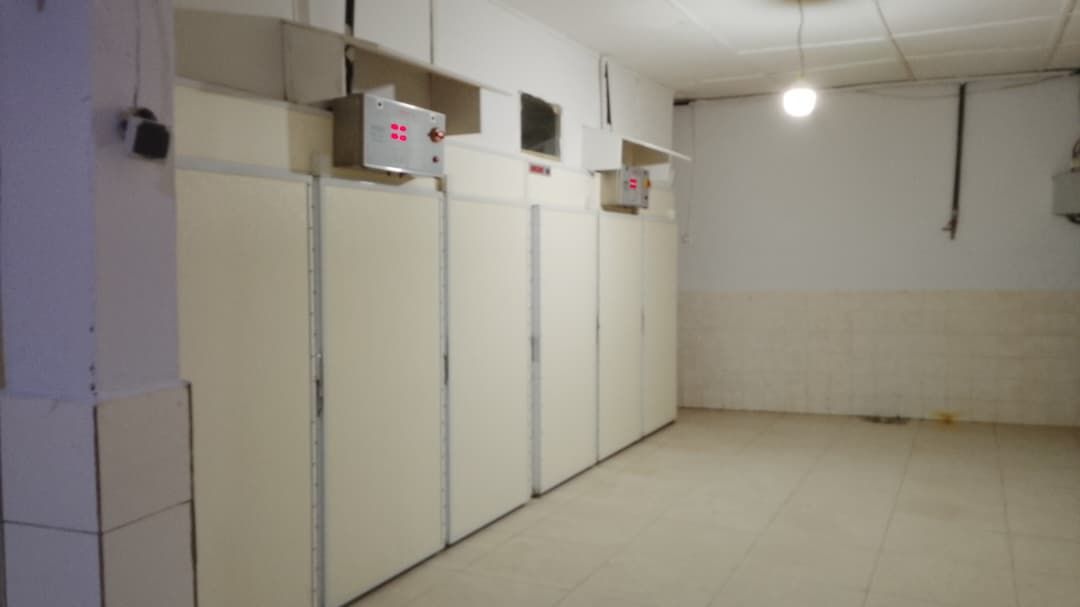
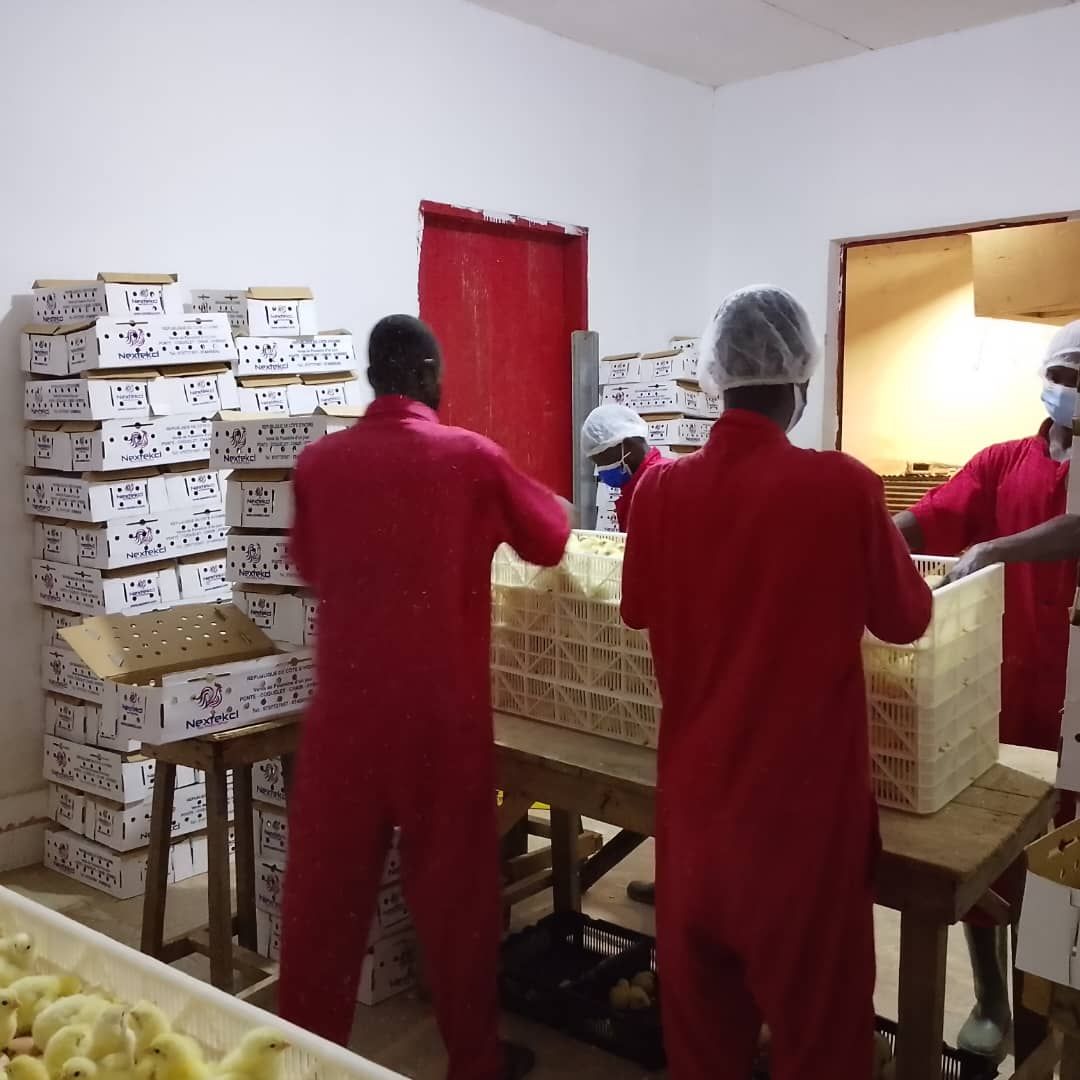
A day-old chick has not yet eaten or drunk: it lives on its yolk reserve. This is enough for the journey, provided it suffers neither heat, nor cold, nor lack of air. On arrival, the sooner it drinks, the better it starts.
2. The six NEXTEKCI chicks
The Agnibilékrou hatchery produces six types of day-old chicks, sold in boxes of 50. The right choice depends on your market, your poultry house and how long you can wait before selling.
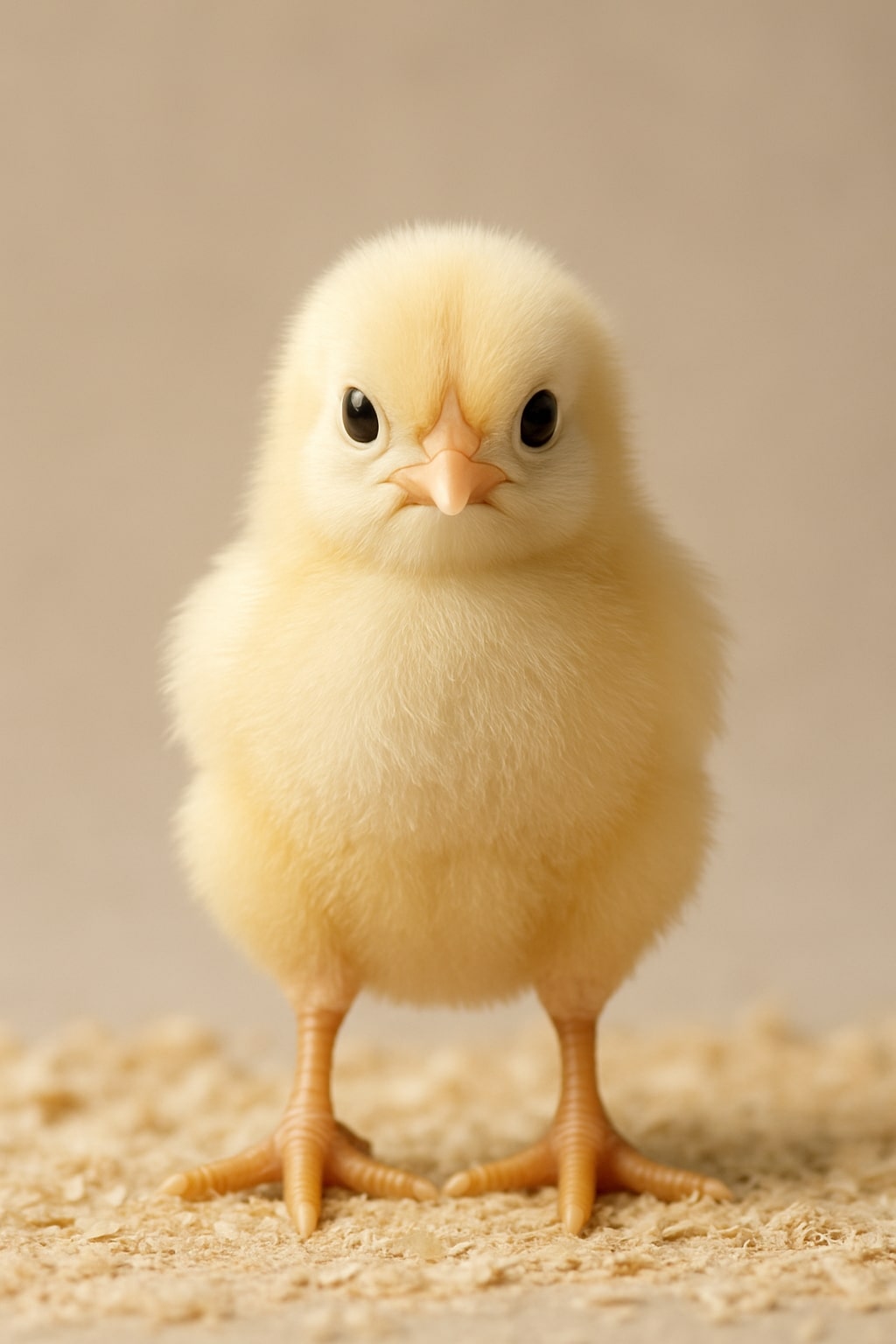
White broiler
- Fast-growing broiler (Cobb 500 type)
- Sold at around 35 to 45 days
- Needs a well-run house, a complete feed and a buyer ready on time
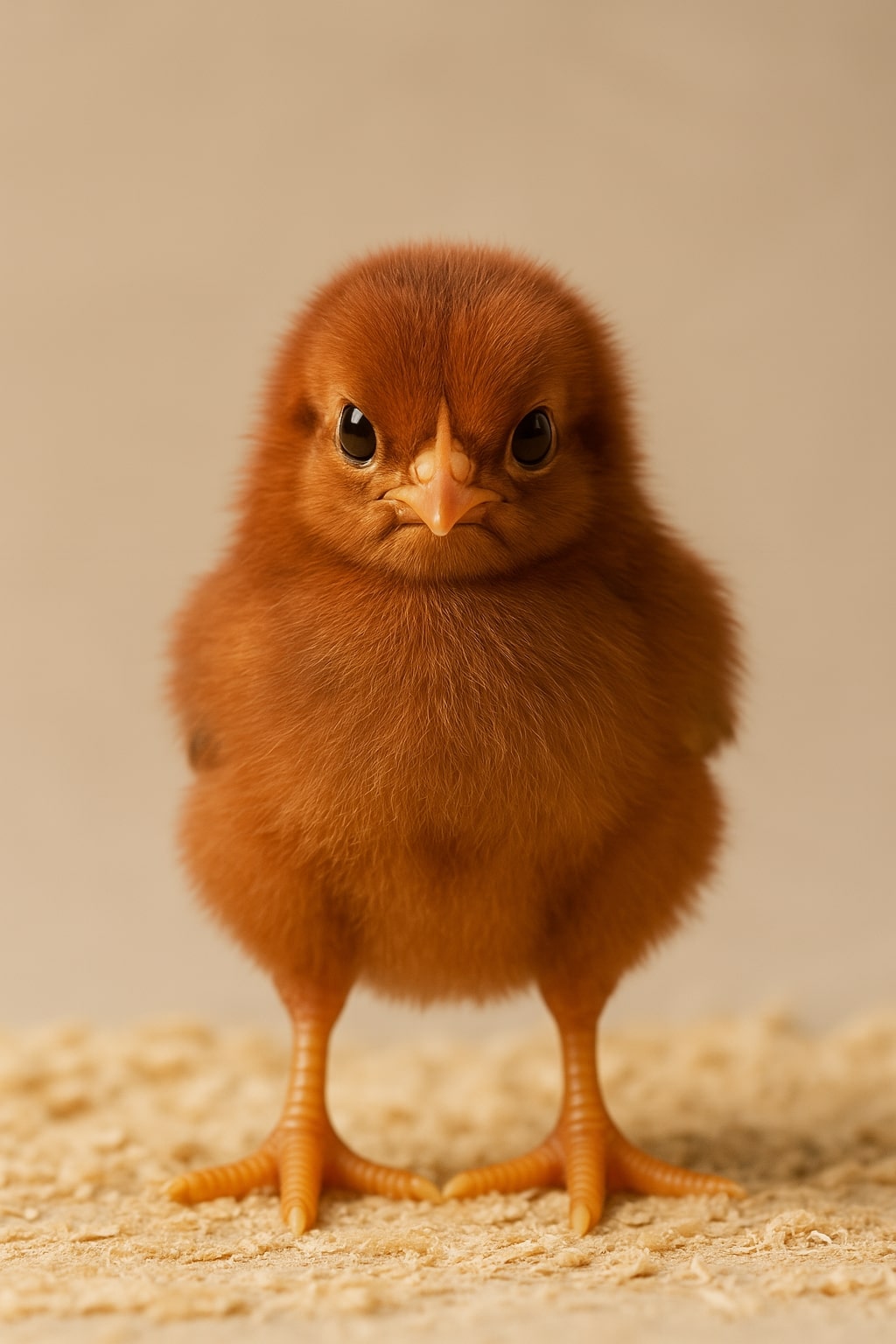
Red broiler
- Hardy coloured chicken, often called “red chicken”
- Copes better with heat
- Longer cycle than the white broiler, firm, popular meat
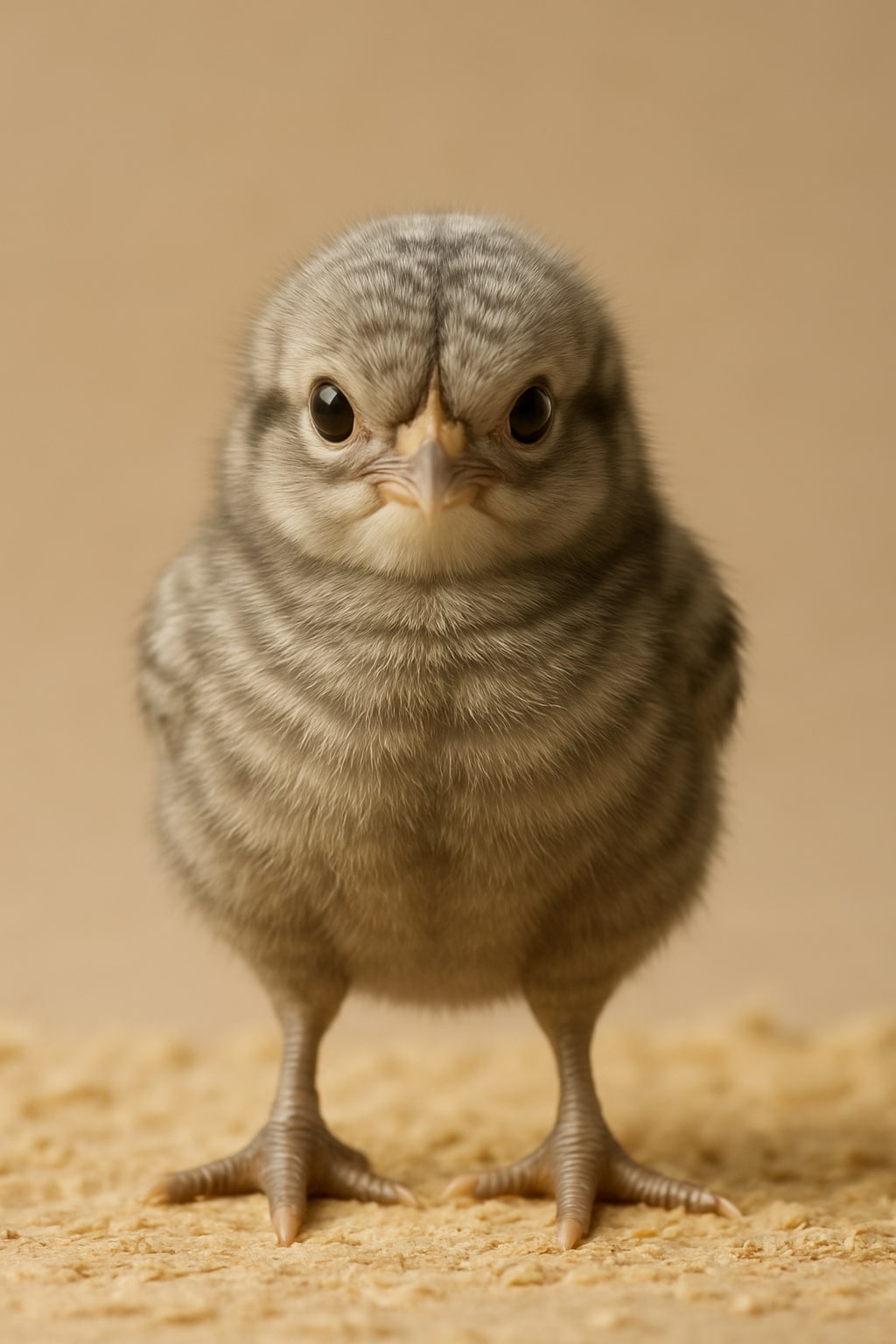
Barred grey
- Dark coloured chicken, very hardy
- Suited to free-range and simple houses
- Longer cycle than the white broiler
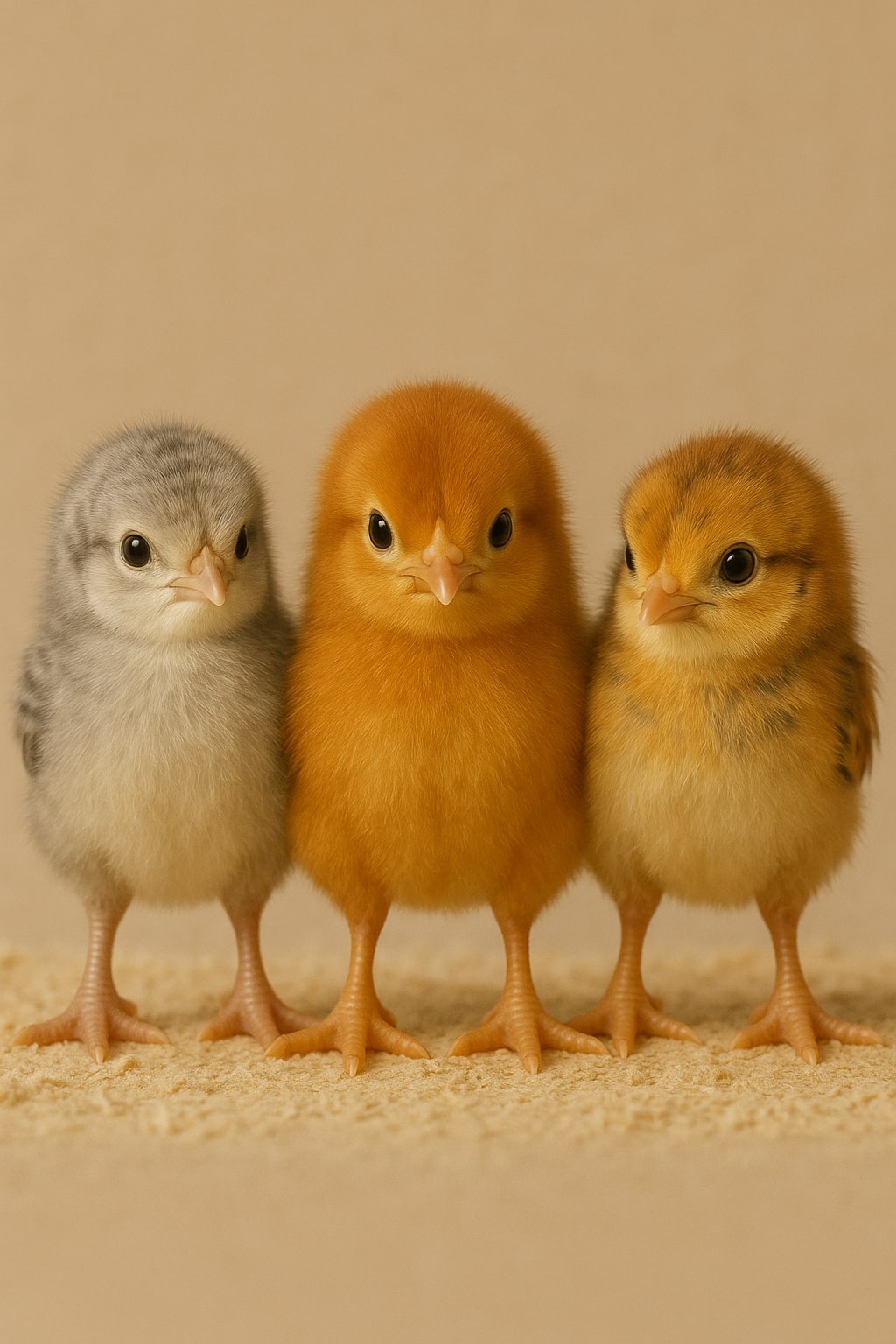
Hybrid
- Balance between growth and hardiness
- Firm meat
- Longer cycle than the white broiler
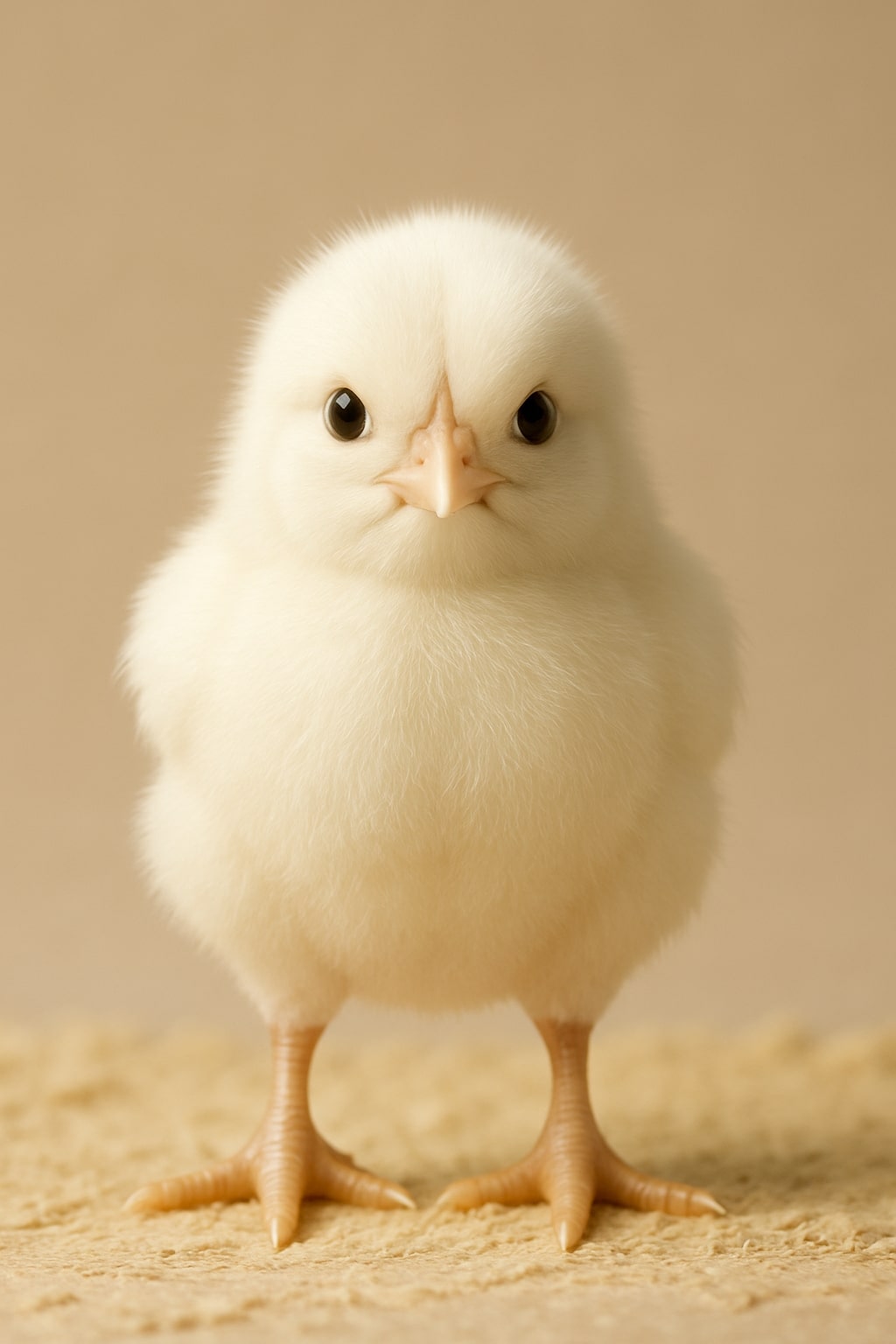
White cockerel
- Males of a laying strain
- An affordable option to get started
- Lighter than a broiler: target the right customers
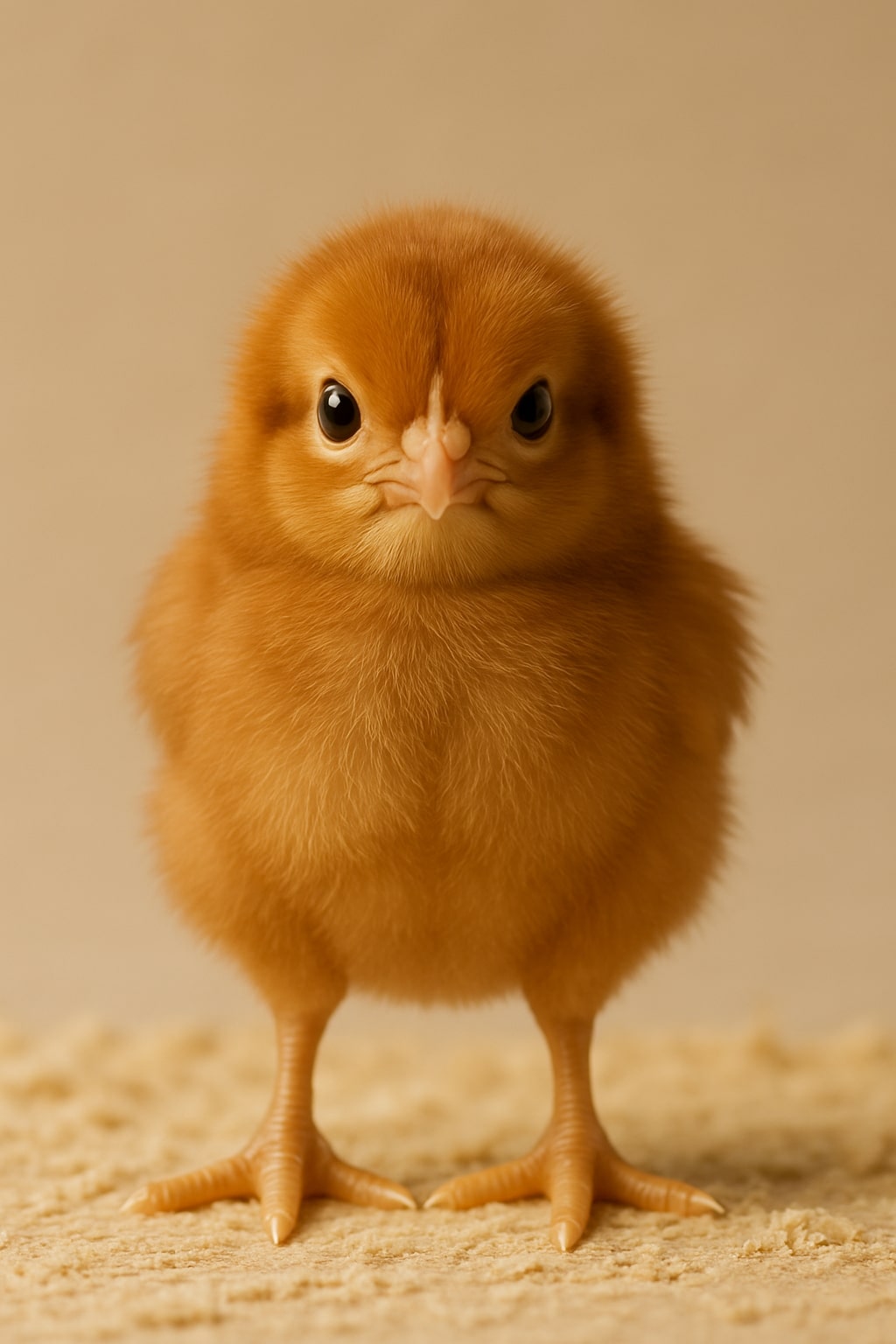
Brown laying hen
- For egg production
- Vaccinated against Marek’s disease at the hatchery
- Long cycle: several months of rearing before the first eggs
For a first flock, choose a type that forgives mistakes: a coloured chicken or a cockerel lets you learn the trade with limited risk. An adviser will help you choose on WhatsApp at +225 05 44 83 27 79.
3. How to spot a good chick
A good chick can be recognised in a few seconds, when the box is opened. First look at the batch as a whole, then pick up a few chicks from several boxes.
What makes a good chick
| Point | Good chick | Report it |
|---|---|---|
| Activity | Lively, standing, alert, reacts to sound and light | Lying down, sleepy, does not get up when put down |
| Eyes | Round, bright, wide open | Half-closed, dull |
| Navel | Fully healed, dry, covered with down | Open, wet, dark, or with a remnant sticking out |
| Legs | Bright and waxy to the touch, straight; hocks not red | Dry and wrinkled (thirsty chick), red hocks, crooked toes |
| Down | Dry, long, clean and fluffy | Matted, dirty or wet |
| Shape | Well-formed body, straight beak and neck | Crossed beak, twisted neck, crooked legs |
| Size | Chicks of even size in the box | Many small chicks, very uneven batch |
Source: Cobb (Broiler Management Guide)
Checking the boxes when you open them
- Listen: a healthy batch cheeps gently and steadily.
- Look: the chicks stand up, spread out and explore as soon as they are put down.
- Pick up a few chicks from several boxes: eyes, navel, legs, down.
- Weigh a sample (about 5% of the boxes) to know the starting weight: this is the reference for judging weight on day 7.
- Write down straight away any chicks found dead or weak when the boxes are opened.
A well-graded batch is even: chicks of the same size start together and grow together. If anything worries you when you open the boxes, take photos and a short video and send them the same day to +225 05 44 83 27 79.
4. Ordering your chicks
The date fits the poultry house, not the other way round. Order when you know your house will be cleaned, disinfected, dry and equipped the day before arrival, and that your buyers will be ready at selling age.
Ordering at a glance
| Question | Answer |
|---|---|
| How do I order? | On WhatsApp at +225 07 07 72 78 67 |
| What information is needed? | The chick type, the quantity in boxes of 50, your town or collection point, the date you want |
| What is the minimum? | 50 chicks (1 box) for collection at the Agnibilékrou hatchery; 200 chicks (4 boxes) for delivery by carrier |
| When should I order? | At least 15 days before departure; 3 to 4 weeks ahead in busy periods, especially before festive seasons |
| Which days do the chicks leave? | Monday and Thursday evening, arriving on Tuesday and Friday morning along the routes |
| What about the price? | An adviser confirms the price of the day when you order; paying in advance secures your place in the schedule |
How many chicks should I order?
- According to the size of the house: do not exceed the recommended stocking density for your production (see the housing guide).
- According to your buyers: a white broiler flock must be sold at the planned age, because every day of delay costs feed.
- According to your cash flow: budget for feed, heating, litter and the vet for the whole flock, not only the chicks.
- For a first flock, start small: you learn the trade better with 200 to 500 birds.
Before confirming, arrange the vehicle, the person who will receive the chicks and a phone number that can be reached on the night of departure: coordination with the carrier is done on WhatsApp.
5. Transport: three routes, and everywhere in Côte d’Ivoire
NEXTEKCI does not transport its chicks itself. Professional carriers run three fixed routes from Agnibilékrou. The carrier tells you his rate per box, which you pay to him directly.
The three routes
| Route | Itinerary |
|---|---|
| Route 1 | Agnibilékrou → Daoukro → Bouaké |
| Route 2 | Agnibilékrou → Bongouanou → Dimbokro → Yamoussoukro → Bouaflé → Daloa |
| Route 3 | Agnibilékrou → Abengourou → Akoupé → Adzopé → Abidjan (Yopougon) |
NEXTEKCI chicks are available throughout Côte d’Ivoire. If your town is not on a route, you have three options:
- Collection at the Agnibilékrou hatchery, from 50 chicks.
- Collection on arrival of the nearest route, at the point agreed with the carrier.
- Your own carrier, who collects the chicks at the hatchery or on arrival of a route.
Where to collect your chicks, by region
| Region | Example towns | Collection point |
|---|---|---|
| East, from Agnibilékrou to Bouna and beyond | Koun-Fao, Tanda, Bondoukou, Nassian, Bouna | At the Agnibilékrou hatchery |
| North | Korhogo, Ferkessédougou, Odienné, Katiola | Route 1 in Bouaké |
| Centre-East | Prikro, M’Bahiakro, Bocanda | Route 1 in Daoukro |
| Centre | Toumodi, Tiébissou, Sinfra, Oumé | Route 2 in Yamoussoukro or Bouaflé |
| West and Centre-West | Man, Duékoué, Séguéla, Gagnoa | Route 2 in Daloa |
| South and coast | San-Pédro, Divo, Agboville, Grand-Bassam, Aboisso | Route 3 in Abidjan (Yopougon) |
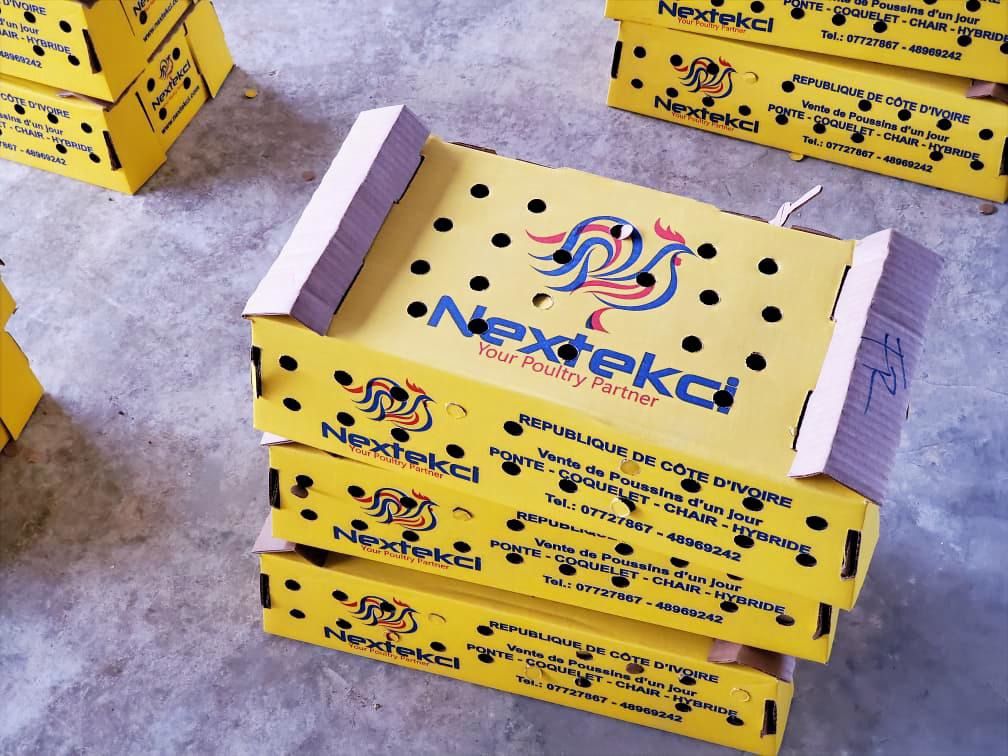
Stay reachable on the night of departure and the morning of arrival: the carrier cannot wait. Be at the collection point before the agreed time, with a vehicle ready and a shady spot for the boxes.
6. Transporting chicks properly
The journey is the most fragile moment in a chick’s life. It can go a few hours without food or water thanks to its yolk, but it cannot cope with heat, cold or lack of air. These rules apply to the carrier and to the trip between the collection point and your farm.
The rules of transport
| The rule | Why |
|---|---|
| Covered, ventilated vehicle, never a closed car boot | Chicks give off a lot of heat: without air, they suffocate |
| Never in the sun, nor on the roof of a vehicle | The sun heats the boxes within minutes; rain and wind chill them |
| Air between the boxes, no closed tarpaulin on top | The holes in the boxes must stay clear so that air can flow |
| No long stops, especially in full sun | In a stationary vehicle, the air stops moving and the heat builds up fast |
| Travel in the cool hours and go straight to the farm | That is why departures are in the evening; every hour lost delays the first drink |
| No exhaust fumes or smoke near the boxes | Chicks are very sensitive to them |
| No water or feed during the journey | The chick lives on its yolk; water spilt in the box wets and chills it |
| Boxes wedged flat, gentle driving | A box that slides or tips over injures the chicks and piles them up |
During the journey, listen and look
- Chicks cheeping loudly and huddling: they are cold. Close the openings exposed to the wind, without cutting off the air to the boxes.
- Silent chicks, beaks open, wings held away from the body: they are too hot. Ventilate at once, move to the shade, space the boxes out.
- Calm chicks cheeping gently: all is well.
The classic trap: leaving the boxes in the sun at the collection point while looking for a vehicle. Come with the vehicle ready, and put the boxes in the shade as soon as they are unloaded.
7. Preparing for arrival
The chicks must arrive in a house that is already ready: clean, disinfected, dry and warm. On the day of arrival, it is too late to warm up a cold floor. Up to 5 days of age, a chick cannot regulate its own temperature: the floor and air you prepare are what keep it warm.
The countdown
- 1Between flocks: cleaning, disinfection and downtime completed, house dry.
- 2A few days before: clean, dry litter in place, chick guard (brooding ring) set up around the heat source, equipment checked, starter feed in stock.
- 3At least 48 hours before: switch on the heating, so that floor, air and humidity are stable 24 hours before arrival.
- 4The day before: check the temperature at chick height (32 to 34 °C at the edge of the brooder) and the warmth of the floor.
- 5Two hours before: fill the drinkers with clean water at room temperature, never ice-cold; set out the trays and paper.
- 6On arrival: soft lighting, and one person ready to unload, count and record.
Brooding equipment
| Point | Benchmark |
|---|---|
| Drinkers | 14 to 16 per 1,000 chicks, including mini-drinkers for the first days |
| Trays or paper | 1 tray per 50 chicks; on paper, about 50 to 65 g of feed per chick |
| Floor temperature | At least 32 °C; about 40 °C directly under the brooders |
| Draughts | None at chick level up to 14 days |
| Feed and water | Never directly under the heat source |
Source: Cobb (Broiler Management Guide)
Never close a house heated with gas or charcoal completely: they use up oxygen and give off gases. Always keep a high opening to renew the air.
8. Receiving the chicks, step by step
From the collection point to the first drink
- 1At the collection point: check the number of boxes and the batch labelling (type, date). Put the boxes in the shade and set off at once.
- 2At the farm: carry the boxes straight into the heated house; never leave them outside.
- 3Open the boxes calmly, one at a time, inside the chick guard, in soft lighting.
- 4Place the chicks gently near the water, spread evenly across the brooding area; do not tip the boxes out in a heap.
- 5Count and write it down at once on the record sheet: chicks received, dead on arrival, weak chicks set aside.
- 6Water first: dip the beaks of a few chicks in the drinker, the others will follow.
- 7Starter feed (fine crumbs) one to two hours later, on the trays and paper.
- 8Bring the lighting back to normal once all the chicks are placed, then check all equipment 1 to 2 hours later.
Mistakes to avoid
- Giving ice-cold water “to cool them down”: the chicks do not drink and get chilled.
- Opening the boxes outside, in the sun or the wind.
- Leaving the boxes closed inside the house while you finish preparing.
- Giving an antibiotic “as a precaution”: no treatment without the vet’s advice.
A little sugar dissolved in the water for the first few hours (about two tablespoons per litre) helps the chicks recover from the journey. Vitamins or anti-stress products: only on the advice of your vet or your adviser, never at random.
A problem on arrival? Send photos and a short video on WhatsApp to +225 05 44 83 27 79 the same day. NEXTEKCI technical support follows you for the 72 hours after delivery.
9. The first 72 hours
The first three days decide the flock. A chick that drinks, eats and sleeps warm from the first night becomes an even, healthy bird; a chick that has been cold, thirsty or frightened keeps a delay that is never fully made up.
Reading how the chicks spread out
| What you see | What it means | What you do |
|---|---|---|
| Chicks huddled in a ball under the heat, cheeping loudly | They are cold | Lower the brooder or increase the heat, close the curtains, stop draughts |
| Chicks pressed against the edges of the guard, away from the heat, beaks open, wings held out | They are too hot | Raise the brooder or reduce the heat, ventilate |
| All the chicks on one side | A draught is coming from the other side | Find and block the source of the draught |
| Chicks spread everywhere, moving, drinking, eating, cheeping gently | All is well | Change nothing, note the time and temperature |
Checks in the first days
| When | The check | Good result |
|---|---|---|
| 4 to 6 hours after arrival | Hold the feet of a few chicks against your neck or cheek | Warm feet; cold feet = floor too cold |
| 8 hours after arrival | Feel the crop of 20 chicks taken from several places | At least 8 out of 10 full and soft |
| 24 hours after arrival | Same crop check | More than 9 out of 10 full and soft (Cobb aims for 95%) |
| Day 7 | Weigh a sample | A well-started white broiler weighs about 4 times its arrival weight |
Benchmarks: NEXTEKCI School lessons and Cobb (Broiler Management Guide)
Reading the crop
- Crop full and soft: the chick has drunk and eaten. Perfect.
- Crop full and hard: it has eaten but not drunk enough. Move the drinkers closer, check the water temperature.
- Crop empty: it has found neither water nor feed. Check the lighting, the number of trays, the height of the drinkers, the heat.
Temperature at chick height
| Age | Under the brooder | In the rest of the area |
|---|---|---|
| Days 1 to 3 | 32 to 34 °C | 28 to 30 °C |
| Days 4 to 7 | 30 to 32 °C | 27 to 29 °C |
| Days 8 to 14 | 28 to 30 °C | 26 to 28 °C |
| After 14 days | Lower by 2 to 3 °C per week | Down to the outside temperature |
Benchmarks: NEXTEKCI School lessons (levels 1 and 2)
Nights, weak chicks, the record sheet
- On the first night, someone sleeps near the house and checks every two hours: temperature, how the chicks are spread, water, gas or power.
- On the next two nights, one check at midnight and one at dawn are enough if all is well.
- Weak chicks are put in a small separate space, kept warm, with water and feed within reach.
- The water is changed several times a day; feed is given in small, frequent amounts so that it stays fresh.
- On the record sheet, every day: morning and evening temperature, water drunk, feed given, deaths, weak chicks, observations.
Always look at the chicks before reading the thermometer: the thermometer gives a figure, the chicks tell the truth. A heating failure at 2 a.m., discovered at 6 a.m., costs chicks smothered in piles.
10. First-week mortality
A few losses in the first week are normal: the journey, weak chicks, the start. What matters is not having zero deaths but spotting an excess on the same day. The percentage is calculated on the number of chicks received: 15 deaths out of 1,000 chicks = 1.5%.
Normal or abnormal
| Benchmark | Normal | Warning |
|---|---|---|
| First week, in total | 1 to 1.5% (journey, start, weak chicks) | More than 2% in total at 7 days |
| A single day, after day 1 | A few isolated deaths | More than 1% in one day |
| Crops at 24 hours | More than 9 chicks out of 10 with a full, soft crop | Empty crop in more than 1 chick out of 5 |
Benchmarks: NEXTEKCI School lessons (levels 1 and 2)
The most common causes
| What you see | Likely cause | What to do |
|---|---|---|
| Weak chicks with dry, wrinkled legs, deaths in the first days | Journey too hot or too long, first drink too late | Water at once; check that every chick finds the drinkers |
| Chicks found crushed in piles in the morning | Cold or heating failure during the night | Night watch, heating checked, draughts blocked |
| Chicks pressed against the edges, beaks open, deaths in the hot hours | Too hot | Raise the brooder or reduce the heat, ventilate |
| Stunted chicks, empty crops | They have not found the water or the feed | More trays, drinkers at the right height, enough light |
| Inflamed or wet navel, deaths that drag on | Possible infection | Call the vet: treatment only on his prescription |
| Red or very watery droppings in many chicks | Possible health problem | Call the vet the same day |
Call the vet in your area or a NEXTEKCI adviser as soon as
- Mortality exceeds 1% in one day, after the first day.
- The chicks stay listless despite the right heat.
- Droppings are red or very watery in many chicks.
- The crop is still empty in more than 1 chick out of 5 at 24 hours.
From day one, write down the number received, the deaths on arrival and the deaths each day: these figures are your flock’s starting point. With photos and a short video, they allow quick advice. Waiting one more day has never helped.
11. Vaccination
Brown laying chicks are vaccinated against Marek’s disease at the hatchery (certificate on request). The other chicks (white broilers, red broilers, barred grey, hybrids, cockerels) receive no vaccine at the hatchery: vaccination is done on the farm, following the protocol of the vet in your area.
What this means for you
- Choose the vet in your area before the chicks arrive: he sets the vaccination protocol for your farm.
- For brown laying hens, ask for the Marek’s disease vaccination certificate and keep it with the flock record.
- A vaccine is kept cold, between 2 and 8 °C, never in the sun; an opened vial is used at once.
- Record every vaccination on the sheet: name, batch number, date, number of birds, who gave it.
A vaccine only protects a well-run flock: warmth, clean water, dry litter and biosecurity remain your chicks’ first protection.
12. Ordering and getting advice
NEXTEKCI contacts
| For | Contact |
|---|---|
| Ordering chicks | WhatsApp +225 07 07 72 78 67 |
| A technical question, a problem on arrival | WhatsApp +225 05 44 83 27 79 |
| Collecting at the hatchery | NEXTEKCI hatchery, Agnibilékrou |
| Opening hours | Monday to Saturday, 9 a.m. – 12 noon and 2 p.m. – 6 p.m.; Sunday, 9 a.m. – 12 noon |
| Maria, the online assistant | Any time on www.nextekci.com |
Need advice?
Our advisers answer on WhatsApp: +225 05 44 83 27 79 (information) · +225 07 07 72 78 67 (chick orders).