
Poultry encyclopedia · NEXTEKCI School · Farm equipment
Chick feeder tray (tray, egg flat, paper)
Trays, lids, upturned egg flats or paper laid on the litter: this is where the chick learns to eat, by pecking at what it sees. One tray for 50 chicks, paper over at least half of the brooding area, for the first 7 to 10 days.
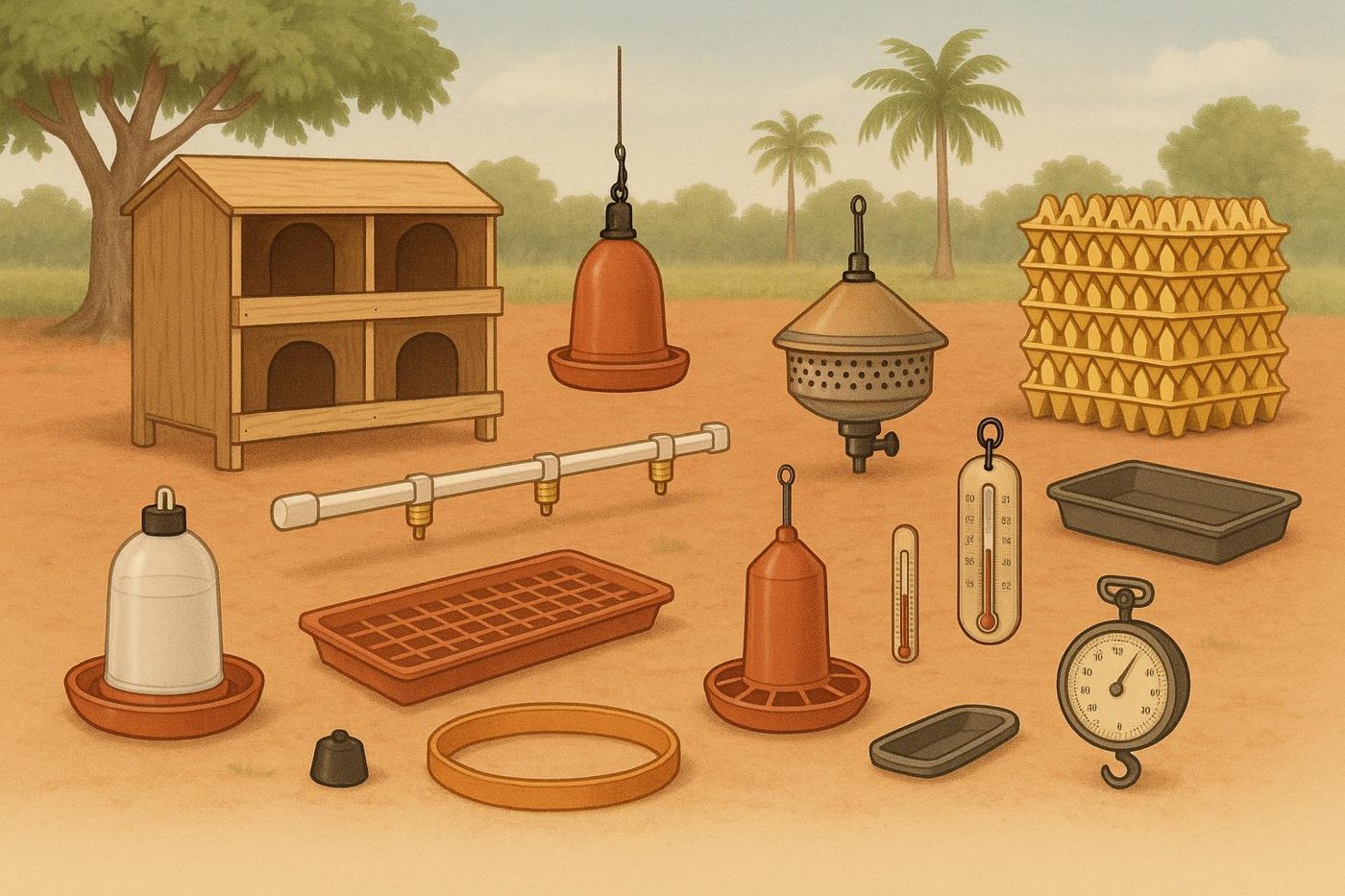
Key facts
- Number
- 1 tray for 50 chicks, i.e. 20 per 1,000
- Paper
- Over at least half of the brooding area
- Feed on the paper
- 50 to 65 g per chick
- Refilling
- 3 times a day
- Duration
- First 7 to 10 days
- Feed
- Starter feed as fine crumbs
What it is for
A day-old chick does not yet know where to look for food: it pecks at what it sees and what it hears others pecking at. Trays, lids, upturned egg flats and sheets of paper lay the feed flat, under its feet and in front of its eyes. This is the feeder for the first days, before the permanent feeders.
How many to install
Allow 1 tray for 50 chicks, i.e. 20 trays per 1,000, and cover at least half of the brooding area with paper. Spread about 50 to 65 g of starter feed per chick on the paper and top up 3 times a day: feed must never run out during the first 7 to 10 days.
Setting it up
Place trays and paper between the water lines and near the brooders, inside the chick guard, but never directly under the heat source. Starter feed in fine crumbs is offered one to two hours after arrival, once the chicks have drunk.
Bright light in the first days (about 25 lux at floor level) helps chicks find the feed. A few hours after arrival, feel the crop of a few chicks: a soft crop swollen with water means the chick is drinking but not finding feed, so add paper or trays.
Moving to the permanent feeders
After three to four days, the permanent feeders (hanging hoppers, pans or chain) are set up next to the trays. The trays are removed gradually, once all the chicks are eating from the new feeders, at around 7 to 10 days. Removing them too abruptly leaves the smallest chicks without feed and makes the flock uneven.
Hygiene
Offer feed in small, frequent amounts so it stays fresh, and remove any that is soiled with droppings or wet. Paper and cardboard cannot be washed: destroy them at the end of brooding and never reuse them. Plastic trays are washed, disinfected and dried between flocks.
Common mistakes
Too few trays for the number of chicks; feed placed under the brooder, where it heats up and where chicks do not stay; trays left empty overnight; trays removed before the chicks can eat from the feeders; dirty or damp egg flats reused.