
Poultry encyclopedia · NEXTEKCI School · Farm equipment
Hanging feeder (tube feeder and pan)
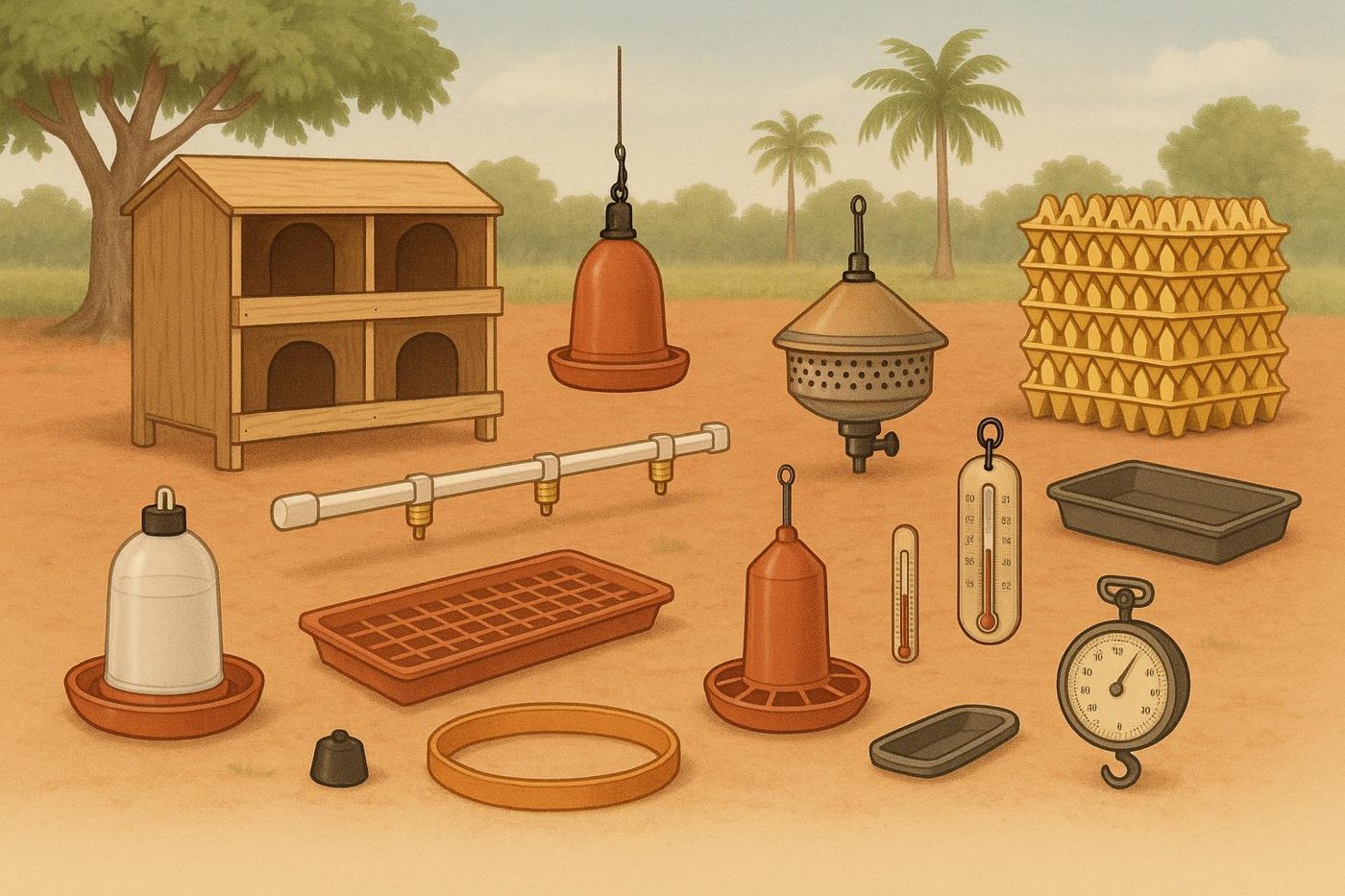
A reservoir hanging above a pan, filled by hand, from which feed flows down as the birds eat. One 10 to 15 kg tube feeder for 40 to 50 broilers, rim at back height, never empty and never filled to the brim.
Key facts
- Number
- 1 tube feeder of 10 to 15 kg for 40 to 50 broilers, i.e. 20 to 25 per 1,000
- Height
- Pan rim at back height, raised every week
- Pan filling
- No more than one third of its depth
- Waste when badly set
- Up to 5 to 10% of the feed
- Severe heat
- Lift the feeders about 6 hours before the hottest time of day
- Distance
- No more than 2 to 3 m to walk to eat
What it is for
A hanging tube feeder is a tube or cone filled with feed, hung above a pan. Feed flows down into the pan as the birds eat. It is the most common feeder on hand-fed farms: it takes over from the starter trays and is used until sale, or throughout the life of layers.
How many to install
Allow one 10 to 15 kg tube feeder for 40 to 50 broilers, i.e. 20 to 25 feeders per 1,000. When feeder space is short, the strong eat and the weak wait: growth slows and the flock becomes uneven.
For layers and pullets, there must be enough feeders for all the birds to eat at the same time: this is the key to an even flock.
Height and position
The pan rim is set at the height of the birds’ backs and raised every week as they grow. If the birds tip the pan to reach the feed, it is too high. If they scratch and throw feed on the floor, it is too low.
Alternate feeders with drinkers (feeder, drinker, feeder) so that no bird has more than 2 to 3 m to walk.
Filling and waste
A feeder is never empty, but the pan is never filled to the brim: beyond one third, birds scratch it out and waste can reach 5 to 10% of the feed. With mash feed, let the feeders empty once a day around midday: the birds then eat the fine powder, which often holds the minerals and vitamins.
In severe heat, lift the feeders about 6 hours before the hottest time of day, then feed again in the evening and early morning. In the rainy season, remove any wet feed: it goes mouldy within hours.
Cleaning and maintenance
On every round, check that each feeder is at the right height, neither empty nor too full, and that the feed has not caked. Between flocks, empty the remaining feed, take the feeders apart, wash with detergent, rinse, disinfect and leave to dry. Spilled feed attracts rats: pick it up immediately.
Choosing one
Choose a sturdy tube feeder that is easy to hang and to raise or lower, with a pan whose lip limits waste and an adjustable feed flow. It should come apart easily for washing. Buy the number needed for the birds ordered, from the start.