
Poultry encyclopedia · NEXTEKCI School · Farm equipment
Incubator: how it works and precautions
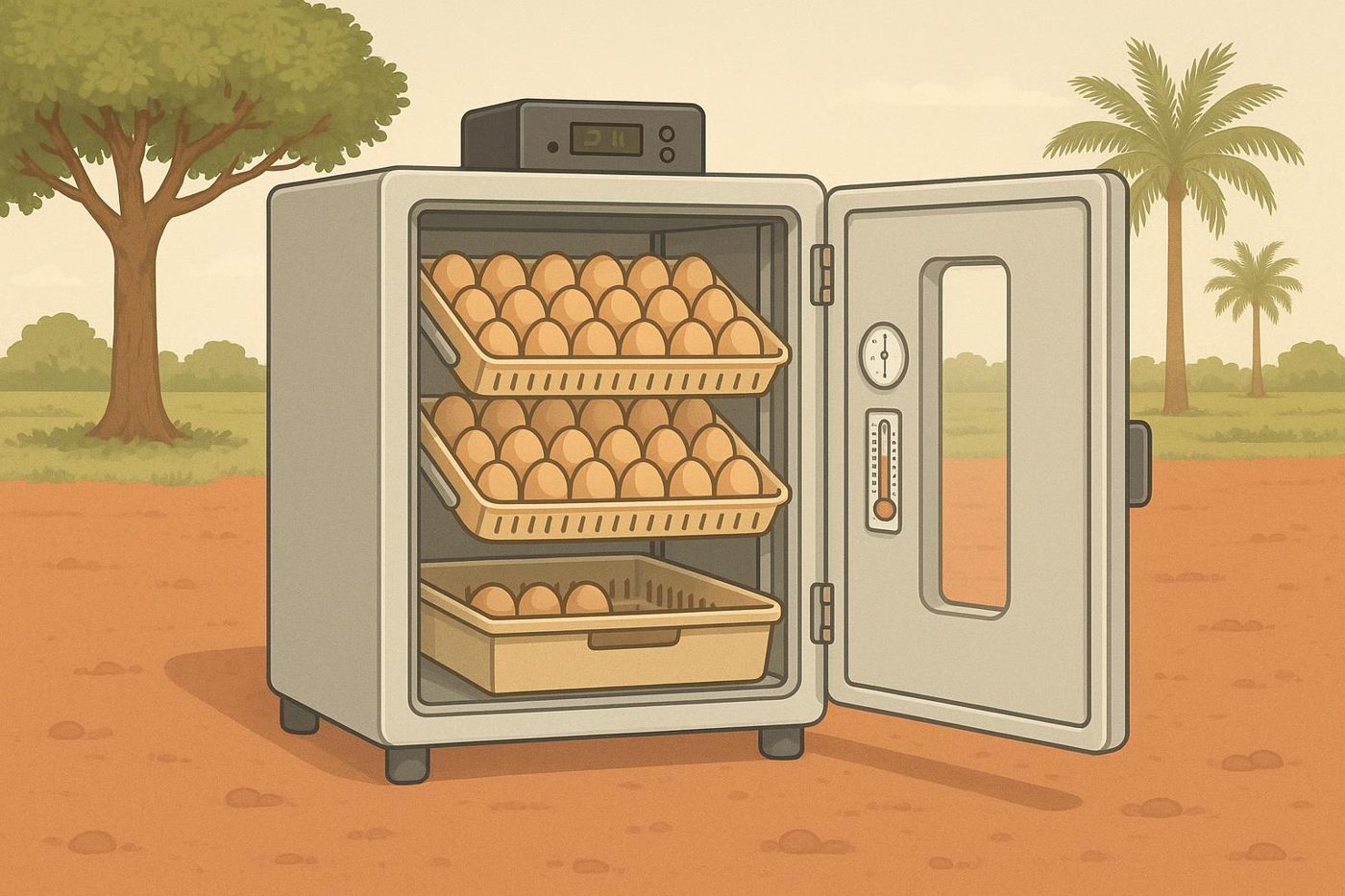
An incubator recreates, for 21 days, the conditions a broody hen provides: warmth, humidity and egg turning. It is a demanding machine that needs a stable power supply, strict hygiene and settings followed to the letter.
Key facts
- Incubation period (hen)
- About 21 days
- Three settings
- Temperature, humidity, egg turning
- Hatcher
- Last days of incubation, without turning
- Candling
- Removing clear eggs and dead embryos
- Power
- Stable, with essential back-up
How it works
In the hen, incubation lasts about 21 days. An incubator keeps hatching eggs at a controlled temperature and humidity and turns them regularly for most of the incubation period. For the last days, the eggs move to the hatcher, where they are no longer turned, until the chicks emerge.
Just before leaving the egg, the chick absorbs the rest of its yolk: this reserve feeds it during its first hours and during transport.
The eggs and candling
Hatching eggs are selected before they go into incubation: clean, whole, and of regular shape and size. During incubation, candling means looking at the eggs against a bright light to remove clear eggs and dead embryos, which could rot and contaminate the others.
Precautions
An incubator does not forgive power cuts: it needs a stable supply and a back-up. Set it up in a clean room with a steady temperature, out of the sun and away from draughts. Follow the manufacturer’s temperature, humidity and turning settings to the letter, and check them several times a day.
Between batches, the machine is emptied, cleaned, disinfected and dried. A dirty machine hatches weak chicks that start badly.
The hatchery’s job
At the hatchery, the work does not stop at hatching: chicks are sorted, counted and packed so they leave in the best condition. Brown laying chicks are vaccinated against Marek’s disease at the hatchery (certificate on request); the other chicks are vaccinated on the farm, following the protocol of the vet in the area.
For a farmer, buying day-old chicks from an approved hatchery, such as NEXTEKCI’s in Agnibilékrou, avoids the risks of on-farm incubation and makes it possible to start a flock of chicks all of the same age.