
Poultry encyclopedia · NEXTEKCI School · Trades and the poultry industry
Poultry farming in West Africa
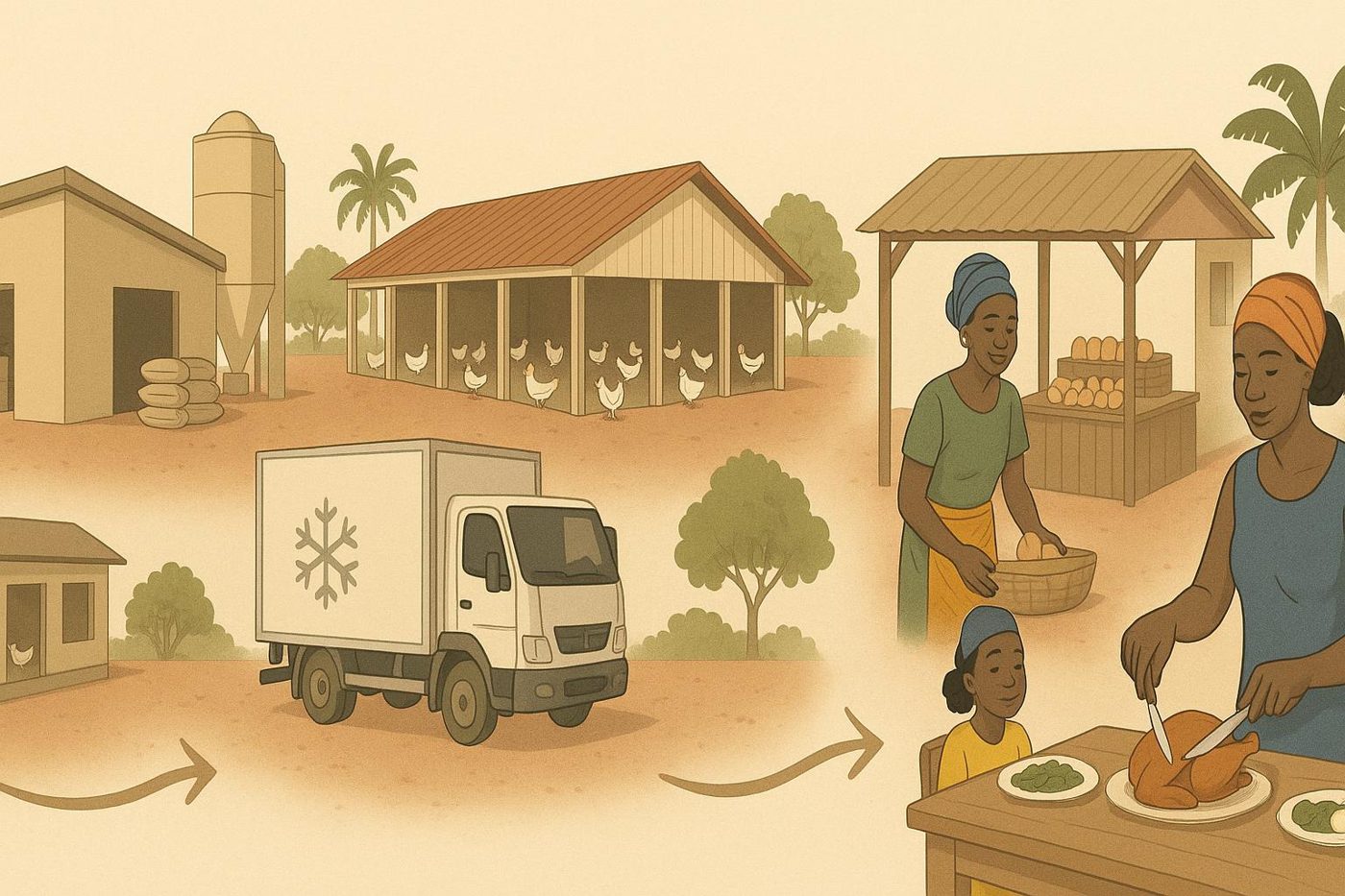
In West Africa, poultry farming ranges from the family backyard to modern housed farms. It faces shared challenges (feed costs, heat, disease, cold chain) but offers real opportunities, driven by continuing strong demand for animal protein.
Key facts
- Systems
- Traditional, semi-intensive, intensive
- Challenges
- Feed, heat, disease, cold chain
- Strengths
- Short cycle, steady demand, accessible to small investors
- Key to success
- Training and biosecurity
Traditional farming
In villages, local chickens roam freely around homesteads, find their own food and get a few scraps. They need little investment and are highly valued for their taste.
On the other hand, they grow slowly, mortality is high and diseases spread easily between backyards.
Semi-intensive farming
It is often the first step towards professional farming: a simple house, sometimes an outdoor run, coloured or improved birds, supplemented feed.
This system suits farmers who want to progress without heavy investment, and customers looking for a chicken close to the local bird.
Intensive farming
Suitable housing, selected day-old chicks, complete feed, veterinary follow-up and performance records: intensive broiler and layer farming produces quickly and consistently.
In exchange, it requires more capital, more technical skill and strict biosecurity, since a disease can hit a whole flock in a short time.
Shared challenges
Feed is the largest expense and depends on raw materials whose availability varies. Heat affects growth and laying, and calls for well-ventilated houses. Diseases (Newcastle, Gumboro, coccidiosis, respiratory diseases) require vaccination and hygiene. Finally, the cold chain remains fragile, which explains the large share of live-bird sales.
None of these challenges is insurmountable: they are managed through training, planning ahead and working with reliable partners.
Opportunities
Chicken and eggs are affordable proteins eaten by every family, in towns and villages alike. The short broiler cycle makes it possible to start small and grow step by step.
The trades around farming (feed, transport, slaughter, trade, advice) also offer openings for young people and entrepreneurs.