Poultry encyclopedia · NEXTEKCI School · Trades and the poultry industry
The poultry trader
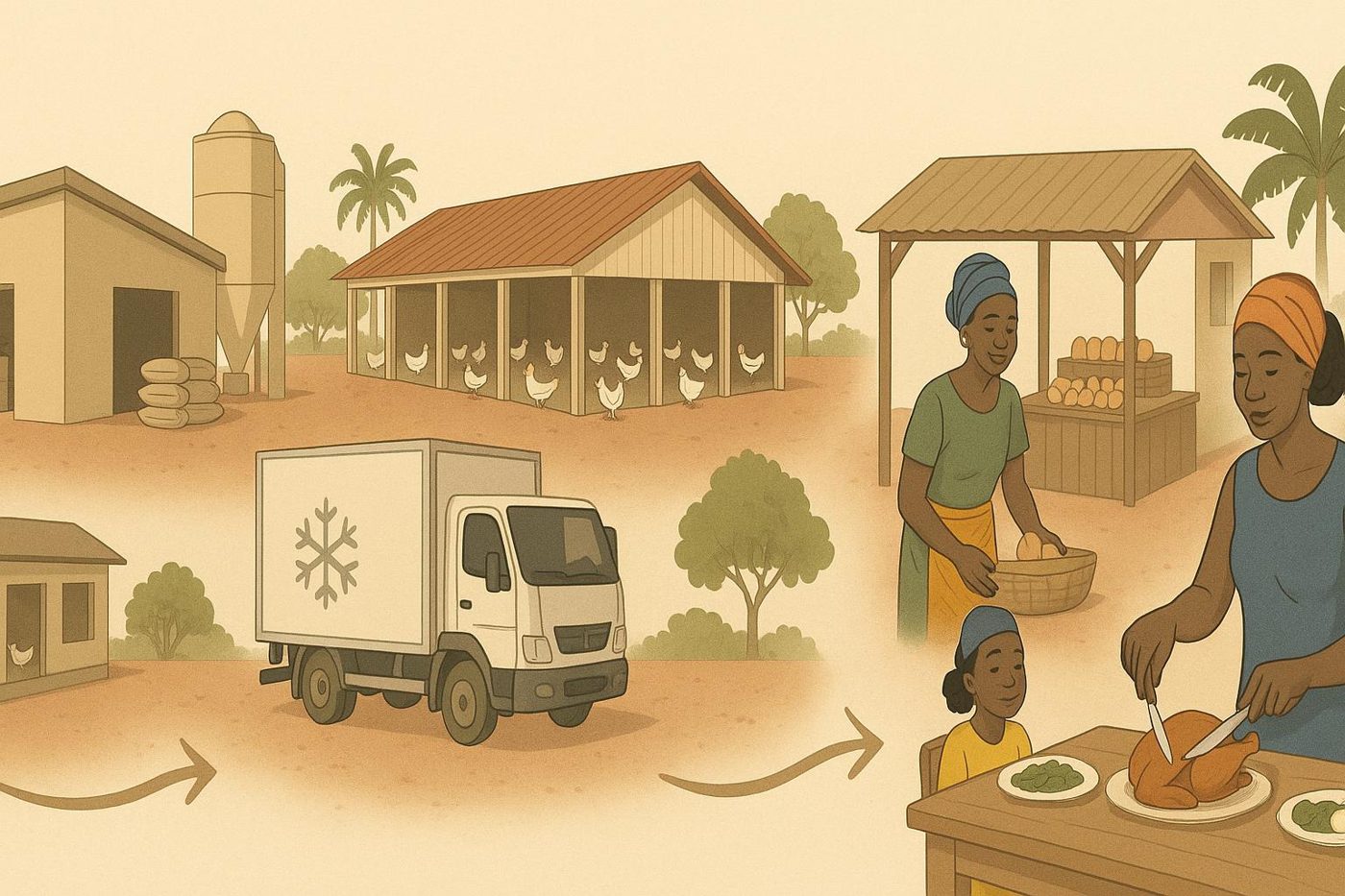
The trader links farms and consumers. He buys birds or eggs from farmers and sells them on markets, to restaurants or to households. He knows demand, peak periods and customer expectations, which makes him a valuable partner for the farmer.
Key facts
- Role
- Buying from farmers, selling to consumers
- Products
- Live chickens, dressed chickens, eggs, spent hens
- Strengths
- Market knowledge, customer network, logistics
- Watch points
- Hygiene, animal transport, storage
An often essential link
Many farmers have neither the time nor the means to sell each chicken themselves. The trader buys in batches, transports the birds and sells them on markets the farmer could not reach alone.
In return, he takes a margin: that is the reward for his work, transport and risk.
What the trader expects from the farmer
Uniform, healthy birds at the expected weight and available on the announced date. For eggs: clean, fresh, well graded.
A consistent, reliable farmer quickly becomes a priority supplier. Conversely, uneven batches or delays erode trust.
Building a lasting relationship
The best farmer-trader relationships rest on planning ahead: the trader announces his needs in advance, the farmer plans his flocks accordingly. A simple agreement, even verbal, on dates and quality avoids many disputes.
For the farmer, having several buyers reduces the risk of depending on just one.
Hygiene and welfare in transport
Live birds must travel in clean crates, not overcrowded, shaded from the sun, and must not be left for hours without water. Crates and vehicles moving from farm to farm can carry disease: they must be cleaned and kept out of the rearing area.
For meat and eggs, cleanliness and freshness are the first guarantee offered to the customer.