
Poultry encyclopedia · NEXTEKCI School · Trades and the poultry industry
The poultry farmer as entrepreneur
A poultry farmer is both the technician of his birds and the head of a small business. He buys chicks and feed, manages his flocks, keeps his accounts and sells what he produces. Success depends as much on daily discipline as on sound business decisions.
Key facts
- Role
- Producing chickens or eggs and selling them at a margin
- Training
- Poultry training or hands-on experience, then continuous learning
- Qualities
- Discipline, daily presence, a head for figures, a network of buyers
- Key tools
- Daily record sheet, scales, expenses and sales ledger
One job, two hats
In the morning, the farmer checks water, feed, temperature and the condition of the birds. In the evening, he records mortality, feed use and expenses. In between, he deals with suppliers and buyers.
The farmers who last are those who keep both hats on: one eye on the house, one eye on the account book. A good technician who does not keep figures can lose money without noticing.
Choosing what to produce
White broilers, coloured chickens or layers: each type of production has its own pace, starting capital and buyers. Broilers turn over quickly and require selling at the right moment. Layers need more patience before the first income, then bring a steady revenue.
The right choice is the one that suits your local market, your house and your cash flow, not the one that looks most profitable on paper.
Running each flock as a project
Each flock has a start, an end and a result. The entrepreneur-farmer prepares the house before the chicks arrive, follows growth through regular weighing, and draws up a balance at the end: what was spent, what was sold, what went wrong.
That review guides the next flock: changing the season, adjusting the number of birds, finding new buyers.
Selling before producing
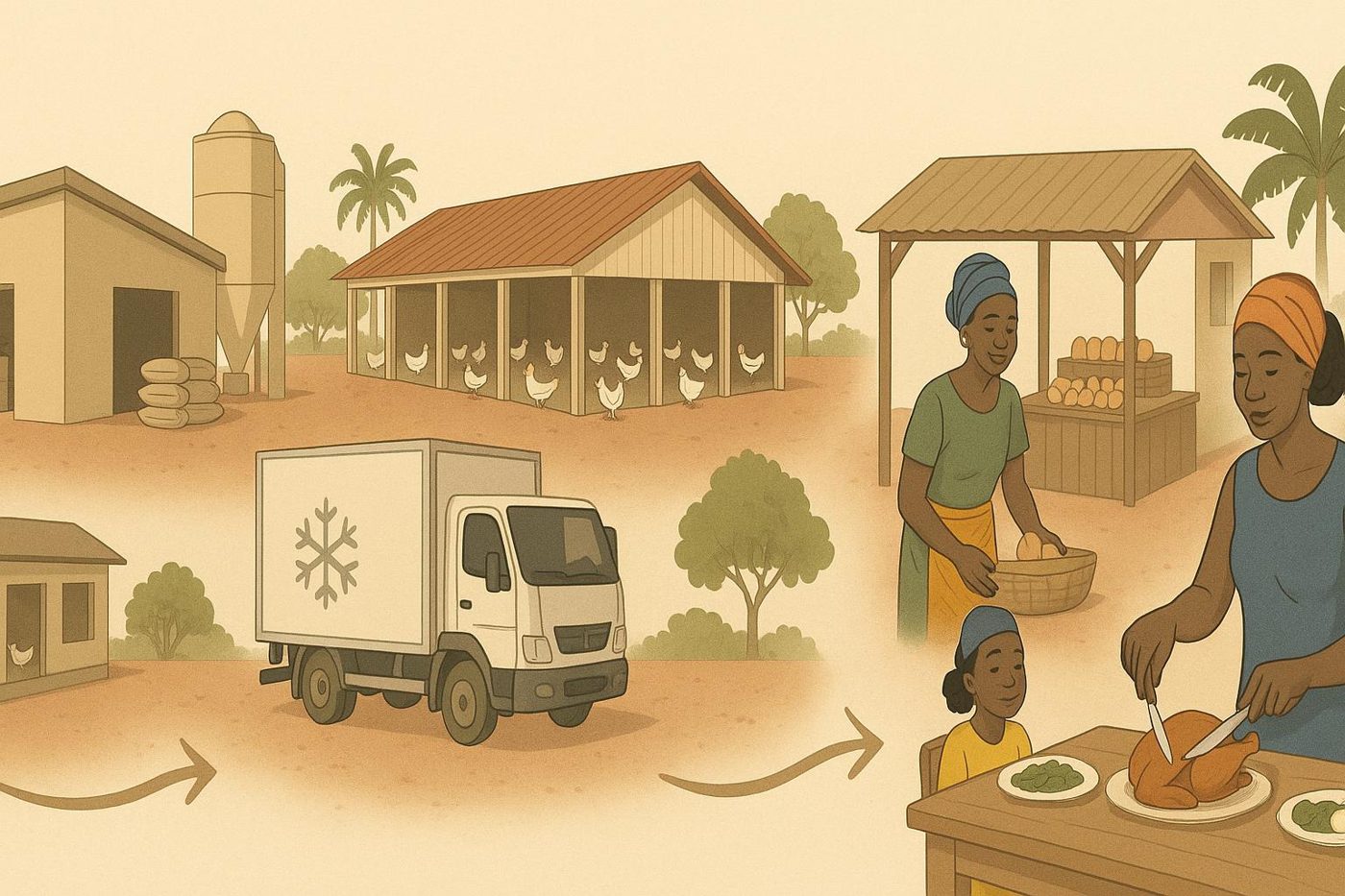
The most common mistake is starting a flock without knowing who will buy it. A chicken kept too long keeps eating without bringing in more. The entrepreneur-farmer finds buyers before ordering chicks: traders, restaurants, markets, households, the slaughterhouse.
Loyal customers are built through consistency: birds of the same quality, delivered on the promised date.
Learning and building a network
No farmer succeeds alone. He relies on a vet in his area, a technician, a reliable chick supplier and a regular feed supplier. Farmers’ groups and the IPRAVI inter-professional body also help share information.
The NEXTEKCI School offers free online lessons, guides and a calculator to prepare each flock.