
Poultry encyclopedia · NEXTEKCI School · Trades and the poultry industry
The slaughterhouse and the cold chain
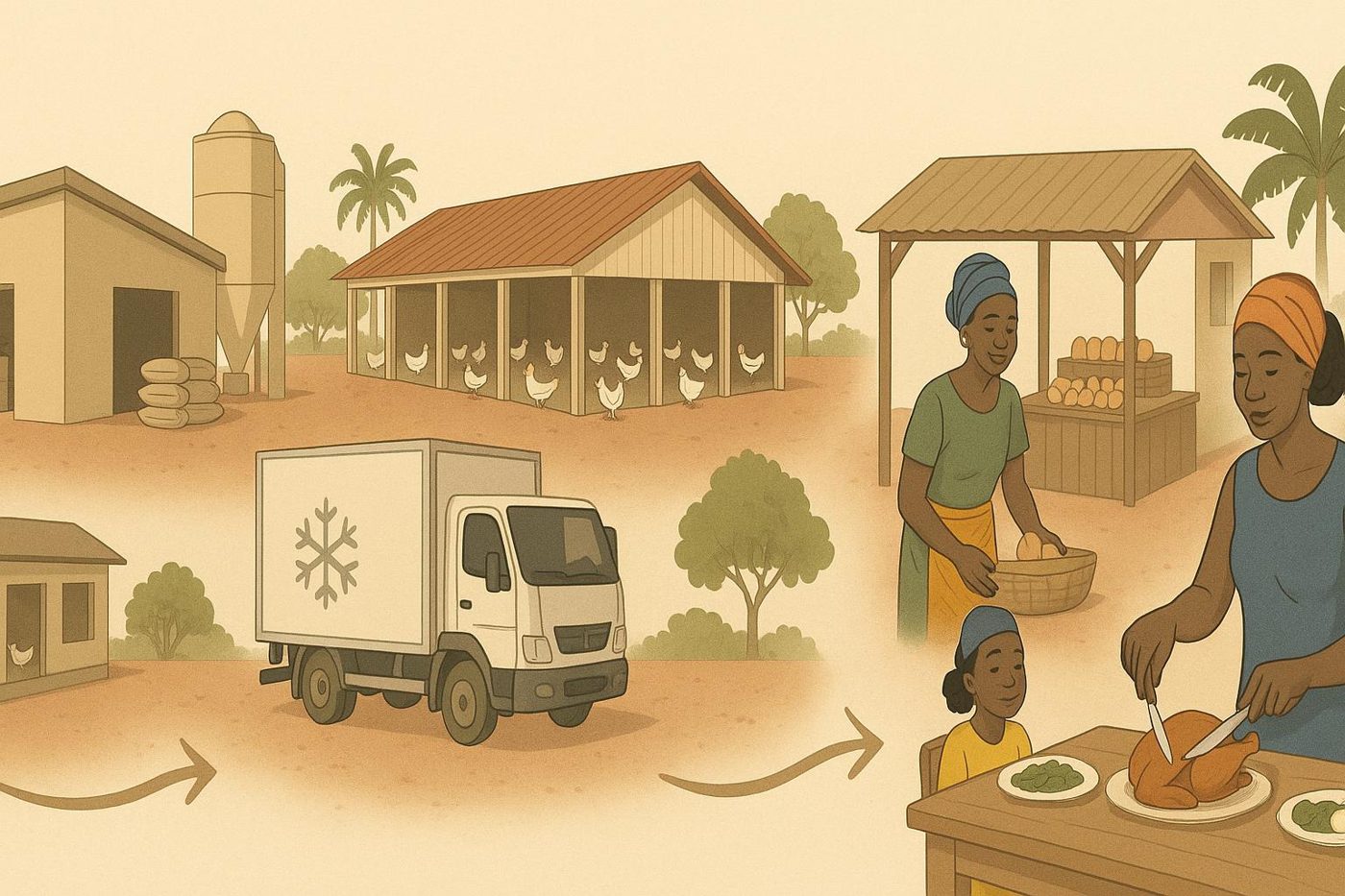
The slaughterhouse turns live birds into meat fit for consumption, under controlled hygiene conditions. The cold chain then takes over to preserve the meat all the way to the consumer. It is the link that most directly protects public health.
Key facts
- Role
- Slaughtering, dressing and packing poultry
- Requirements
- Hygiene, health inspection, temperature control
- Products
- Fresh or frozen chicken, whole or in cuts
- Framework
- Activity subject to official approval
The stages of slaughter
Birds arrive with an empty crop, are checked, then slaughtered, plucked, eviscerated, washed and chilled. Each step follows a one-way flow, from “dirty” to “clean”, to avoid recontaminating the meat.
Birds and carcasses are inspected so that anything unfit for consumption is removed.
Why the cold chain is vital
Poultry meat is fragile: in the heat, germs multiply quickly. Cold slows this down. But it is useless if the chain is broken, even briefly, between the slaughterhouse, transport, storage and the point of sale.
A frozen product that has thawed must not be refrozen.
Challenges in a hot climate
Power cuts, long roads, unrefrigerated vehicles, shops without freezers: keeping things cold requires reliable equipment and backup plans (generator, insulated boxes).
That is why many birds are still sold alive. Chicken slaughtered in an approved slaughterhouse and kept cold, on the other hand, gives the consumer a hygiene guarantee.
What the farmer should know
A slaughterhouse expects uniform, healthy batches, delivered on the agreed date and with feed withdrawn before departure. Birds that have been treated must have completed the withdrawal period given by the vet.
NEXTEKCI holds a slaughterhouse approval and also sells frozen chicken.