

Recent news in Italy has brought the safety of egg products back to the centre of discussions. These products, obtained from processed eggs, are used in various food preparations. When an alert concerns their production, it is a reminder of an essential principle: consumer confidence rests on control of the entire chain, from production through to processing and marketing.
For poultry farmers in Côte d'Ivoire, the point of this news is not to draw hasty conclusions about a sector or a country. Rather, it is a reminder that food safety quality is built day by day. A clean farm, consistent practices and well-kept records make it easier to monitor production and enable a quicker response if an anomaly is observed.
Simple practices in the chicken coop
Prevention begins with the organisation of the poultry houses. It is useful to limit entry to those who need access, keep a visitors' register and put hygiene measures in place at the entrance to poultry farming areas. The equipment used must be maintained and the premises cleaned according to a clearly defined routine. Between two flocks, a well-managed sanitary break helps prepare the poultry houses before the next birds arrive.
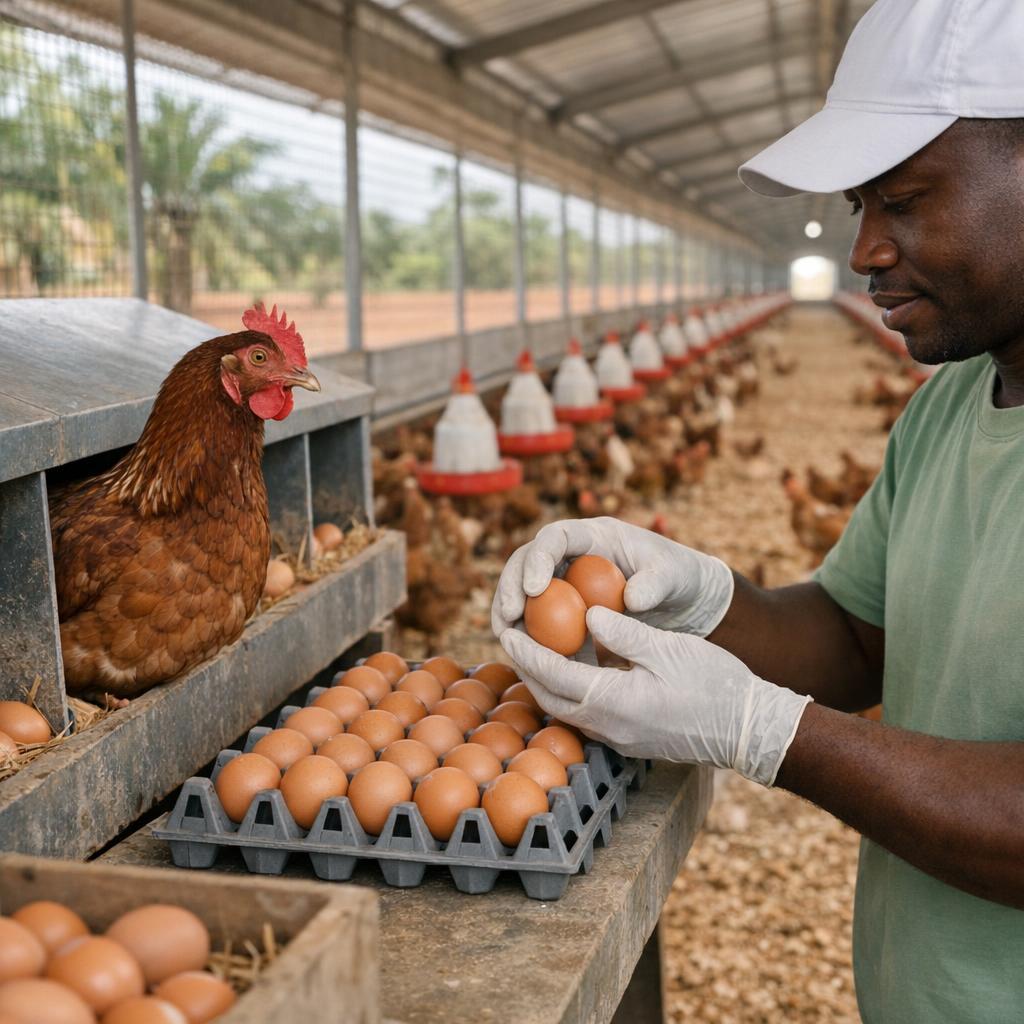
For farms producing table eggs, collection and storage deserve particular attention. Eggs must be handled carefully, kept separate from dirty areas and protected from heat, excessive humidity and pests. Clean trays and a suitable storage area reduce the risk of contamination or deterioration. It is also prudent to set aside cracked or visibly dirty eggs from consumption and sale, in accordance with the instructions applicable in the sector.
Traceability is just as important. Recording collection dates, quantities, storage conditions and the destinations of batches helps quickly identify the source of a problem. This information is useful when communicating with buyers and the relevant services, rather than relying on memory alone.
What this means in practice for a poultry farmer in Côte d'Ivoire
This news encourages strengthening good habits rather than giving in to concern. Every poultry farmer can check their hygiene practices, organise the movement of people and record the movements of their products. In the event of a health anomaly or uncertainty about what action to take, they should consult the local veterinarian or the relevant services. Regular prevention protects the animals, reassures partners and helps preserve consumer confidence in local poultry products.
--- *Source: Réussir Volailles — summary and analysis by NEXTEKCI.*