

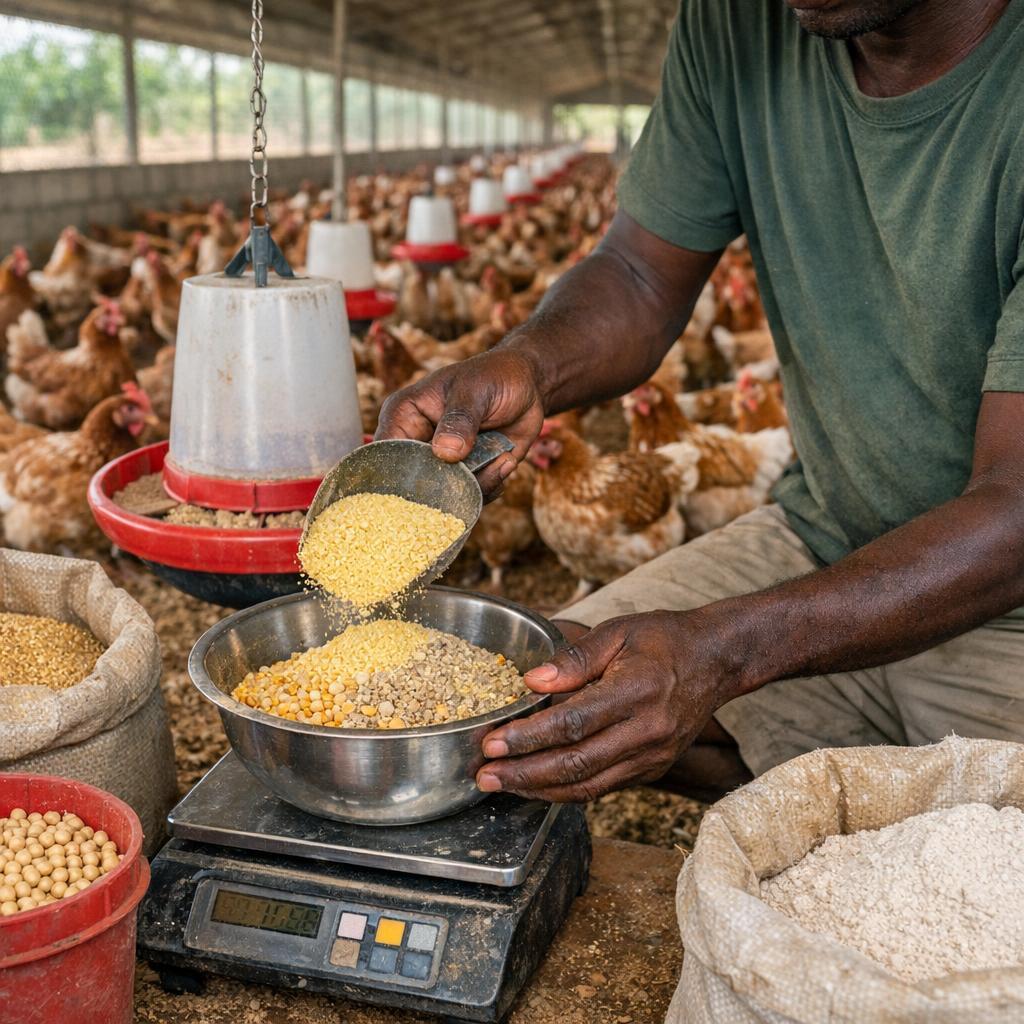
Feed formulation is a central aspect of managing a poultry farm. A new formulation support tool for organic poultry farmers underscores the value of planning rations rather than choosing ingredients at random. The general aim of this type of tool is to help organise feeding choices, taking into account the animals’ needs and the usable raw materials. However, the available information does not allow the tool’s precise functions to be detailed or to establish whether it is suited to the conditions of each Ivorian poultry farm.
A ration is more than a list of ingredients
To develop well, poultry need a balanced diet suited to their age and production stage. The quality of a ration depends on its overall composition, the consistency of its preparation and the way it is distributed. Replacing one ingredient with another without checking the overall balance can change the nutritional content of the feed.
A formulation tool can help structure the decision-making process, but it does not replace observing the flock or seeking advice from a professional with expertise in animal nutrition. Locally available raw materials can vary in quality and composition. It is therefore useful to find out about their origin, storage condition and consistency of supply before including them in a ration.
Practical guidance for poultry farms in Côte d'Ivoire
Before changing the feed, poultry farmers can note the ingredients used, the quantities distributed and their observations in the poultry house: consumption, behaviour, growth and the poultry’s general condition. These indicators make it possible to monitor changes and avoid making several changes at once, which makes the results difficult to interpret.
Storage also deserves particular attention. Feed exposed to moisture, pests or heat can lose quality. It is preferable to store raw materials in a clean, dry and protected area, then check their appearance before use. If you have doubts about a ration or notice unusual signs in the flock, seek advice from an animal feed specialist; if signs of illness appear, contact the local veterinarian.
What this means in practical terms for a poultry farmer in Côte d'Ivoire
This news encourages better feed planning, without assuming that a tool designed for a particular context is automatically suitable for every farm. Identify the ingredients that are genuinely available in your region, check their quality and have your choices reviewed by a qualified person. Record changes and observe the poultry regularly. A methodical approach helps you make more informed decisions while taking into account the realities of your poultry farm and the local availability of raw materials.
--- *Source: Réussir Volailles — summary and analysis by NEXTEKCI.*