

Why classify eggs?
Buyers do not all have the same expectations. A household, shop, restaurant or reseller may be looking for eggs of different sizes, or prefer uniform trays. By separating the sizes, you make it easier to present your production and prepare orders. Sorting also helps identify cracked or dirty eggs, or those with an abnormal shape, which should not be mixed with eggs intended for regular sale.
Set up a simple sorting system
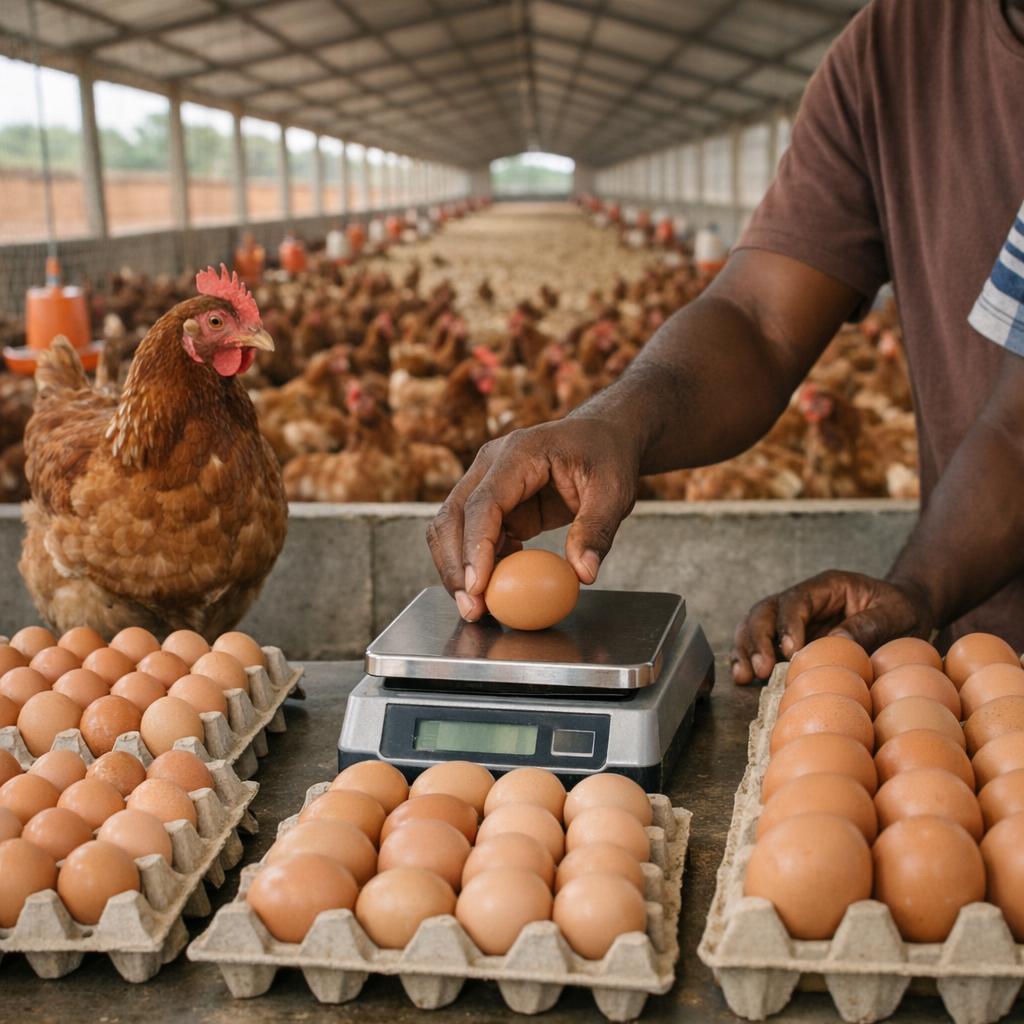
Have a clean set of scales, labelled trays and a dry work area protected from the sun and dust. Weigh the eggs one by one, then sort them into categories defined in advance. You can use simple labels such as small, medium and large, setting a suitable weight range for each according to your customers’ requirements.
The key is to keep the same limits from one sorting session to the next. Write them down near your workstation and explain them to anyone helping you. If a buyer has specific criteria, discuss them before putting the batch together: their needs should guide your classification, as far as your production allows.
Keep batches uniform
After sorting, store each category separately and clearly label the trays. Avoid mixing freshly sorted eggs with eggs that have already been stored without checking their collection date. Handle them gently and place them with the pointed end down when the packaging allows. Cracked or very dirty eggs should be set aside; do not present them as ordinary eggs.
Also keep a simple record: collection date, quantity by size, observations and batch destination. This note will help you see which sizes are most in demand at different times and among different types of customers. It also makes order preparation easier and reduces mistakes at the point of sale.
Adapt the classification to your market
Regularly ask shops, restaurateurs and resellers which sizes they are looking for and what packaging they prefer. Compare this feedback with the quantities actually available on your farm. If a category is not much in demand, do not automatically mix it with the others: instead, offer a clearly presented batch or ask your customers whether they will accept a different mix.
Good classification depends on consistency, cleanliness and clear communication. At your next collection, prepare your categories, weigh the eggs and note your buyers’ preferences so you can adapt your sorting to the realities of your farm in Côte d’Ivoire.
--- *Source: NEXTEKCI — In-house expertise — summary and analysis by NEXTEKCI.*