

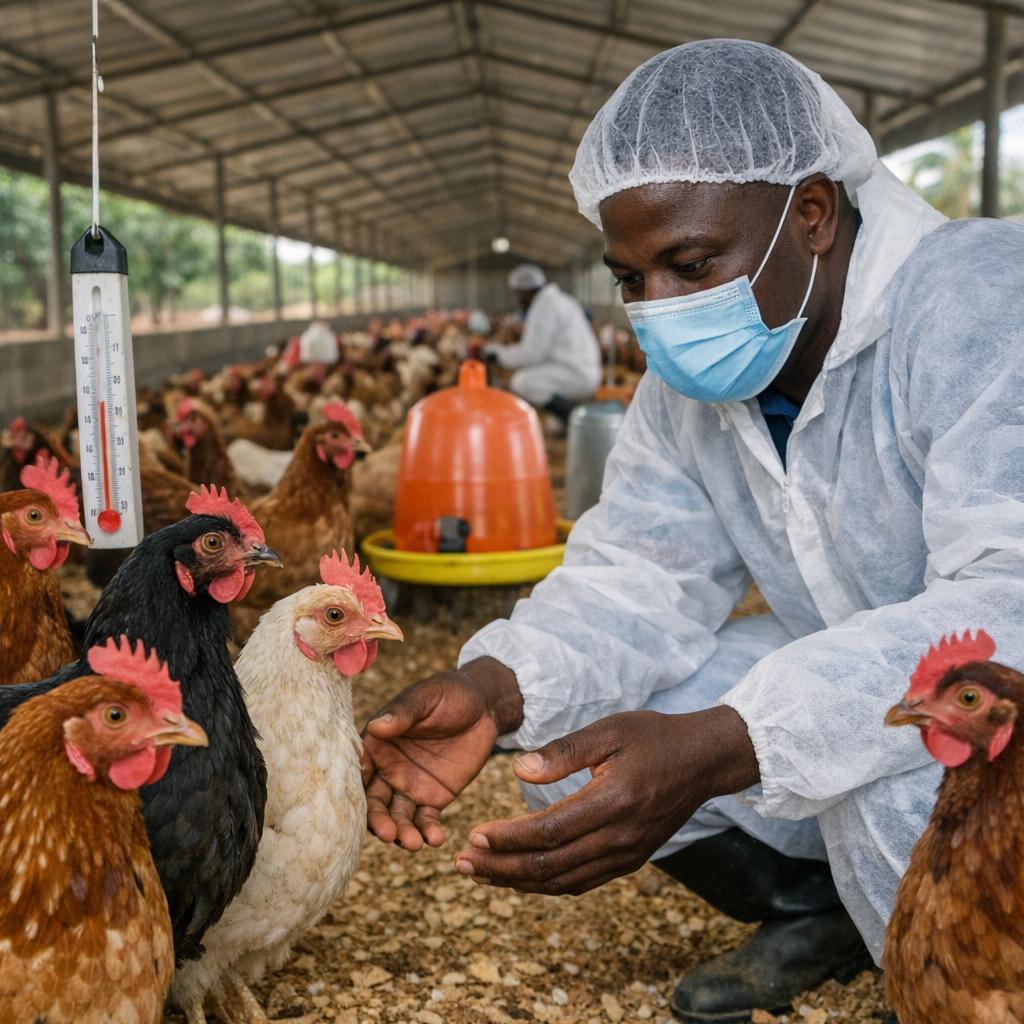
Spotting changes in the flock quickly
Avian cholera is a contagious disease of poultry. Some signs can appear quickly, but on their own they cannot confirm the cause of a problem. Other diseases or rearing conditions can cause similar symptoms: a veterinarian’s advice is therefore essential.
Monitor your chickens’ behaviour every day. Birds that remain isolated, seem lethargic, eat or drink less, or show a sudden drop in laying rate deserve your attention. Unusual mortality, sometimes greenish or yellowish diarrhoea, ruffled feathers and difficulty breathing are also signs to take seriously. Observe the flock as a whole: a rapid change or several birds affected warrants an immediate response.
Responding with caution
If you notice these signs, limit movement between the affected group and the other poultry. Avoid sharing equipment without cleaning it first and reduce contact with visitors. Note the changes observed, when they first appeared and which poultry houses are affected. Contact the local veterinarian promptly so they can assess the situation and advise you on what to do.
Do not try to diagnose the problem yourself and do not give any product or treatment without veterinary instructions. If any birds have died, avoid handling them with bare hands and ask the veterinarian how to manage them in accordance with local regulations. Prompt action and precise information make it easier to assess the problem.
Reducing risks every day
Prevention relies on a regular routine adapted to the conditions on your farm:
- Clean the drinkers and feeders, then keep them protected from contamination. Replace the water and remove any damp or spoiled feed.
- Keep the poultry houses clean and dry. Remove droppings and soiled litter, and organise a sanitary break between flocks.
- Limit access to the poultry houses. Set aside footwear for poultry farming, maintain footbaths and wash your hands before entering.
- Keep rodents and wild birds away from the feed and water. Store feed in a clean, protected area.
- Avoid mixing poultry of different ages or origins without taking precautions. Monitor any new arrivals especially closely.
In Côte d'Ivoire, heat, humidity and rain can quickly deteriorate the litter and water. So inspect the surroundings and equipment every day. At the first unusual sign, isolate the affected area, strengthen hygiene measures and call your local veterinarian: acting early protects the rest of the flock.
--- *Source: NEXTEKCI — In-house expertise — summary and analysis by NEXTEKCI.*