

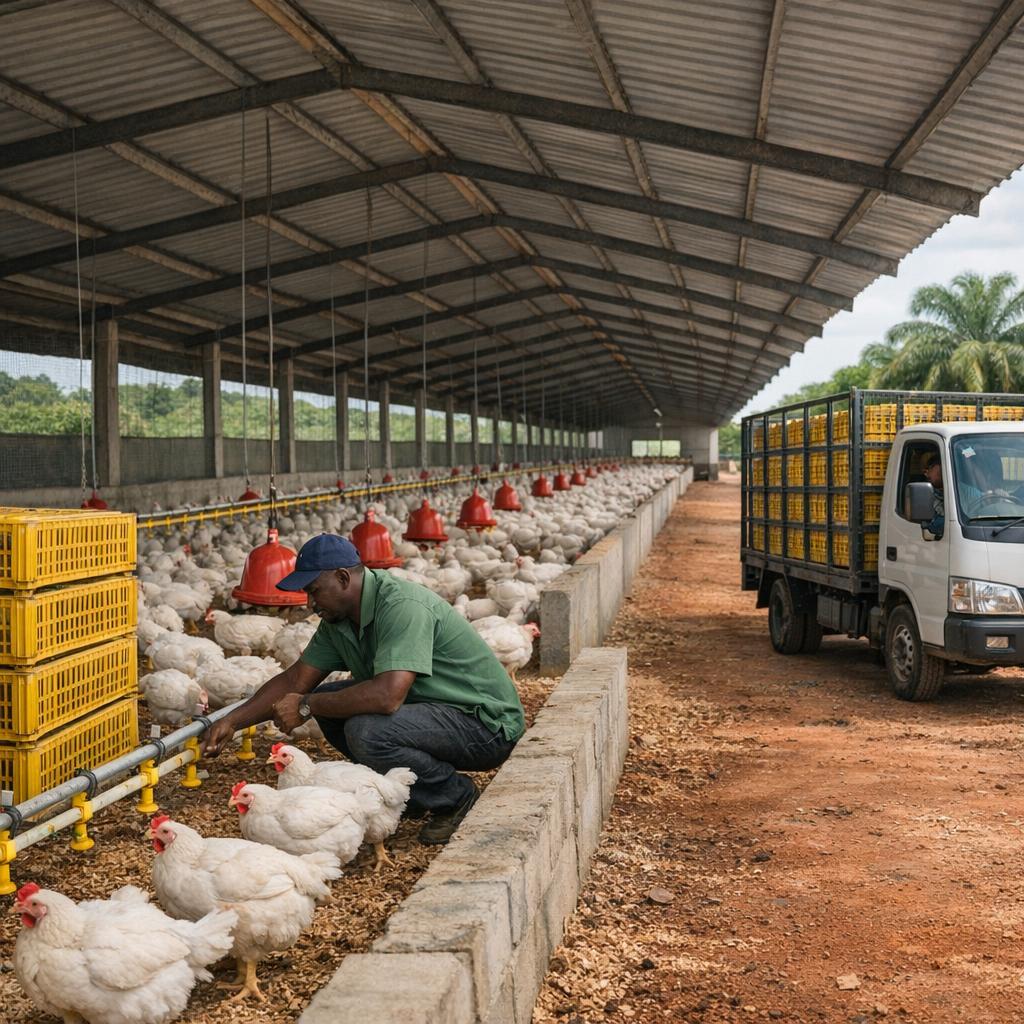
As slaughter approaches, withdrawing feed requires careful planning. The aim is to prepare the birds for departure without depriving them of water. Poorly planned deprivation can increase their stress, especially when it is very hot or transport is delayed.
Plan when to withdraw feed
Before removing the feeders, confirm the collection time, the estimated journey duration and the arrival time at the slaughterhouse. Discuss this with the people responsible for transport and reception: a change to the programme may prolong the wait and make your arrangements less suitable.
There is no single duration that applies to every situation. Take the journey, temperature, transport conditions and the slaughterhouse’s instructions into account. Avoid withdrawing feed too early “as a precaution”: an unnecessarily long fast offers no benefit to the poultry farmer. If you are unsure about the schedule, ask an animal husbandry professional or the local veterinarian for advice.
Keep clean water available
Withdrawing feed does not mean removing water. Keep drinkers accessible and check that they are working properly until the birds leave, in accordance with the practical instructions from the carrier and the slaughterhouse. The water must remain clean, and the drinkers must be sufficiently well distributed to prevent some chickens from having difficulty accessing them.
Monitor their water level, particularly in hot weather. If the floor around the drinkers becomes wet, adjust their position or height to limit splashing and keep the litter as dry as possible. Do not leave the birds without water because the feeders have been removed.
Organise the poultry house and collection
Remove the feed in an orderly manner, then keep the equipment out of reach to prevent the birds from overturning the feeders or dirtying the area. Prepare a clear route for collection. Calm movement, without shouting or sudden gestures, makes handling easier and reduces flock agitation.
On the scheduled day, check that the team and vehicle are ready before starting collection. In the event of a delay, contact the people concerned again and adjust the arrangements rather than leaving the chickens to wait without water.
Key points
Plan feed withdrawal with the people involved in transport and slaughter, keep water available and monitor conditions in the poultry house. For your next flock in Côte d'Ivoire, record the actual departure and arrival times to improve your arrangements, without applying the same duration to every situation.
--- *Source: NEXTEKCI — In-house expertise — summary and analysis by NEXTEKCI.*