
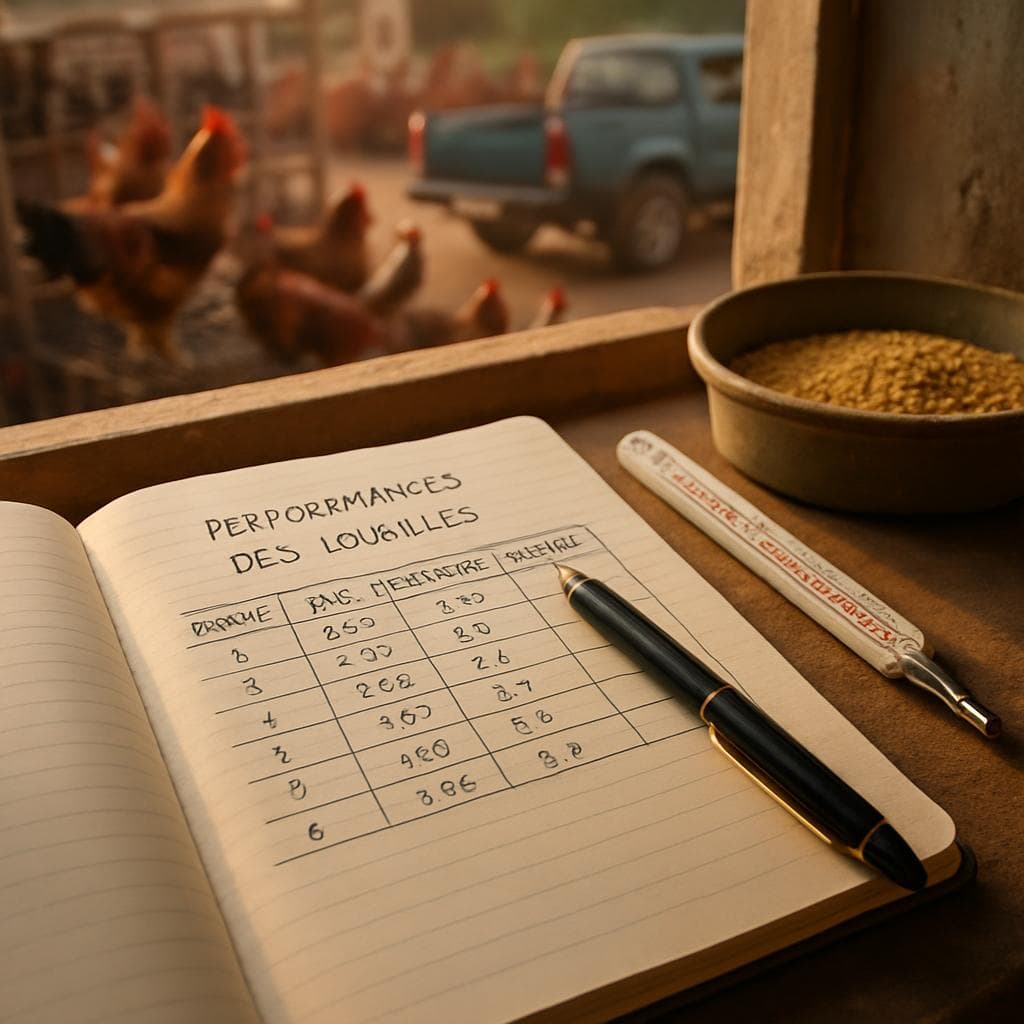
Keeping a farm record book is an indispensable practice for poultry farmers, particularly in Côte d'Ivoire, where rigorous management of farms is crucial for profitability. Good data tracking allows for informed decision-making and anticipating potential problems. Here are the essential figures to note each day to effectively manage your flock.
1. Number of poultry
Start by noting the total number of poultry in your farm. This includes chicks, young poultry and adults. Daily tracking will allow you to quickly detect any losses due to diseases or other factors, and adjust your management accordingly.
2. Mortality
It is crucial to track the daily mortality rate. Note the number of poultry that have died and try to identify the causes. A high mortality rate can be a sign of a health, nutritional or environmental problem. By analysing this data, you can implement appropriate preventive measures.
3. Feed consumption
The amount of feed consumed by your poultry is a key indicator of their health and growth. Note the quantity of feed distributed each day and compare it with previous days. A sudden drop in consumption may signal a health problem or a change in the poultry's appetite.
4. Average weight
Weigh your poultry regularly to track their growth. Note the average weight of your flock each week, which will allow you to check if they are reaching the desired growth targets. An abnormal weight may indicate nutritional or health issues.
5. Environmental conditions
Record the climatic and environmental conditions of your farm, such as temperature and humidity. These factors directly influence the well-being of the poultry. For example, excessively high temperatures can lead to heat stress, affecting feed consumption and overall health.
6. Health and treatments
Note any observations regarding the health of your poultry, as well as the treatments administered. This includes vaccinations, dewormers and medical treatments. Rigorous tracking will help you establish a health history of your flock, thus facilitating decision-making for future generations.
7. Egg production (if applicable)
If you are raising laying hens, note the number of eggs laid each day. This will allow you to assess the productivity of your flock and quickly detect any anomalies.
Conclusion
By keeping a farm record book and noting these key figures each day, you empower yourself to better manage your farm. This will allow you to anticipate problems, improve the health of your poultry and optimise your production. Don't wait any longer, start documenting your farm today to make the most of it!
--- *Source : NEXTEKCI — In-house expertise — summary and analysis by NEXTEKCI.*