
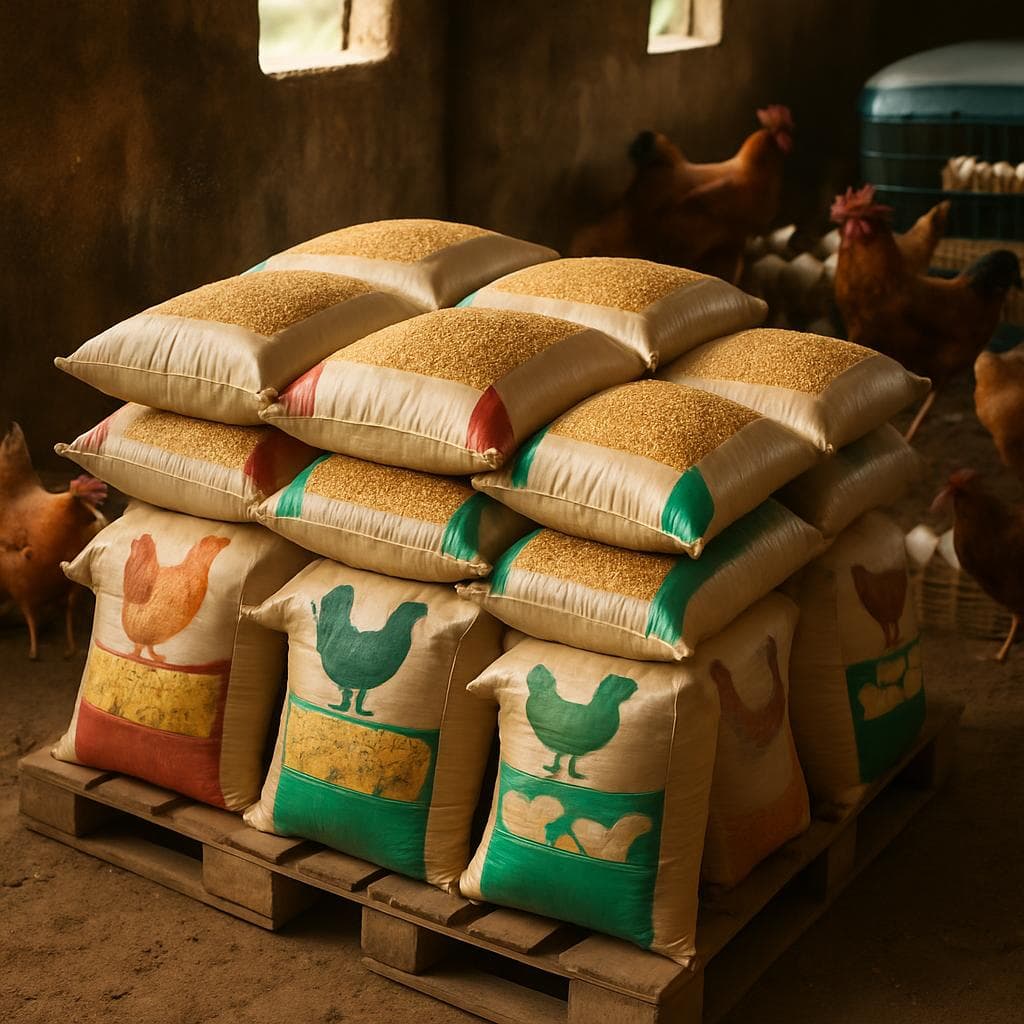
Côte d'Ivoire, with its humid tropical climate, presents particular challenges for storing feed intended for poultry. The humid conditions promote the proliferation of mould and the production of mycotoxins, which can have detrimental effects on the health of the birds and, consequently, on the profitability of your poultry farming. Here are some practical tips for effectively storing and preserving poultry feed in such conditions.
1. Choose the right storage location
It is essential to select an appropriate location for storing feed. Prefer a cool, dry, and well-ventilated place. Avoid areas where humidity is high, such as basements or areas close to water sources. Using pallets to elevate feed bags off the ground can also help reduce moisture.
2. Use appropriate containers
Poultry feed should be stored in airtight and moisture-resistant containers. Plastic bags can be an option, but they are not always the most effective. Opt for metal or rigid plastic containers with airtight lids to minimise exposure to air and moisture.
3. Control humidity
It is crucial to monitor the humidity level in your storage space. Using humidity measuring devices can help you keep an eye on humidity levels. If humidity is too high, consider using dehumidifiers or moisture absorbers to create a drier environment.
4. Practice stock rotation
Adopt the FIFO (First In, First Out) method to manage your stocks. This means that the oldest feed bags should be used first. This reduces the risk of keeping feed for too long, which can lead to deterioration and contamination by mould.
5. Regularly inspect feed
Conduct frequent inspections of your stocks to detect any signs of mould or degradation. If you find mouldy feed, it is best to dispose of it immediately to avoid any cross-contamination. Regular inspection will also allow you to check the integrity of the containers.
6. Add antifungal agents
Consider adding natural antifungal agents to the poultry feed. Some plant-based products can help inhibit the growth of mould. Research solutions suitable for your farming and region.
Conclusion
By following these practical tips, you can significantly reduce the risk of mould and mycotoxins in your poultry feed. Proper storage is essential to ensure the health of your birds and the profitability of your farming. Take action today to improve your storage practices and protect your poultry from humidity-related dangers.
--- *Source: NEXTEKCI — In-house expertise — summary and analysis by NEXTEKCI.*