

Rules put to the test by weather conditions
In France, extreme heat and water shortages led to an exceptional number of exemptions being granted from the specifications for several labelled agricultural products. Some types of production, including poultry, were affected. These adaptations address a specific difficulty: when production conditions are disrupted by the weather, complying with certain requirements becomes more complicated.
This news does not mean that quality rules are no longer useful. Rather, it shows that standards sometimes need to be examined in light of unusual circumstances, within a framework defined by the competent authorities. An exemption is not general authorisation to change practices: it applies to specific requirements and a particular situation.
A practical issue in Côte d'Ivoire
For Ivorian poultry farmers, the main lesson is to plan ahead. Hot periods, variations in rainfall and difficulties accessing water can affect the comfort of poultry and the organisation of work. A well-prepared farm can cope better with difficult periods, even if it cannot control the weather.
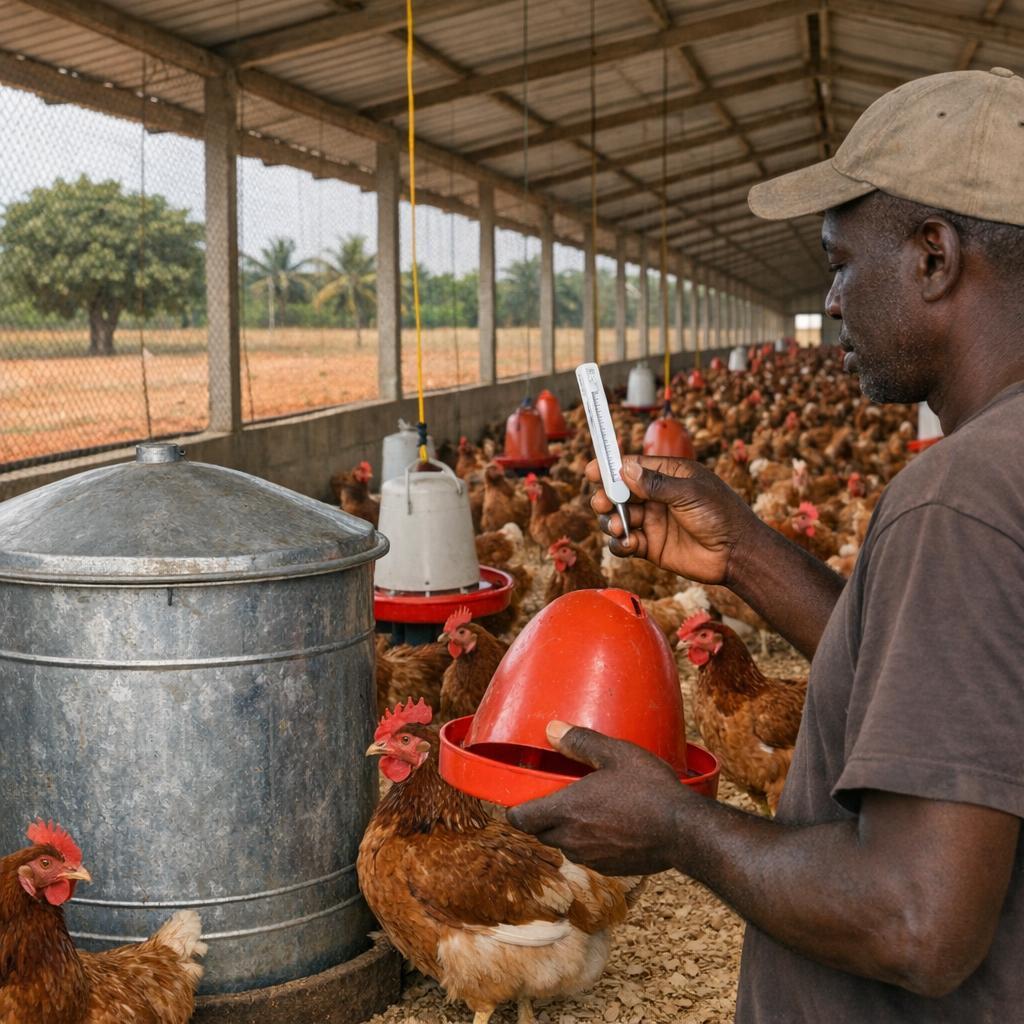
It is useful to regularly monitor the availability and quality of water, check drinking equipment and identify areas where air does not circulate well. The layout of the poultry house, maintenance of the surrounding areas and organisation of daily tasks also help to limit stress factors. Observations should be recorded: they help compare periods and identify areas for improvement.
Specifications and applicable rules vary by sector and country. A decision made abroad therefore does not automatically change the obligations of Ivorian poultry farms. In the event of a difficulty relating to a requirement or a weather event, you should seek information from the competent organisations rather than changing your practices on your own.
What this means in practice for a poultry farmer in Côte d'Ivoire
Before the hottest periods or episodes of irregular rainfall, check access to water, the condition of the drinkers, ventilation and shade around the buildings. Prepare a simple plan to maintain essential tasks if conditions deteriorate, and note any problems encountered. If unusual signs appear in the poultry, contact the local veterinarian. Finally, keep health requirements and official guidelines at the centre of your decisions: adapting to the climate must remain regulated and must not come at the expense of prevention.
--- *Source: Web-agri — summary and analysis by NEXTEKCI.*