

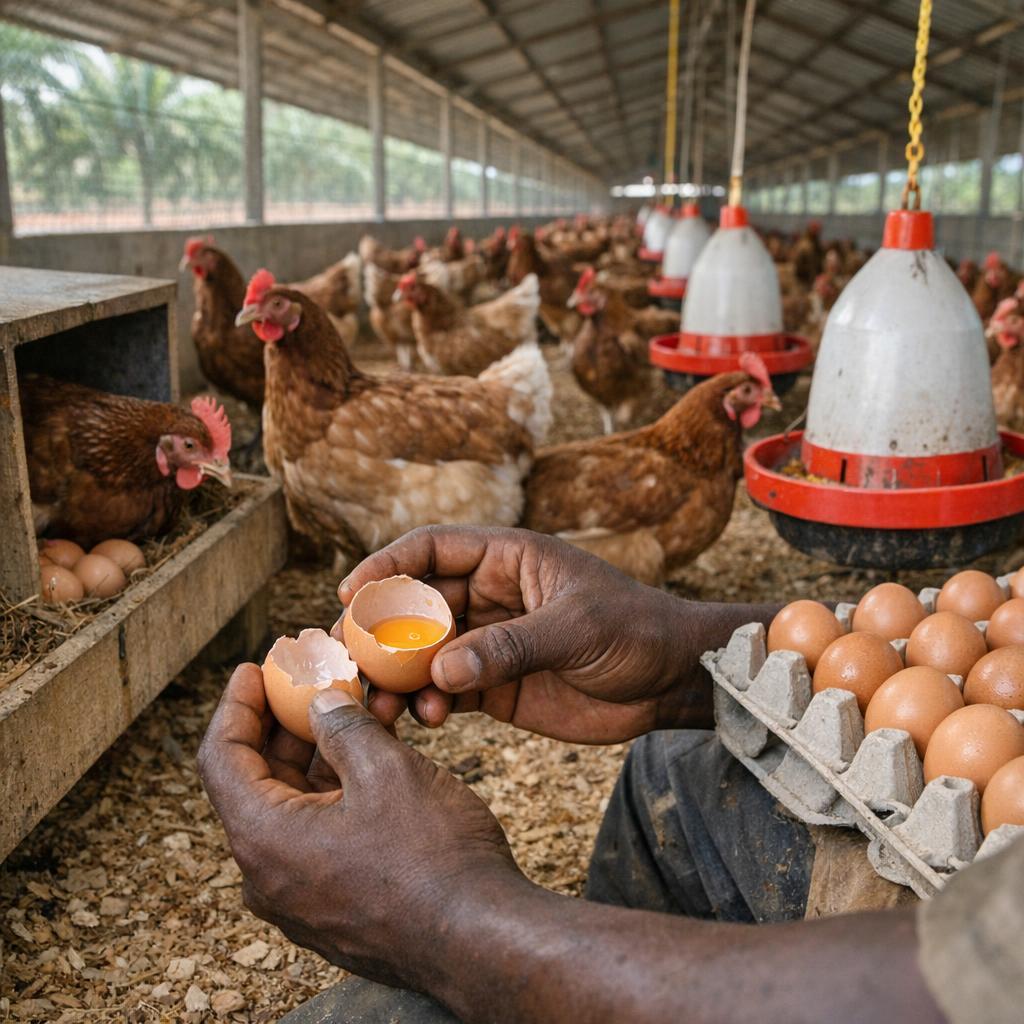
Finding broken or emptied eggs in the nest box is concerning. However, it is important first to distinguish an egg that has been accidentally broken from repeated consumption behaviour. A hen may peck at the contents after finding a cracked egg, then become accustomed to taking an interest in the others. Careful observation helps you take action without being too quick to blame a single hen.
Identify the signs
Inspect the nest boxes at several times of the day. Crushed shells, traces of yolk or white on the litter and hens pecking at the debris may signal a problem. Note where the eggs are found and when the damage occurs. If possible, discreetly observe the hens’ behaviour: repeatedly approaching the eggs, followed by pecking, is more revealing than a single broken shell.
Also check whether the eggs are laid on the floor or in an overcrowded nest box. They may then be trampled or knocked, and pecked at once cracked. Heat, frequent movement in the poultry house and damp or compacted litter can also make observation more difficult and encourage breakage.
Reduce contributing factors
Collect the eggs regularly, particularly when laying is active, and remove broken eggs and debris without delay. Keep the nest boxes clean, dry and sufficiently lined with comfortable litter. Check that they are accessible, stable and positioned in a quiet area. Limit sudden movement near the hens and avoid letting eggs accumulate.
Monitor the ration and access to water. A balanced diet, suitable for laying hens and distributed regularly, contributes to good laying conditions. If the shells often become fragile or the consumption continues, seek advice from a poultry farming professional or the local veterinarian to assess the situation and decide what to do.
Finally, clean the nest boxes and the affected area, then continue observing after making adjustments. Do not just remove the shells: also look for why the eggs are breaking or remaining accessible.
In Côte d'Ivoire, start today by noting the affected areas, collecting the eggs more regularly and checking the condition of the nest boxes, the litter, the feed and the water. If the behaviour continues, seek support from a local professional to adapt your practices.
--- *Source: NEXTEKCI — In-house expertise — summary and analysis by NEXTEKCI.*