

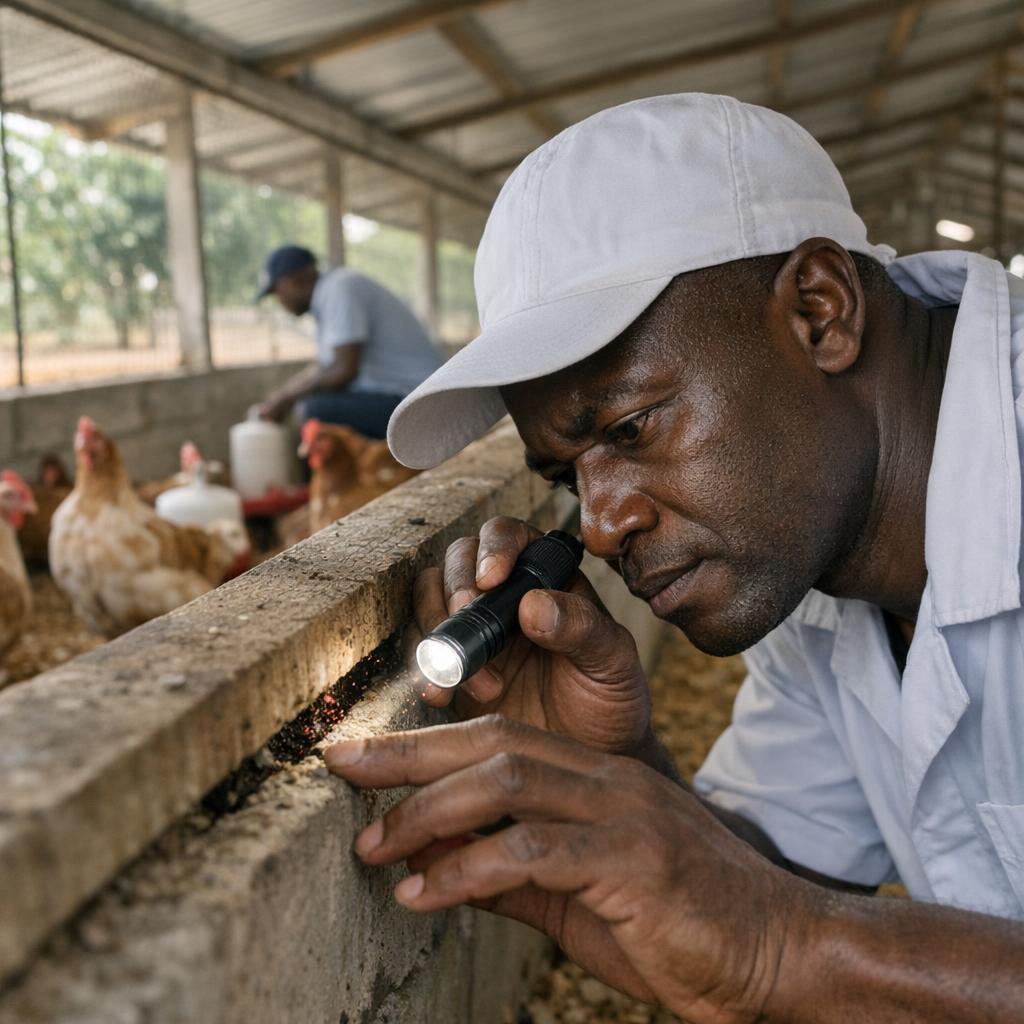
A discreet parasite, especially active at night
Red mites are small parasites that feed on poultry blood. They spend much of the day hidden in cracks, wood joints, perches and around nests. At night, they come out to reach the birds. In a warm, humid chicken coop, regular monitoring is therefore important, particularly after a rainy period or when the poultry house remains poorly ventilated.
What signs should you look for?
The behaviour of the poultry can provide the first clues. Birds that are restless in the evening, scratch frequently, rest less well or avoid their perch should be checked. Reduced activity, a pale comb or a decrease in laying may also accompany a serious infestation, without being proof on their own. Several signs should be examined, and conclusions should not be drawn too quickly.
To inspect the poultry house, choose a quiet time, preferably after nightfall. Using a torch, look under the perches, around the joints, in cracks and near the nests. Run a light-coloured cloth over suspicious surfaces: small greyish or reddish specks may appear. During the day, look instead for clusters or traces in hiding places, as the parasites are less visible on the birds.
Preventing them from settling in
- Clean methodically: regularly remove droppings, feathers and debris. Pay particular attention to corners, the undersides of equipment and hard-to-reach areas.
- Reduce hiding places: repair cracks and open joints. Where possible, choose surfaces that are easy to inspect and clean.
- Inspect incoming equipment: check crates, perches and equipment before installing them in the poultry house. Avoid moving equipment between chicken coops without checking it first.
- Manage access: limit unnecessary visits and ask people entering to follow the farm’s hygiene instructions.
- Keep records: note your observations, the date and the areas inspected. Repeated checks make it possible to spot changes before the signs become widespread.
If you observe parasites or very restless poultry, contact the local veterinarian to assess the situation and advise you. Do not apply a product at random: the professional will be able to recommend an approach suited to the poultry house and the birds.
Starting today, inspect the perches and cracks in your chicken coop, then schedule regular checks as part of your poultry farming routine.
--- *Source: NEXTEKCI — In-house expertise — summary and analysis by NEXTEKCI.*