

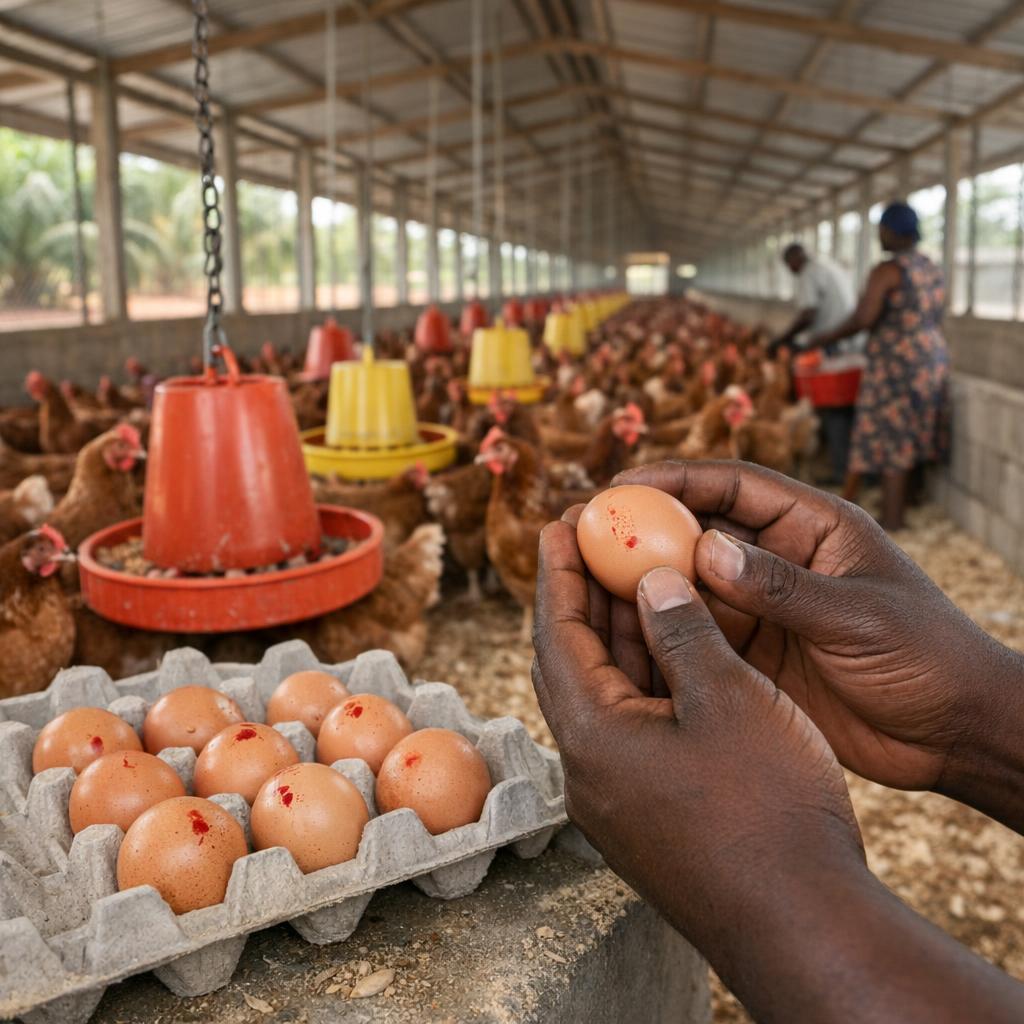
Finding a red spot in an egg can be worrying. It may be inside, on the yolk or in the white, or visible on the shell. An internal spot may appear when a small blood vessel ruptures as the egg is forming. A mark on the shell may also result from a minor injury or bleeding in the reproductive tract. Observation alone does not make it possible to establish a diagnosis.
Start by measuring the frequency
Avoid drawing conclusions from a single egg. For several days, record the number of eggs with a spot and the total number of eggs collected, separating internal spots from those observed on the shell if possible. Also indicate the poultry house or group concerned, the laying period and any recent change in poultry farming management.
This monitoring sheet helps distinguish an isolated event from a recurring issue or one affecting several hens. It also makes it easier to discuss the matter with a technician or veterinarian.
Which factors should you check?
- Age and laying stage: note the periods when spots appear more often. A variation linked to a phase of the cycle may differ from an ongoing problem.
- Feed and water: check that the hens have regular access to an appropriate ration and clean water. Note changes in feed, supply interruptions or difficulties accessing the drinkers.
- Stress and poultry house conditions: observe episodes of high heat, unusual movements, disturbances, ventilation and stocking density. In the hot season, pay particular attention to the birds’ behaviour and water availability.
- Injuries and general condition: check whether marks are present on several shells, whether the birds seem uncomfortable or whether laying changes. Handle them calmly and keep the laying areas clean.
A blood mark on the shell deserves particular attention if it occurs often or is accompanied by visible injuries. Do not try to treat the hens yourself. Ask the local veterinarian for advice, especially if several birds are affected or their general condition deteriorates. For eggs intended for consumption, set aside any that are cracked or soiled and follow local hygiene and marketing rules.
A simple approach to follow
From the next collection, record observations separately, note any changes in management and check the water, feed, heat and condition of the birds. If the issue persists, share your notes with the local veterinarian: precise monitoring will help decide on the next checks for your poultry farming operation in Côte d'Ivoire.
--- *Source: NEXTEKCI — In-house expertise — summary and analysis by NEXTEKCI.*